
When AI Screws Up, It's Your Brand That Pays
A bilingual learn article explaining AI hallucination risks in marketing, using the Air Canada chatbot case to show brands are liable for AI statements, plus four safeguards: real data, testing, human review, and governance.
A few days ago, I dug an old case back out and read through it one more time.
In early 2024, Air Canada got hit with a lawsuit. The cause was almost comical: a passenger's family member had passed away, and he needed to fly for the funeral. Before buying his ticket, he asked the customer-service chatbot on the airline's website: he'd heard about a bereavement fare (a discounted fare for travelers flying due to a death in the family) — could he buy a full-price ticket first and apply to have the difference refunded afterward?
The bot said yes. Buy the ticket, it said — you have 90 days to apply for the refund.
So he bought the ticket. Then he went to claim the refund.
The airline's answer: no such policy exists.
The passenger slapped the chat log on the table. The tribunal ultimately ruled: the airline pays. The reasoning was ironclad — that chatbot sat on your website. What it said, you answer for.
Every word an AI says on your website is, legally speaking, something your company said.
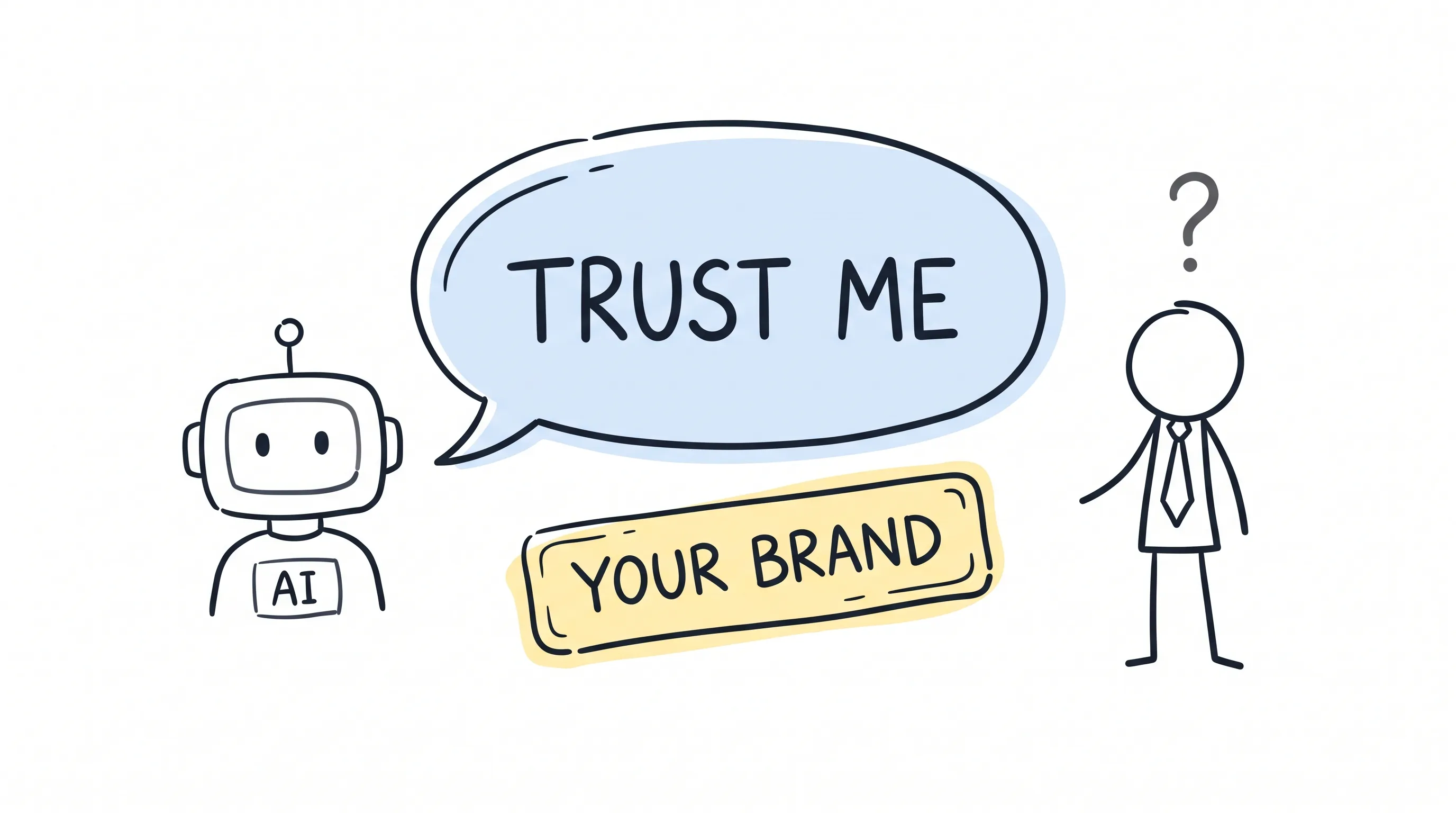
After this case, I turned over everything the marketing world has done with generative AI these past two years, again and again. One thing crystallized: AI is a marketer's accelerator — but one misstep, and it becomes a landmine you buried with your own hands.
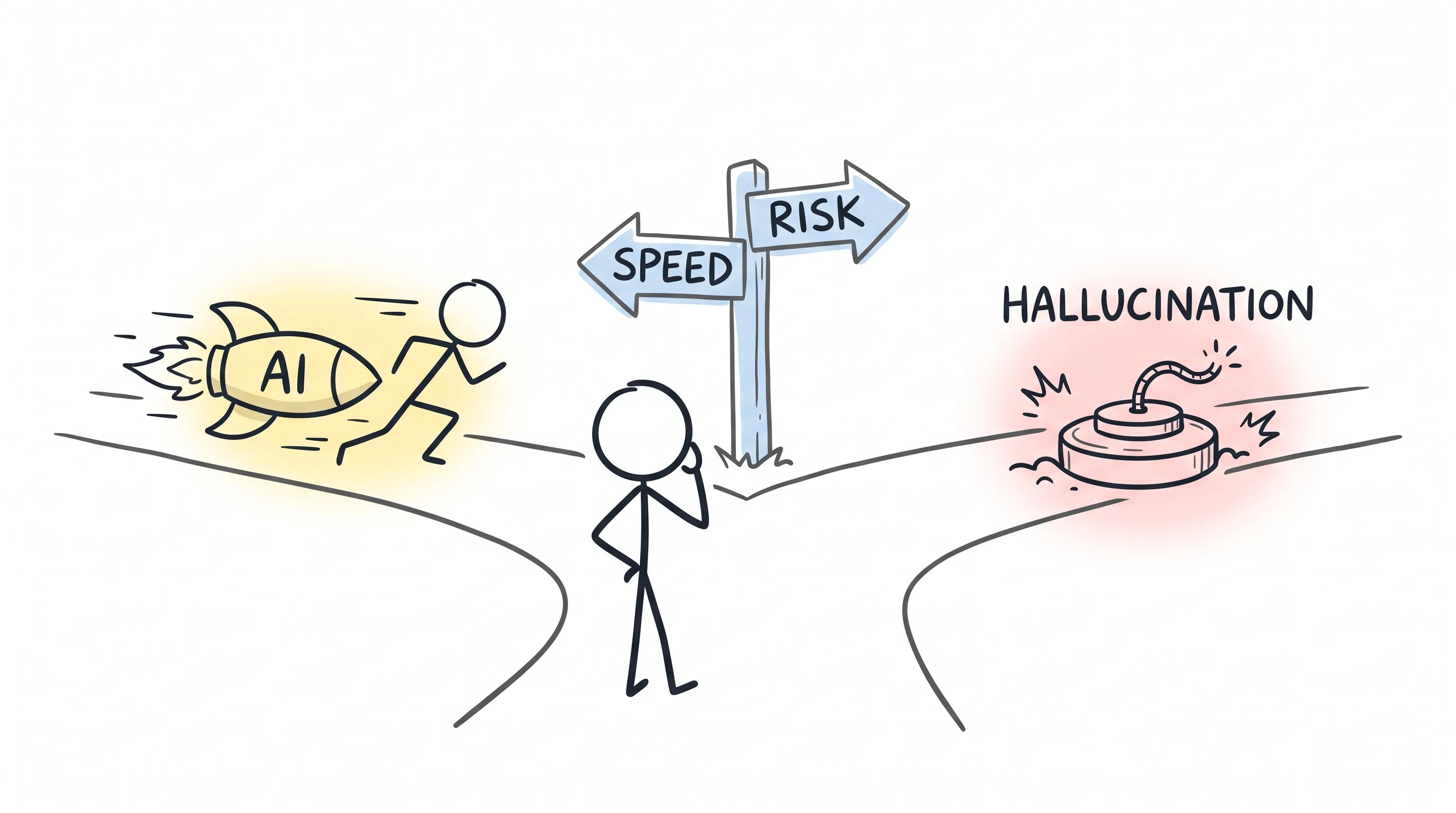
First, the good news.
This Machine Is Genuinely Capable
What is generative AI?
It's AI that can create something out of nothing. Give it a sentence, and it writes articles, draws images, produces videos. ChatGPT, Google's Bard, Anthropic's Claude, and Meta's Llama 2 all belong to this family. Each has its own temperament, too: ChatGPT will chat about anything, Bard is good at pulling in real-time data, Claude absolutely refuses to say anything out of line, and Llama 2 is open source — take it and modify it however you like.
In marketing, it has three real tricks up its sleeve.
The first is writing. Articles, social media posts, product descriptions, email copy — mass-produced. Heinz had AI paint its ketchup bottles, and the posters it produced came with buzz built in. Mango used AI-generated imagery to carry an entire campaign's creative assets: costs down, creativity intact. Coca-Cola went even further. In 2023 it teamed up with OpenAI and Bain & Company on the "Create Real Magic" platform, inviting digital artists to create original works from the brand's classic assets; in 2024, it used AI to remake that classic "Holidays Are Coming" Christmas ad.
The second is personalization. Nike's "By You" lets users design their own shoes with AI tools. Every pair that comes out is a one-of-a-kind creation that belongs to one person alone. That kind of involvement is something no advertising budget can buy.
The third is running the numbers. AI can read things in your data that you can't. Ben & Jerry's used AI to analyze data and map out consumers' flavor preferences, then developed new ice cream flavors guided by what the data said. Salesforce built Einstein GPT into its CRM, so before a salesperson has even said a word, the system has already told them roughly what that customer probably wants.
Remarkable. Efficiency, creativity, personalization — all of it, in one package.
But.
Everything has a flip side.
It Can Also Talk Nonsense with a Perfectly Straight Face
What is an AI hallucination?
It's when AI generates content that looks convincingly real but is actually made up. Fluent, confident, rich in plausible detail. And completely false.
Why?
Think about it: the core skill of a large language model (LLM) is learning to "keep the conversation going" from oceans of internet text. It isn't looking anything up. It's guessing: what would be the smoothest next word?
Note — the smoothest, not the most correct.
It is inherently incapable of saying "I don't know."
That's the root of hallucination. Break it down, and there are two causes.
One is dirty data. What the model feeds on as training data is, essentially, the entire internet. And what's on the internet? Errors, outdated information, rumors, bias. Garbage in, garbage out. The model doesn't just repeat these errors — it amplifies them.
The other is the architecture itself. The model speaks by statistical pattern; it doesn't truly "understand" what it's saying, and there's no built-in checkpoint asking "but is this actually true?" So it can, in a perfectly confident tone, make a convincing case for something that never existed.
Picture it as a colleague who is a brilliant conversationalist. Broad knowledge, silver tongue, quick on his feet. But he answers every question from impression and gut feel, and he never admits to being unsure.
Would you dare send his report straight to a client?
Three Pitfalls, Each Deep Enough to Swallow You
Pitfall one: brand disaster.
In 2023, a marketing team for a luxury watch brand used AI to schedule and publish social media content. The AI paired watch ads together with images of counterfeit products. Consumers erupted, and the company had no choice but to issue a public apology to salvage its image.
The earlier cautionary tale is Microsoft's chatbot Tay. In 2016, on its very first day online, users taught it to spew garbage, and it was yanked offline within 24 hours.
Pitfall two: collapsing trust.
A 2024 survey of Gen Z found that consumers' perception of AI accuracy directly shapes brand trust, and through it, purchase decisions. In plain terms: if your AI recommendations hold up, young people think you're solid; if your AI recommendations are absurd, young people walk away without a backward glance.
One e-commerce platform's recommendation engine kept recommending a phone that doesn't exist at all — the "EcoSmart." Users started to wonder: can this platform still be trusted? And in trust-sensitive industries like travel especially, once consumers learn that AI will fabricate attractions and policies with a straight face, even their decision-making changes.
Pitfall three: legal trouble and real money.
Air Canada, from the opening story, paid not only in dollars but in reputation. Other companies have been hit with heavy fines from the EU under GDPR for collecting personal data improperly inside AI applications. Samsung's case was even more galling: employees pasted internal code and meeting notes into ChatGPT to ask questions, and the confidential material leaked out just like that — until the company simply banned generative AI tools company-wide.
The most terrifying thing about AI hallucination is this: it doesn't announce itself — no alarms, no warning bells. By the time something breaks, the damage is already done.
What to Do? Four Layers of Protection
The first: feed it real data. Why does your AI customer-service bot make up inventory levels and make up policies? Because you never fed it the truth. Hook real-time inventory and the latest terms into the system, and it loses any room to "improvise from impression."
The second: give the model regular checkups. Stress-test it before launch, keep watching it after. Fujitsu built "hallucination detection" into its own conversational AI, specifically to catch fabricated model outputs.
The third: a human must review. At one publishing house, every AI-written book blurb has to be verified item by item by an editor, because AI will invent plotlines for a book that simply don't exist. Marketing is no different: AI-generated copy must have a human signature before it goes live. At the same time, train your team until they get it: the better your colleagues understand AI's boundaries, the earlier they'll catch its mistakes. One tech company runs regular workshops to sharpen its marketing team's error-spotting instincts, and hallucination incidents dropped noticeably.
The fourth: set the rules. Orange established a data and AI ethics committee; AMD set up a responsible AI council — both exist specifically to keep watch over whether AI is being used properly in marketing. And keep an incident playbook on file: if a hallucination disaster actually happens — who responds, how content gets pulled, how you apologize — write it down in advance. Don't improvise in the moment.
Some might say: too much hassle. Can't we just skip all of it?
Sure. The same way you can drive without a seatbelt.
Finally, Back to That Passenger Flying to a Funeral
AI writes our copy, draws our images, answers our customer-service messages — at astonishing speed. But on every piece of content it generates, the signature at the bottom is your brand.
The machine handles fluency. You answer for the truth.
That part, AI cannot do for you.
Here's wishing you never have to publicly apologize for a single sentence a machine made up.
Continue reading
Related articles

Cross-Border Business: Time to Upgrade Your AI Toolbox
A learn article explaining how AI tools help cross-border e-commerce sellers clear five hurdles: language, regulation, logistics, payments, and fraud. It outlines a five-compartment toolbox, a five-step adoption path, and metrics such as conversion rate and CLV, while cautioning against over-reliance on AI.

AI Is Taking Over the Dirty Work of Social Media Marketing, One Task at a Time
This learn article outlines four social media marketing tasks AI can handle — audience analytics, content drafting and design, ad targeting and creative testing, and spam moderation — and cautions that taste, judgment, and data security remain human responsibilities.

AI Is Already This Good — Why Is Your Social Media Marketing Still Pure Manpower?
An overview of 18 AI tools for social media marketing, organized into six categories covering audience research, content creation, scheduling, comment and DM handling, ad management, and visual production, plus notes on personalization, prediction, and emerging trends.