
When AI Agents Start Managing Ads, KNOREX Opens Up Its "Power Socket"
An analysis of KNOREX's Ads API for AI agents, covering its MCP Server compatibility and support for the AdCP open protocol for cross-channel ad execution.
A while back, I had dinner with an old friend who works in media buying.
His company's advertising stopped living on a single platform long ago. Programmatic, Meta, Google, LinkedIn, TikTok — five battlefronts open at once. It used to be one operator frantically juggling several dashboards at the same time. Now they want an AI agent to take over the job: tell it in plain language, "shift some budget toward Southeast Asia this week, push my cost per conversion down to this-and-that," and it executes on its own.
Sounds great. But he said the chokepoints haven't gone away — not a single one.
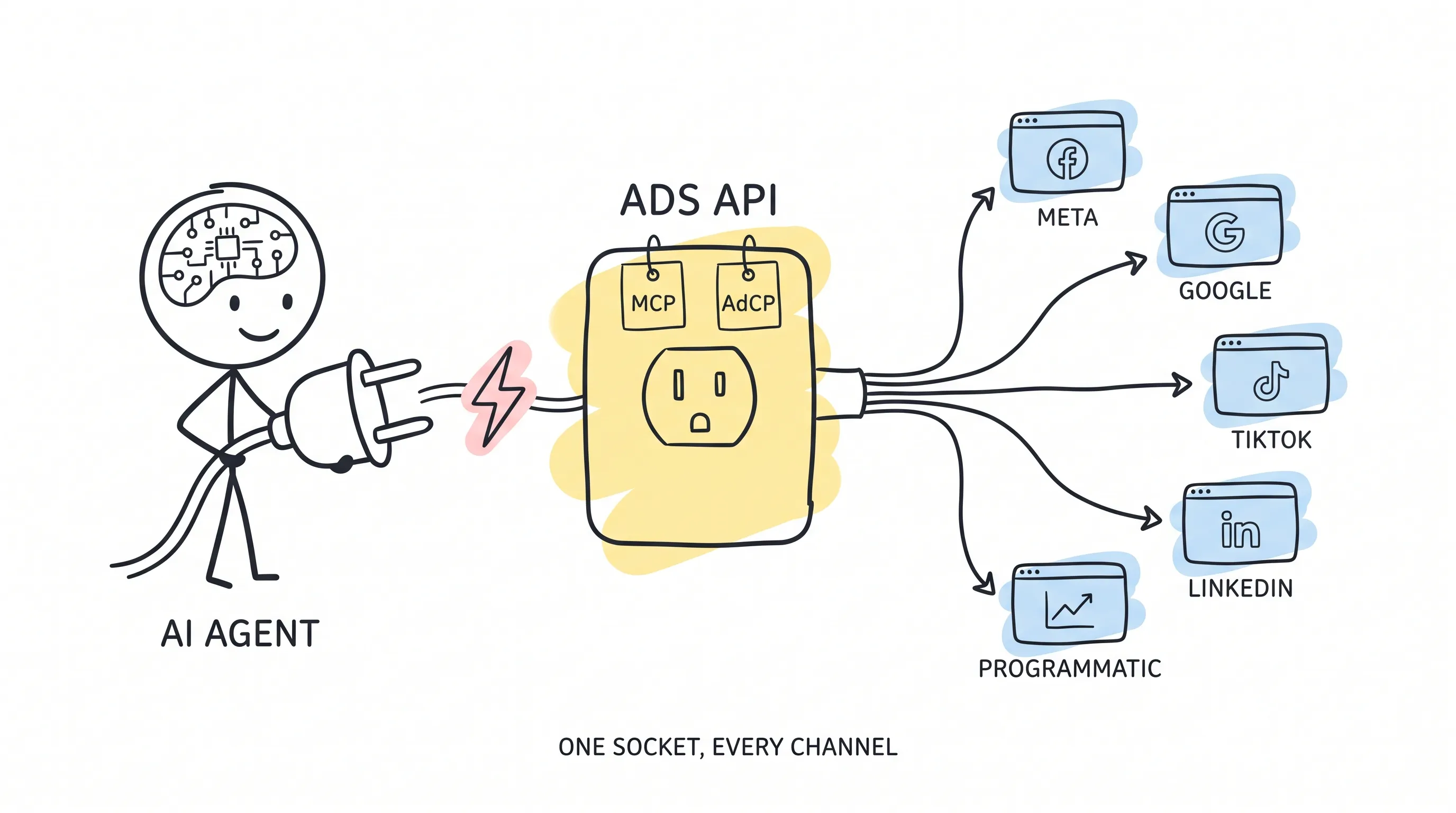
Why? However smart an agent is, it still needs "hands." To touch Meta's ads, it has to connect to Meta's API separately; to touch Google's, it has to hook up yet another set. Five platforms means five integrations and five maintenance burdens, all custom development. In his words: the agent's brain is ready, but its hands and feet still lack a unified socket.
As it happened, on February 19 this year, I came across a piece of news that spoke directly to that pain point.
A company called KNOREX (US ticker KNRX, doing AI-driven programmatic advertising, founded in 2009) released an Ads API built for AI agents. In plain terms: it has packaged its own ad platform's execution capabilities into an interface made specifically for agents to use.
What does "agent-ready" mean? It means the interface speaks a language that AI understands natively.
Specifically, two things.
First, it is compatible with Amazon Ads' MCP Server. You can think of MCP as the universal plug of the AI world. With natural-language prompts, an agent can invoke KNOREX's advertising capabilities directly, without writing a custom integration for every platform. It used to mean running a private line to each platform, one at a time; now it's plug-and-play.
Second, it supports an open protocol called AdCP (Advertising Common Protocol). What this thing wants to do is make all advertising platforms speak the same language. If the protocol really holds up, an agent with a single interface can cut straight across every channel.
Once everything is connected, what can agents actually do?
They can create and manage ads across channels; pull data from five platforms onto one table for analysis; when they spot a channel drifting off course, adjust budgets, change bids, and run optimization by themselves; and finally, generate the report and put it on your desk.
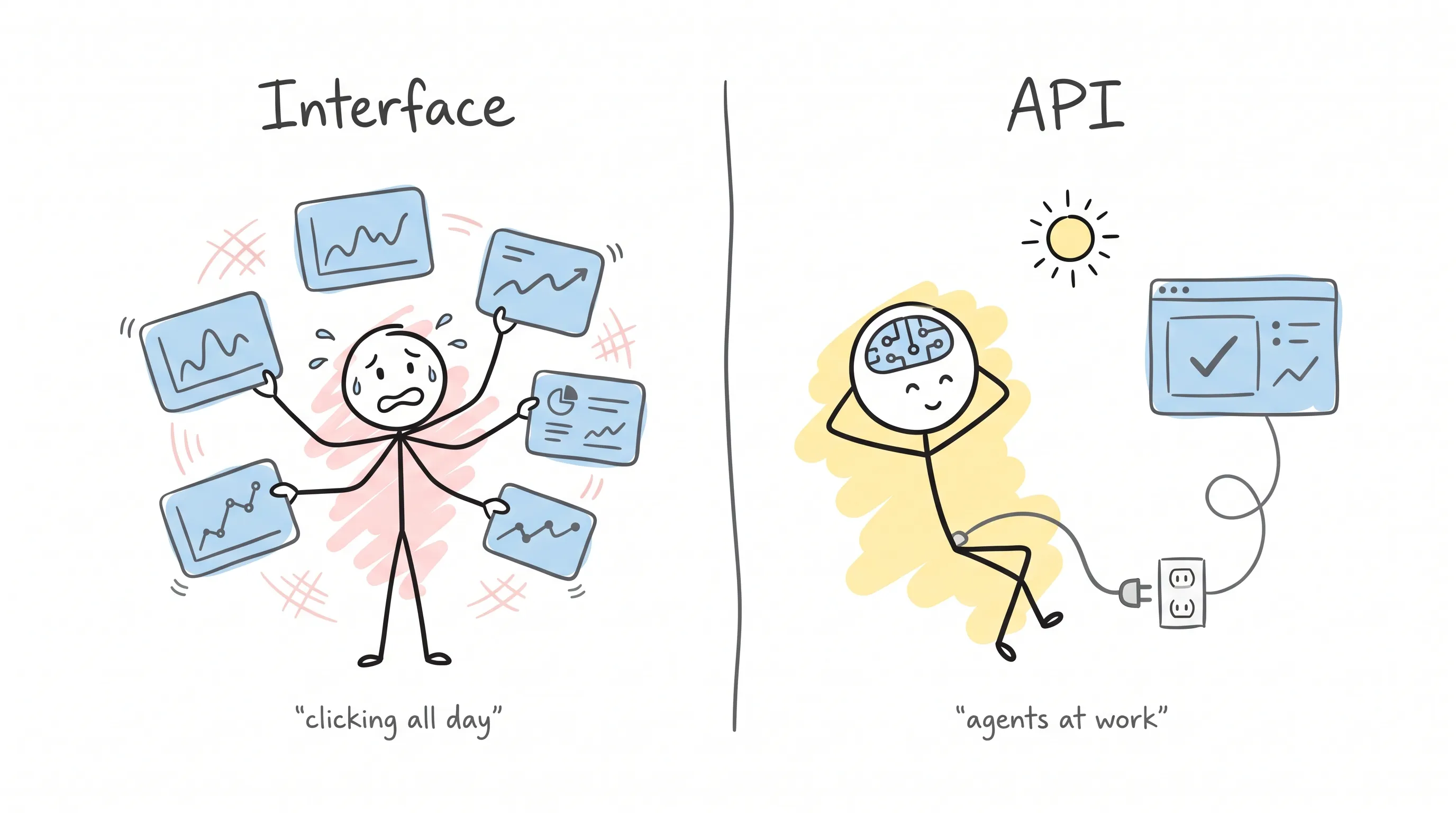
In one sentence: the execution layer of advertising has gone from "humans clicking interfaces" to "agents calling APIs."
There's a big number behind all this. Industry forecasts put global digital ad spend above $740 billion in 2026. That much money used to be moved around by humans switching back and forth across a dozen-odd dashboards. Now, the entire industry is handing execution over to autonomously running agents. So who is going to supply power to the agents? That, it turns out, has become a business.
KNOREX didn't just fire off a press release, either. This API is already up and running with three strategic partners: two in the US, one in Southeast Asia. Their own platform is called KNOREX XPO, covering search, social media, CTV (connected TV), audio, and digital out-of-home screens; the company operates across the US, Vietnam, India, Malaysia, and Singapore.
The company's own judgment, in essence: agentic AI is the next structural change in digital advertising, and scalable infrastructure will become a must-have.
Here's how I read that line. Ad platform competition used to be about whose interface was smoother for marketers to click; from here on, it may be about who gets called the most by agents.
The interface is for humans. The API is for machines.
Back to my friend. As dinner was wrapping up, he asked me: "Tell me — do you think we should set up a dedicated budget account just for agents?"
I said I don't know. But the answer to that question may matter more than many of the KPIs he set for himself this year.
The socket has been built — by someone else. The electricity is still yours to generate.
And here's hoping the day comes soon when you can hand the media-buying shift over to your agents — with total peace of mind.
Continue reading
Related articles

Cross-Border Business: Time to Upgrade Your AI Toolbox
A learn article explaining how AI tools help cross-border e-commerce sellers clear five hurdles: language, regulation, logistics, payments, and fraud. It outlines a five-compartment toolbox, a five-step adoption path, and metrics such as conversion rate and CLV, while cautioning against over-reliance on AI.

AI Is Taking Over the Dirty Work of Social Media Marketing, One Task at a Time
This learn article outlines four social media marketing tasks AI can handle — audience analytics, content drafting and design, ad targeting and creative testing, and spam moderation — and cautions that taste, judgment, and data security remain human responsibilities.

AI Is Already This Good — Why Is Your Social Media Marketing Still Pure Manpower?
An overview of 18 AI tools for social media marketing, organized into six categories covering audience research, content creation, scheduling, comment and DM handling, ad management, and visual production, plus notes on personalization, prediction, and emerging trends.