
TikTok's New Play: Let AI Run the Ads, Leave the Controls to People
An analysis of TikTok's 2025 New York Advertising Week updates, covering Smart+ automated buying modes, Symphony AI creative tools, GMV Max Creative Hub reporting, and assisted-conversion attribution with Google Analytics integration.
A few days ago, a friend of mine who runs a cross-border e-commerce business invited me out for tea. The moment he sat down, the complaints started pouring out: a dozen or so buttons in the ads dashboard, and every day just "tweaking things" ate up half his day.
I said, what you're doing isn't ad buying. It's sentry duty.
He froze for a second and didn't reply.
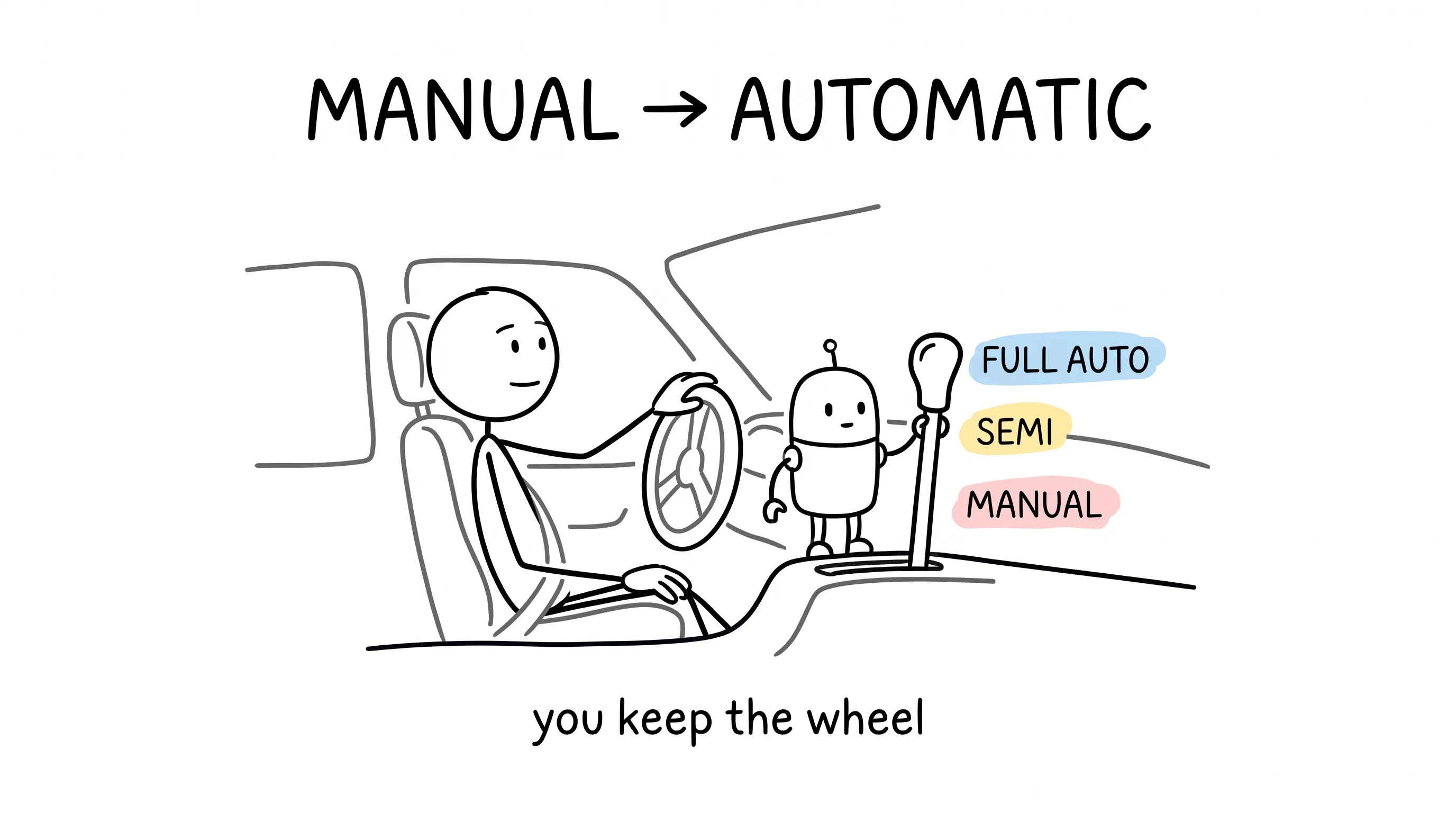
That little episode stayed with me. It wasn't until I saw the batch of updates TikTok rolled out at the 2025 New York Advertising Week — Smart+, Symphony, GMV Max, a full suite of automation upgrades all at once — that a trend finally clicked for me: ad buying is switching from manual transmission to automatic.
But automatic doesn't mean throwing away the steering wheel.
First, Two Numbers
NewtonX once ran a survey spanning multiple markets: 93% of marketers said AI automation had pulled them out of repetitive grunt work, freeing their hands for more important judgment calls; 90% of executives believed AI was tied to future business growth.
What does that mean?
It means the industry has already reached a consensus: the work machines should do, give it to the machines. People move up the value chain.
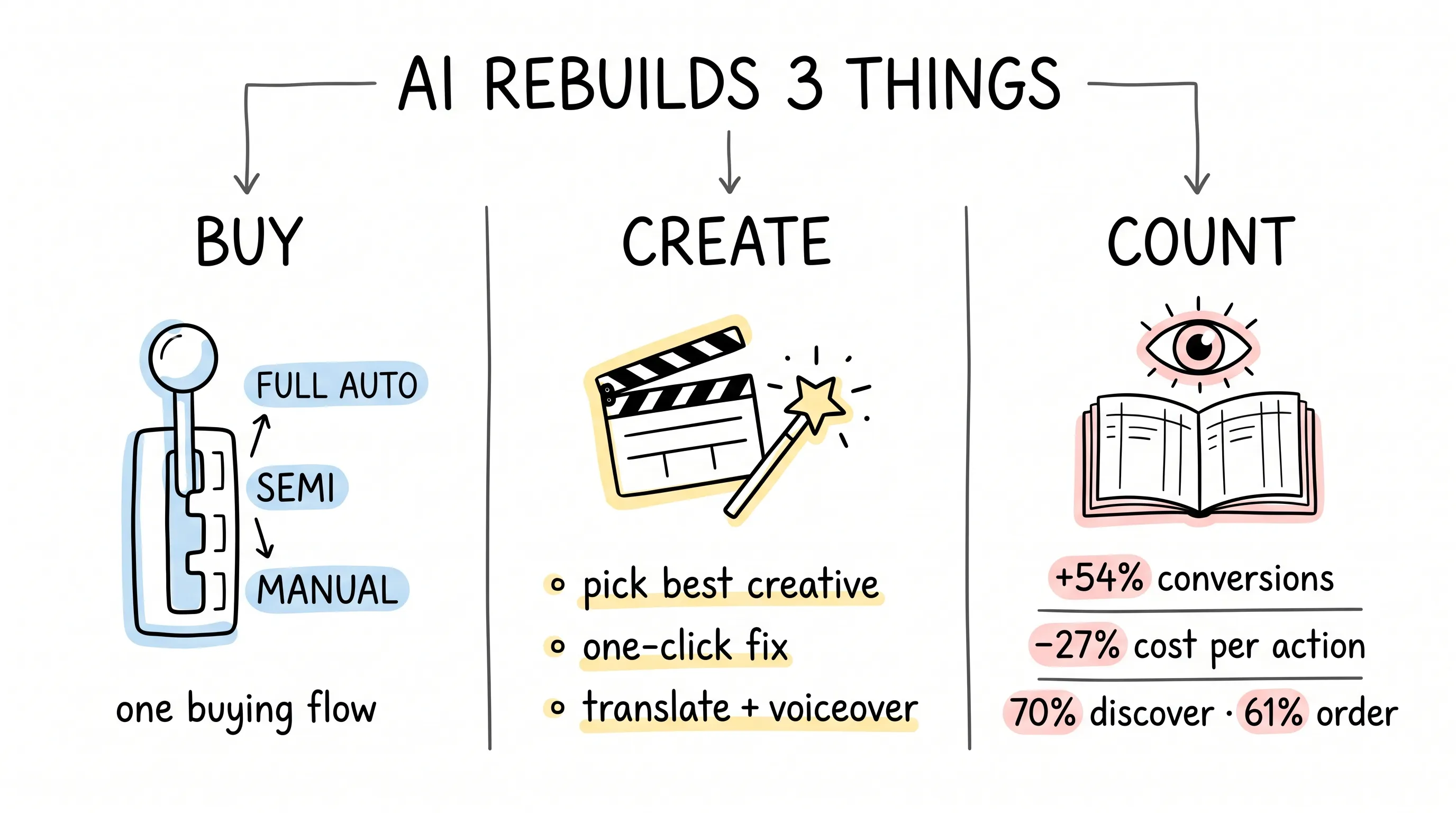
At its core, this round of TikTok updates follows that consensus and rebuilds three things: how you buy, how you produce creative, how you count the money.
So What Is Smart+?
Smart+ is TikTok's performance advertising system. The core of this upgrade is collapsing what used to be scattered buying entry points into a single flow.
Within that one flow, you can drive three ways:
Full auto: the system takes the wheel entirely — you set the budget and the goal, the machine handles the rest. Semi-auto: the machine runs the key steps, but the key decisions are yours to make. Full manual: veteran mode, you turn every dial yourself.
And it's not a locked-in three-way choice. Targeting, budget, creative — every module can be fine-tuned individually. This stretch automatic, that stretch manual, your call.
It's a bit like driving. A novice leaves it in full auto, worry-free; a veteran shifts to manual mid-route and takes the corners himself. Same car — whether the steering wheel is handed over, and when, is up to you.
TikTok's phrasing is that automation should be "customizable and trustworthy." I buy half of that; the other half depends on how it lands in practice. But the direction is at least right: the more complete automation becomes, the more the game comes down to the granularity of control.
The Creative Link — AI Handles That Too
The chronic headache of ad buying really has two halves: "how to run the campaign," and "what to run."
This time, TikTok plugged Symphony's creative tools straight into Smart+, and it comes down to two moves.
First, creative recommendations. The system digs through your past creative and AI-generated videos, picks out the ones it predicts will perform best, and serves them up for you to choose.
Second, automatic enhancement. Wrong video size? One click to fix. Soundtrack gone stale? One click to swap. Going overseas? Translation plus voiceover. Image quality fuzzy? One click to sharpen.
Put simply, it's like giving every advertiser an editing assistant that never sleeps. The ideas are still yours — but the speed of execution is on a different order of magnitude.
Counting the Money: Creative Hub Opens Up the Black Box
Anyone in e-commerce knows the biggest black box in campaign running: the money got spent, and you can't say which piece of creative or which creator drove it.
TikTok added a Creative Hub to GMV Max and laid the books open. Which creative is scaling, which creator is moving product, which product is converting — you can click down layer by layer and see it all. Coming into a big sales event, this ledger pays off the most.
The waste you can't see is the biggest waste of all.
The Part Worth Puzzling Over Most: How Do You Count an "Assist"?
What truly made me stop and think for a long time was attribution.
One number: more than a quarter of TikTok's attributed conversions happen like this. A user sees the ad, doesn't click, then opens the browser on their own that same day and goes straight to the brand's website to order.
By the old way of counting, that order goes down as "direct traffic."
But it was plainly that ad that planted the seed.
It's like basketball. The basket goes on the shooter's stat sheet, but anyone who really understands the game knows the pass that split the defense was the key. Old-school stats only record the scoring. Now TikTok wants to record the assist too.
So it did two things.
One, third-party integration — starting with Google Analytics — so you can see performance inside reports you already trust. In early testing, advertisers using this integration saw conversions rise by an average of 54% and cost per action fall by an average of 27% (TikTok internal data, September 2025, 115 advertisers).
Two, assisted-conversion reporting, built specifically to record the orders that were "seeded on TikTok but closed somewhere else."
Two more numbers worth having on the table: 70% of TikTok users discover new brands or new products on the platform; 61% of users have actually placed an order after viewing content. The weight of the front end of the funnel is right there.
Finally
One more detail from the survey: 78% of advertisers and executives give TikTok high marks for continuously shipping new things in AI. On innovation, it truly hasn't stopped.
Later I met that friend again. I told him: your job is changing — from twisting buttons every day to setting direction and verifying results every day.
The more automated the machine gets, the more valuable human judgment becomes. Flip it around: it's the people who only know how to twist buttons who are truly in danger.
That's just how it feels to me. I could be wrong.
Continue reading
Related articles

It's 2026: Stop "Buying" AI Tools for Your Marketing Team — Start "Hiring" AI Agents
This learn article explains how AI agents differ from standalone AI tools in marketing, outlines three agent categories — build-your-own platforms, CRM-native agents, and vertical tools — and covers use cases across SEO, social media, advertising, and reporting, plus criteria for choosing one.

Did the Money You Spent on AI Marketing Ever Come Back?
A guide to measuring AI marketing ROI across three layers: ad reports, sales pipeline, and the financial ledger. Covers metrics such as ROAS and CPA, eight dashboard metrics, industry benchmarks, and common measurement mistakes.

How to Pick a Creative Automation Platform: First, Figure Out What These Eleven Actually Do
A learn article sorts eleven creative automation platforms — including Bannerflow, Celtra, Smartly.io, and Storyteq — into four functional groups and proposes five evaluation questions covering publishing reach, automation depth, ease of adoption, team fit, and verifiable evidence.