
TikTok Is Now Running Ads Right Outside Its Own Front Door
This analysis piece reports that TikTok opened its ad network to US advertisers, serving ads through TikTok into other apps, and exposed its ad system to external AI agents via Model Context Protocol (MCP). It also covers Buy Direct, Shopping Assistant, Agentic Leads, Smart+, and GMV Max updates announced at the event.
A few days ago, a news item stopped me mid-scroll; I stared at it for a good few seconds.
TikTok announced that its ad network is now officially open to US advertisers. And note this: the ads don't run inside TikTok. The ads go through TikTok, into other apps.
This is worth stopping to think about.
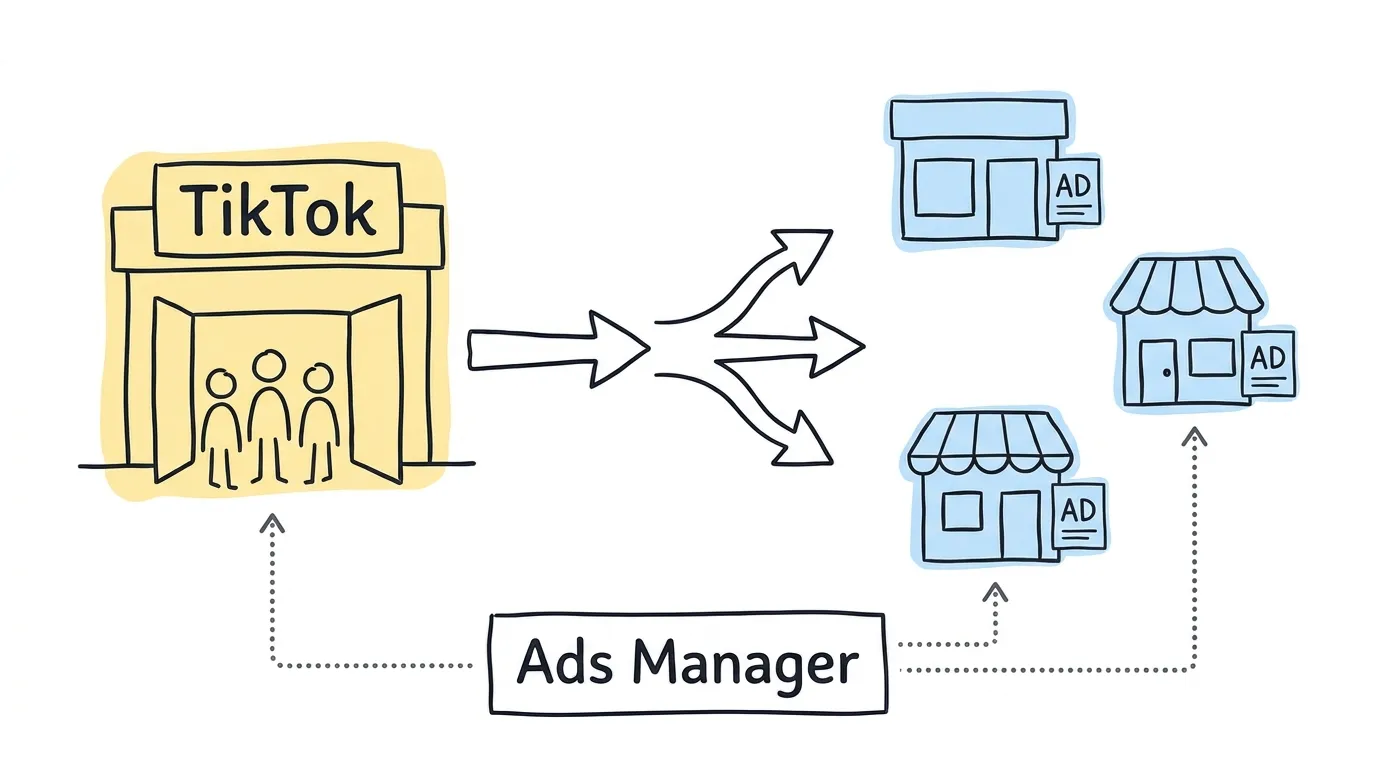
What is an ad network, exactly? Picture TikTok as a big mall in a prime location, flooded with foot traffic. Until now, advertisers could only come in and rent a counter. Now TikTok is saying: keep your counter — and I'll also take you to nearly 400,000 other stores and put your posters up in them. TikTok calls this its "advanced network." And the whole operation happens without you running around town: it's all handled from a single dashboard, TikTok Ads Manager, with brand safety and placement controls built in.
What advertisers are buying has never been TikTok. It's the people TikTok holds.
Before, those people existed only inside TikTok. Now TikTok has packed them into its network.
And there's more. The announcement came at Advertising Week in New York, and on the same stage TikTok did something that, in my view, matters even more: it opened the "interface" of its own ad system to outside AI.
What is MCP? The full name is a mouthful: Model Context Protocol. In plain language, it's an access badge. Hand that badge to Claude, to Perplexity, to Kimi, Manus, Replit, or Snowflake, and they can walk straight into TikTok's ad system and get to work — planning campaigns, launching ads, watching the numbers. What used to take a dozen-odd clicks becomes, with an AI agent, a single sentence's work.
How well does it work? TikTok's own numbers: advertisers' use of MCP to launch and manage campaigns has grown by more than 200% since launch. The data comes from TikTok's internal stats for July through September 2026. George Velonias, head of growth marketing at Wayfair Canada, put it more bluntly — he calls MCP the thing they "can't do without" in their AI advertising workflow: building ads, uploading creative, checking performance, all of it happens there.
AI isn't just writing your copy anymore. AI has started placing your orders.
You might ask: besides all this, what else did TikTok announce?
Quite a lot. Let me pick out the pieces most directly relevant to you if you run a business.
For the people selling: there's Buy Direct. While scrolling the For You feed, users spot something they like and check out on the spot, without ever leaving the app. Right beside it sits a Shopping Assistant, a conversational shopping helper — sizing, shipping, whether it's in stock, just ask.
For the people hunting for customers: there's Agentic Leads, which plugs into TikTok's direct messages and advertisers' own websites, built specifically to capture and follow up on leads.
For the people buying ads: Smart+ now hands keyword selection and creative selection for search ads over to automation as well. There's also Smart+ Creative Selection, which pulls the advertiser's own assets, AI-generated creative from Symphony, and creator content into one place for unified approval. And if you sell on TikTok Shop, take note: GMV Max has been upgraded too — when it optimizes, it now factors in affiliate commissions, coupons, and referral fees.
In one sentence: TikTok wants the road from "seeing an ad" to "paid in full" to be a ride you never have to get off.
In the words of David Kaufman, TikTok's global head of monetization product partnerships: AI is changing how ad content gets made and scaled, and what TikTok aims to do is weave AI, automation, and creativity together so advertisers save effort and get more results.
Beyond the launch event, one number stuck with me. PF Global recently released an economic impact report: activity on the platform has helped generate $81 billion in GDP for US businesses, and 54 million Americans say that after watching TikTok videos, they actually went ahead and bought.
Eighty-one billion. Fifty-four million.
That is what TikTok is standing on. And it's why the company dares to open its ad network beyond its own app: hold the people, hold the transactions, and other places will naturally open their doors and let you in.
Reading this far, you may feel the same question rising in your mind that rose in mine: why should advertisers hand their budgets to TikTok, to be spent outside TikTok?
Here's my take: this move is the critical step in turning "traffic" into "distribution capability." What everyone used to fight over was attention inside the app. From now on, whoever holds the agents and the checkout path, whoever holds hundreds of thousands of exits, is the one who controls the tap.
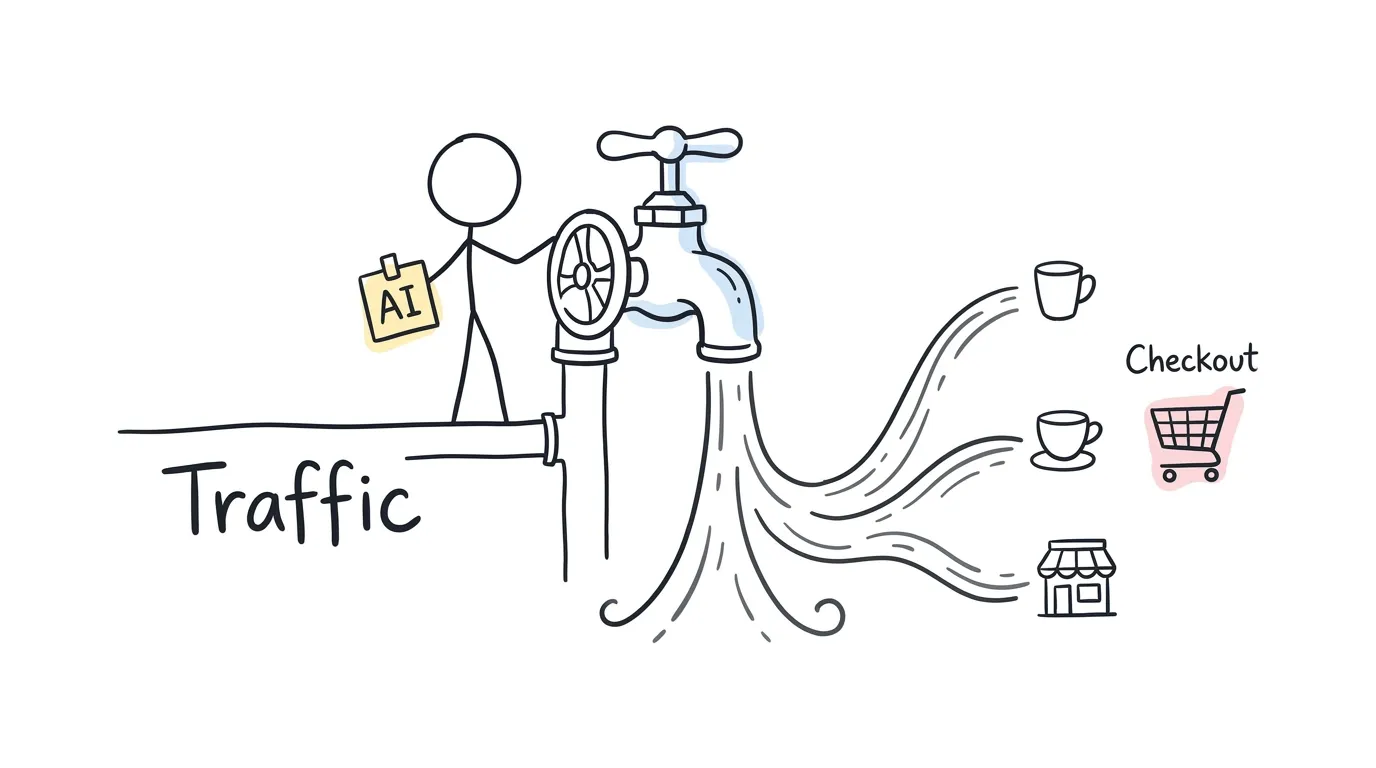
As for where the water flows, and how long it keeps flowing — we'll see.
Continue reading
Related articles

It's 2026: Stop "Buying" AI Tools for Your Marketing Team — Start "Hiring" AI Agents
This learn article explains how AI agents differ from standalone AI tools in marketing, outlines three agent categories — build-your-own platforms, CRM-native agents, and vertical tools — and covers use cases across SEO, social media, advertising, and reporting, plus criteria for choosing one.

Did the Money You Spent on AI Marketing Ever Come Back?
A guide to measuring AI marketing ROI across three layers: ad reports, sales pipeline, and the financial ledger. Covers metrics such as ROAS and CPA, eight dashboard metrics, industry benchmarks, and common measurement mistakes.

How to Pick a Creative Automation Platform: First, Figure Out What These Eleven Actually Do
A learn article sorts eleven creative automation platforms — including Bannerflow, Celtra, Smartly.io, and Storyteq — into four functional groups and proposes five evaluation questions covering publishing reach, automation depth, ease of adoption, team fit, and verifiable evidence.