
The Steering Wheel Is Changing Hands: Google and Meta Are Handing Ads Over to AI
A learn article discussing how Google Ads and Meta are shifting ad delivery decisions such as targeting, placements, and bidding toward platform AI, and what this means for marketers' roles and skills.
What did running ads look like just a few years ago?
You lived in the dashboard, picked your audiences, adjusted bids, wrote a couple of ad variants for A/B testing, and watched campaign after campaign. Exhausting, but reassuring — because the steering wheel was in your hands.
I recently went through everything Google Ads and Meta have shipped over the past two years. After reading it all, one feeling remained:
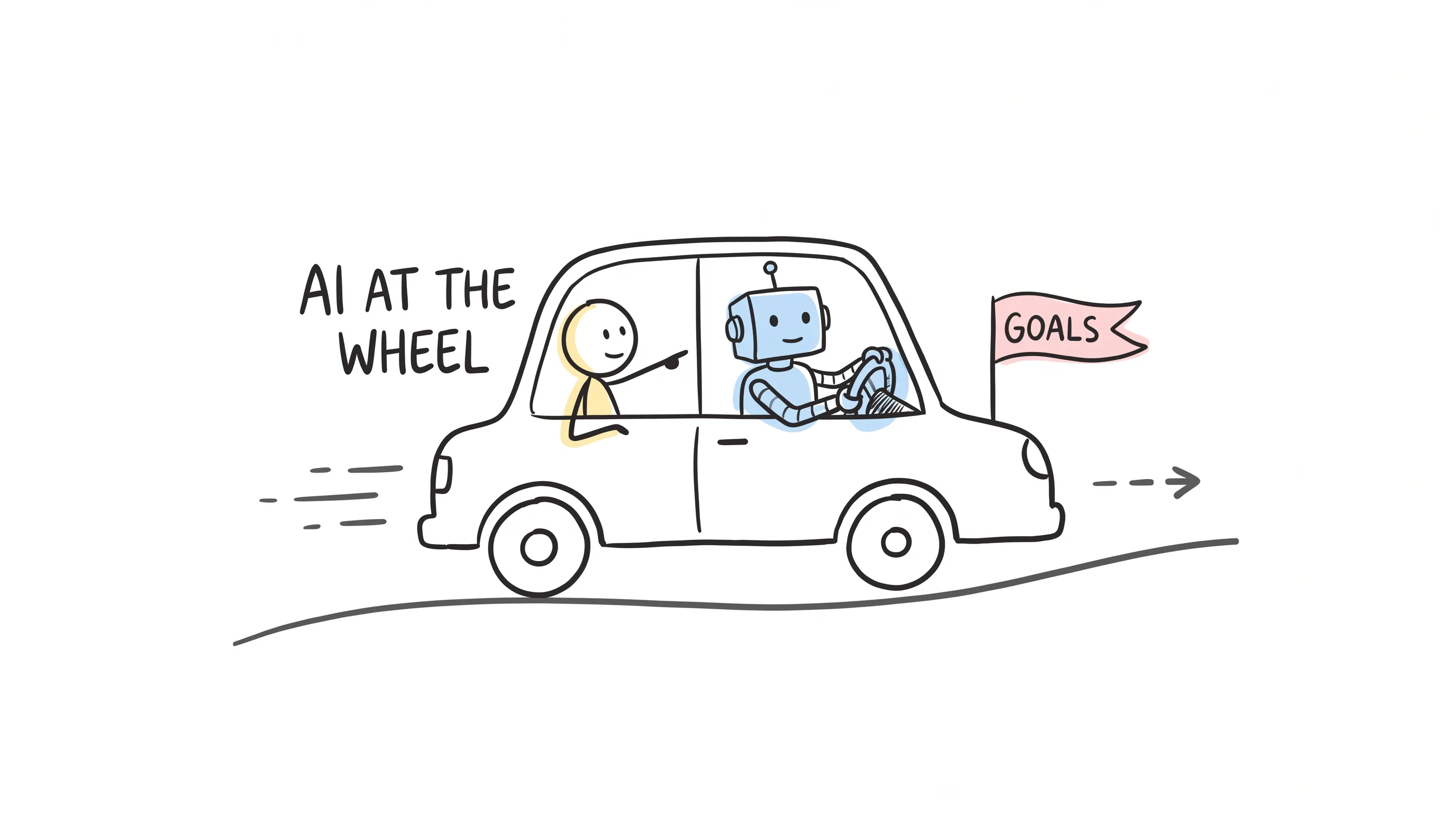
The steering wheel is changing hands.
What do I mean by that?
The core decisions of advertising — who sees your ad, where, at what time, and how much each impression costs — are moving out of your hands and into the hands of the platform AI.
And this isn't some "someday" scenario. It's now. It's already here.
Too Many Signals for Any Human to Chase
Why are the platforms so determined to do this?
Think about what ad platforms looked like in the early days. Users stayed in a handful of places, there was only so much data, and you could comfortably keep up by hand — tweaking audiences, adjusting bids.
Now? Google and Meta process signals by the billions every second. Devices, locations, search intent, conversion probability — all changing in real time.
No human brain, however fast, can keep up with that pace.
So the platforms made a very direct decision: take operational control back and hand it to AI.
Put bluntly: it's not that advertisers have gotten worse at their jobs — it's that this work is no longer fit for humans.
Google: Taking Over the "How"
The route Google Ads has taken is clear. Smart Bidding, Performance Max, Responsive Search Ads, automatic targeting — each feature more automated than the last.
What's actually changed?
In many cases, you no longer get direct control over keywords, placements, or bids at all. Google's AI uses real-time data to judge: what this person wants to search right now, on which device, and how likely they are to convert. Then it delivers the ad to the people most likely to buy. Sometimes even before they've started searching.
Note the shift: you handle only "what outcome you want"; the platform handles "how it gets delivered."
The "how" is disappearing from the advertiser's dictionary.
Meta: Hand Over Your Creative and Leave the Rest Alone
Meta has gone even further.
Advantage+ Shopping Campaigns, automatic placements, AI-driven creative optimization — with this combination, targeting and delivery are basically handed over entirely to Meta's own AI.
The advertiser's job gets compressed into two steps: put your creative in, choose your goal. After that, the AI decides for itself who sees the ad, where they see it, and at what time it will perform best. Interests, age and gender, retargeting — the things you used to build by hand are now mostly handled automatically.
Backing all of this up is the real engagement of users across Facebook, Instagram, and WhatsApp. Ads get better on their own through continuous learning — no more rushing into the dashboard every day to put out fires.
Impressively powerful — and honestly, a little unsettling.
So What Are Marketers Supposed to Do?
Many people's first reaction: That's it — we're all out of a job.
I don't see it that way.
What AI takes over is the execution side. But the things you feed the AI — whether the goals are set correctly, whether the creative quality holds up, how the customer journey is designed, how the data gets interpreted — those are still on humans.
Run the same automated delivery with bad creative, and what goes out is bad. AI is an amplifier: the better the input you give it, the harder it amplifies.
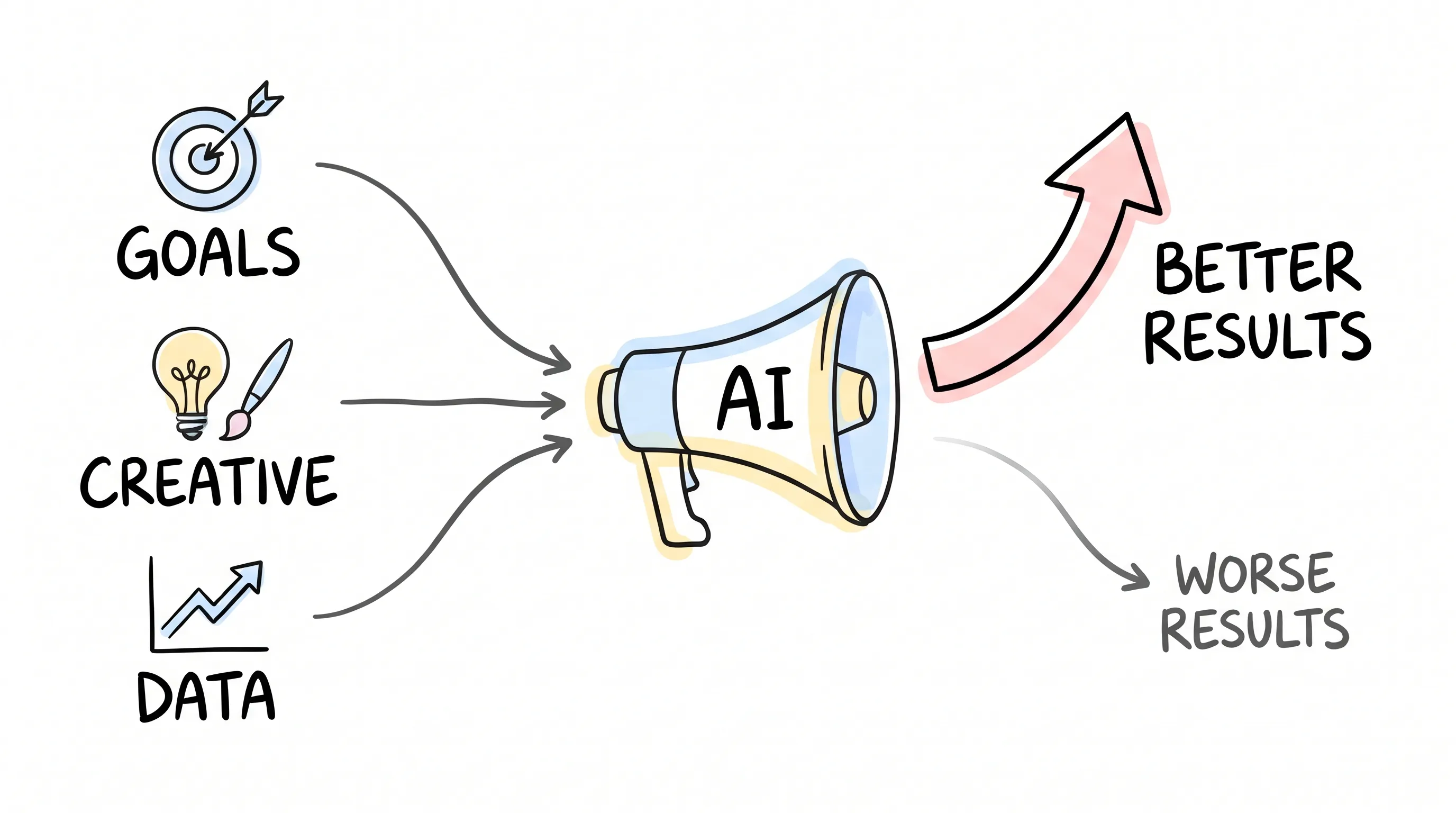
So the marketer's work hasn't gotten smaller — it has moved to a different position. From "adjusting settings" to "making judgment calls."
The Opportunity Window for Small and Mid-Sized Businesses
For businesses, the most tangible benefits of this wave of automation: fewer people needed, less money spent, and less wasted ad spend.
AI's ability to find high-intent users is very hard for manual targeting to match. Bids can also adjust in real time based on competition intensity, demand, and user behavior.
Say you're a small business owner with a five-person team. Running ads in the past meant either paying to keep an ad-ops team on staff or staying up late watching the dashboard yourself. Now, with a clear strategy, a small brand can absolutely go toe-to-toe with the big players.
But.
To be honest, blind faith in automation will crash and burn. Businesses that don't understand how the platform works and just throw everything at AI tend to get ugly results.
The ceiling of automation is set by the person using it.
What Skills to Sharpen From Here
So what should marketers practice?
A few things are becoming more and more valuable: writing copy, telling visual stories, setting up conversion tracking properly, getting funnels in order, and reading data. These are all skills for "feeding the AI good inputs."
Meanwhile, the part that used to take the most effort — manually building campaigns — is depreciating.
The better you understand how AI learns, which signals it pays attention to, and how creative quality affects performance, the more valuable you become.
Will Manual Campaign Management Disappear?
My judgment: it won't disappear overnight, but it will retreat to the corner.
Going forward, manual control will mainly be reserved for three areas: advanced use cases, testing, and brand-specific strategies. Most campaigns will simply be handed to AI to run.
The whole industry is shifting from "hands-on operation" to "intelligent oversight." Those who resist will struggle. Those who learn to steer the AI will be in demand.
Back to that opening image.
The experienced driver is still there — only the car has changed. This car now shifts gears and reads the road on its own; what you need to do is not snatch the steering wheel back, but tell it where to go.
Advertising hasn't gone back to the manual era, and it never will.
The steering wheel has already changed hands. The person in the passenger seat had better learn to give directions.
And may you take that new seat sooner rather than later.
Continue reading
Related articles

It's 2026: Stop "Buying" AI Tools for Your Marketing Team — Start "Hiring" AI Agents
This learn article explains how AI agents differ from standalone AI tools in marketing, outlines three agent categories — build-your-own platforms, CRM-native agents, and vertical tools — and covers use cases across SEO, social media, advertising, and reporting, plus criteria for choosing one.

Did the Money You Spent on AI Marketing Ever Come Back?
A guide to measuring AI marketing ROI across three layers: ad reports, sales pipeline, and the financial ledger. Covers metrics such as ROAS and CPA, eight dashboard metrics, industry benchmarks, and common measurement mistakes.

How to Pick a Creative Automation Platform: First, Figure Out What These Eleven Actually Do
A learn article sorts eleven creative automation platforms — including Bannerflow, Celtra, Smartly.io, and Storyteq — into four functional groups and proposes five evaluation questions covering publishing reach, automation depth, ease of adoption, team fit, and verifiable evidence.