
The most neglected group in every tools ranking is the one worth the most
A learn article arguing that attribution is the most overlooked yet most valuable group in AI marketing tool rankings, explaining multi-touch attribution versus last-click, buyer-fit guidance, and three practical steps for using a 15-tool comparison table.
How many AI tools rankings have you read?
A content group, an email group, an ads group, a video group… they all look alike.
But have you noticed that almost every ranking skips the same group?
Attribution.
A recent function-by-function comparison of 15 tools includes it. My first reaction after reading: this might be the most valuable section of the whole table.
One: why the attribution group is worth the most
A familiar scene first.
The monthly review. The media team says search has the best ROI, raise its budget. The brand team says customers convert only after reading our content — don't cut ours.
Both sides have data. Both sides are confident. The boss in the middle decides by gut.
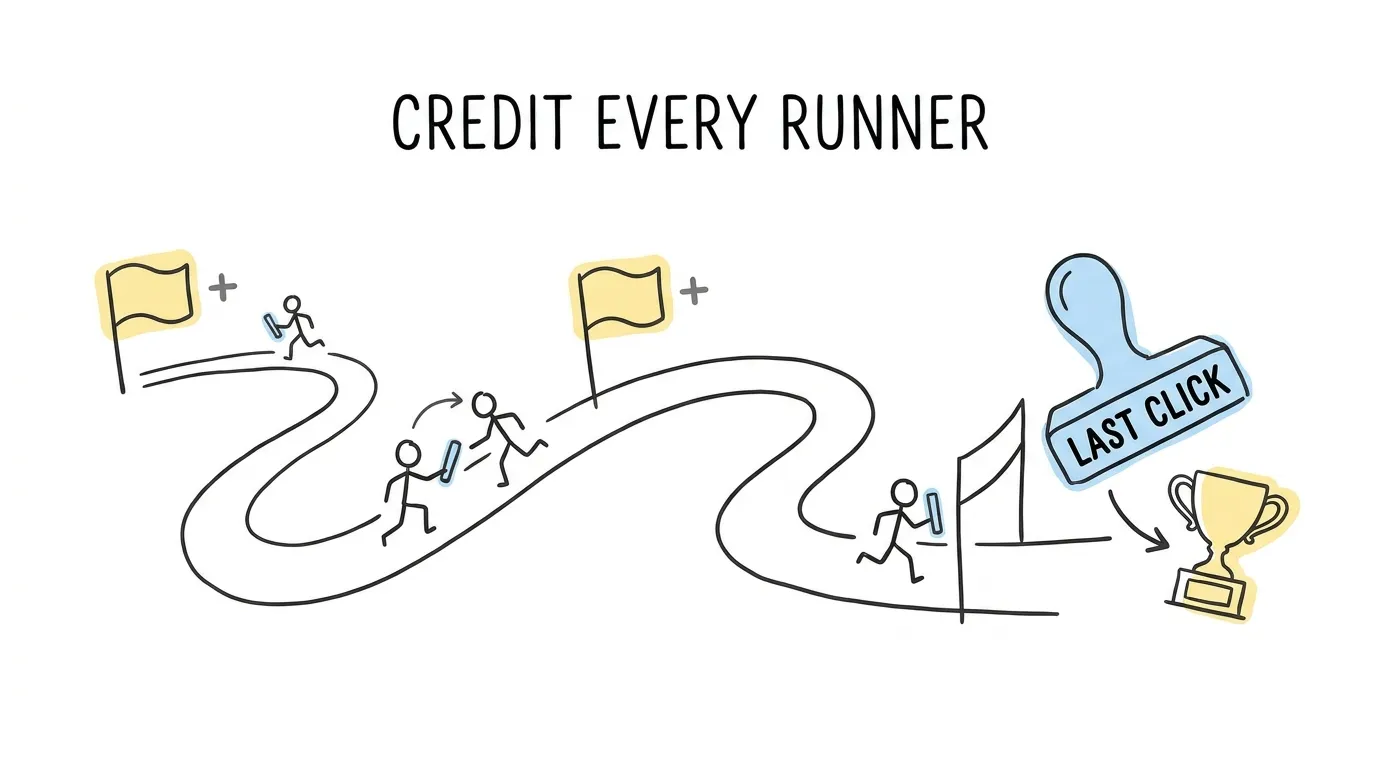
Where's the problem? You're using last-click attribution: whoever happens to catch the final baton collects all the credit. The assisting channels get nothing.
Making budget decisions on that basis means letting an accounting rule determine corporate strategy.
Attribution tools do something else: they stitch together the user's full path from first touch to purchase, recording each touchpoint's contribution. After multi-touch attribution, you'll often discover a counterintuitive fact: the channel that looked like the worst ROI appears in the early stage of most conversion paths.
Cut it, and the whole funnel leaks.
The table also flags a trend: attribution and multi-touch measurement tools are moving from enterprise-exclusive to standard equipment for mid-size teams. What used to be unaffordable now has free tiers.
Two: the table's second virtue — it names the buyer
Most rankings follow one format: tool name, feature list, score.
This table adds a passage to every entry: who it fits.
What small teams should use, what mid-size and large enterprises should avoid — one paragraph each.
Don't underestimate that paragraph. The most expensive error in tool selection isn't choosing a bad tool. It's choosing an oversized one.
A three-to-five-person team buys a full enterprise suite: unused, unlearnable, requiring dedicated maintenance. Money spent, process heavier. That waste is never dramatic, never visible — and it happens every single month.
The table's reverse use follows from this: look not only at what you should buy, but at what you should retire.
Three: three moves for using the table
First, go to the attribution group. If your team still credits channels on last click, any multi-touch tool in the table immediately improves decision quality.
How to try? Pick one with a free tier, connect your existing data, run two months of real traffic. Validate exactly one thing: integration depth with your CRM. An attribution tool's fate lives not in its algorithm but in how completely it can see your data.
Second, check the buyer profiles. Line up your team size and budget tier against the recommended tiers. Oversized tools go on a candidate-for-retirement list; don't renew at term.
Third, sweep all six function groups and mark the blank ones. Blanks are next year's capability gaps — studying them early beats panicking later.
Four: my take
Read enough tools rankings and you catch a disease: the feeling that you're always missing one more tool.
But the real weakness is rarely a missing tool. It's missing measurement.
Tools answer "can we do it." Attribution answers "is it worth doing."
The first is execution; the second is judgment. Everyone is patching execution. Judgment is the dividing line.
May every dollar of your budget be able to explain where it came from and where it went.
Continue reading
Related articles

It's 2026: Stop "Buying" AI Tools for Your Marketing Team — Start "Hiring" AI Agents
This learn article explains how AI agents differ from standalone AI tools in marketing, outlines three agent categories — build-your-own platforms, CRM-native agents, and vertical tools — and covers use cases across SEO, social media, advertising, and reporting, plus criteria for choosing one.

Did the Money You Spent on AI Marketing Ever Come Back?
A guide to measuring AI marketing ROI across three layers: ad reports, sales pipeline, and the financial ledger. Covers metrics such as ROAS and CPA, eight dashboard metrics, industry benchmarks, and common measurement mistakes.

How to Pick a Creative Automation Platform: First, Figure Out What These Eleven Actually Do
A learn article sorts eleven creative automation platforms — including Bannerflow, Celtra, Smartly.io, and Storyteq — into four functional groups and proposes five evaluation questions covering publishing reach, automation depth, ease of adoption, team fit, and verifiable evidence.