
The More AI Knows You, the More You Want to Buy?
A learn article examines whether AI personalization increases purchase intention, drawing on a 2025 survey of 388 digital shoppers analyzed with structural equation modeling. It covers personalized interaction frequency, engagement, perceived value, privacy concerns, and takeaways for marketers.
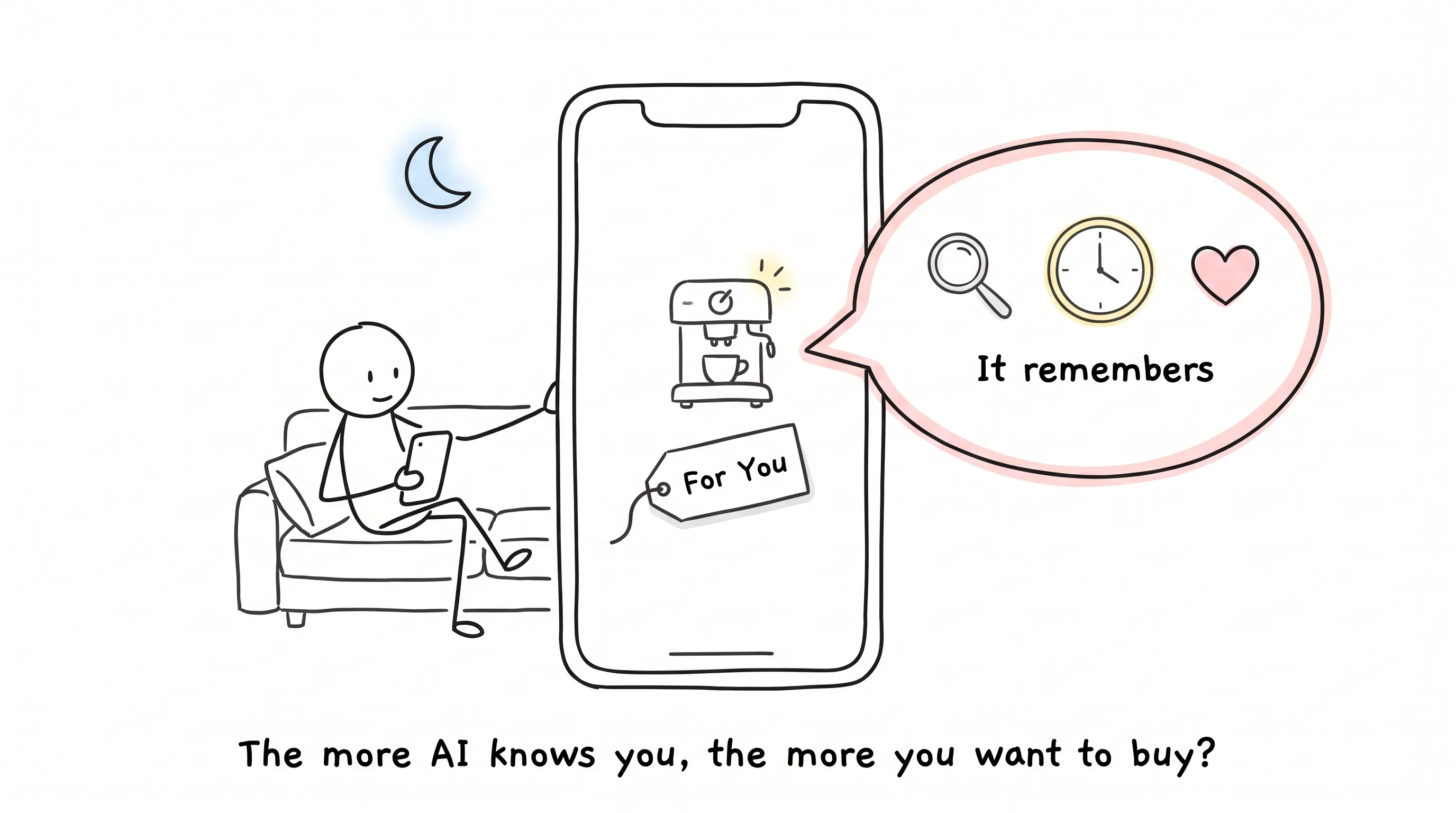
Last night, scrolling through a shopping app before bed, I found the very first recommendation on my home page was the coffee machine I had casually mentioned to a friend that afternoon.
I froze for three seconds.
I never told it. But I had searched for it, compared prices, and lingered forty seconds on one page. It remembered every one of those moves.
Honestly, my feelings were mixed. Half of me thought, "Wow, it really gets me." The other half thought, "Wait — you remembered all that?"
You've probably had a moment like this too.
So here's the question: the more AI knows you, the more you want to buy?
That's not something to settle by gut feeling. In mid-2025, a research team ran a rigorous survey: they recruited 388 people who habitually shop on digital platforms, and used a questionnaire plus statistical modeling to measure this whole chain from end to end.
Let me put the conclusion up front: yes. And the answer is more interesting than you'd think.
What Is AI Personalization, Anyway?
First, the plain-language version.
The woman who runs the breakfast shop downstairs remembers that you don't eat cilantro and like your soy milk lightly sweetened. Go there often enough, and she knows your tastes better than you do.
AI does exactly the same thing, just at a completely different scale. Every move you make online — what you searched, how long you looked, whether you liked, whether you commented — leaves a trace. The traces are massive, fast, and endlessly varied.
No breakfast-shop owner can remember a million customers. AI can.
And what does it do with all that? Guess what you'll want to buy next, then put it right in front of you.
How Big Is This? Let's Run the Numbers
McKinsey once went through 400 AI use cases on the market, spanning 19 industries and 9 business functions, and found that marketing and sales are among the areas with the greatest value potential.
Marketers moved even faster. In Salesforce's 2021 survey, 71% of marketers were already using AI; by 2023, that number had climbed to 87%.
The returns are real, too. One study ran the numbers: done well, personalization can lift revenue by 5% to 15% and boost the efficiency of a single marketing channel by 10% to 30%.
Personalization isn't a nice-to-have. It's real money.
Numbers alone are dull, so let me tell you about three things that stuck with me.
The first is about speed. Amazon built a drone delivery service called Prime Air that gets a package into your hands within 30 minutes. The drone checks the weather by itself and picks its own route. Order in the morning, and by afternoon it's already hovering near your home.
The second is about "goods moving before you've bought." A clothing-subscription platform called Stitch Fix uses AI to guess what each person wants, assembles a box of outfits, and ships it over — keep what you like, return what doesn't fit. It can even get the goods moving through the logistics pipeline before you've placed an order. Every piece you return, every piece you keep, becomes fuel for a sharper guess next time.
The third is about advertising. A company called RedBalloon hands its ad placement to an AI called Albert: where the budget goes, how much, when to pull back — the machine works it all out in real time.
Impressive, right?
But everything has a flip side. Hand the whole ad operation to a machine and the people behind it feel uneasy; spend the whole journey talking to machines and, as a consumer, you're not always comfortable either. That friction is real.
What's Actually Pushing You to Place the Order?
Back to that survey of 388 people.
First, a word on the tools, so you don't think the conclusions came out of thin air. The researchers used structural equation modeling (SEM). What's that? Picture building bridges: every claim is a candidate bridge — say, "AI recommendations make people more likely to buy" — and the model presses on it with data to see whether the bridge holds. The analysis was run in a tool called SmartPLS 4.0, and the reliability of the measurement scales passed the checks too.
Four findings, each more interesting than the last.
First: AI personalization really does directly boost purchase intention — that path is significant. Incidentally, the quality of the shopping experience and the interface design of shopping apps each make direct contributions of their own. A smooth interface and a good experience quietly shape how fast you hit "Buy."
Second: guess which variable came out strongest in the whole model?
It was "the frequency of personalized interactions." A t-value of 9.0, leaving everything else in the dust.
Eye-tracking studies long ago uncovered "banner blindness": see enough ad slots and your brain airbrushes them out. So pure bombardment is useless — the harder you bombard, the more completely you vanish. What actually works is this: show up often, and be relevant every time. Personalized emails, dedicated recommendations, tailored offers — once is an interruption; ten times, each one hitting the mark, that's when it truly gets you.
Think about yourself: aren't you always placing orders at the store that "gets you" best?
That's right: frequency is familiarity, and familiarity is trust.
Marketing scholars divide the AI in marketing into three kinds: mechanical AI handles standardized work, thinking AI processes messy information to make judgments, and feeling AI reads human emotions. A recommendation system that truly gets you needs all three. And trust, especially, is steeped slowly — by the feeling AI part.
Third: why does it work? Two paths.
One is engagement. AI recommendations make you willing to click, save, and interact back and forth. The more you interact, the more attached you get, and the thought of buying surfaces naturally. The bridge through engagement is very sturdy: a t-value of 8.7.
The other is "is it worth it." In the data, the indirect effect of AI personalization on purchase intention through perceived value came out at a coefficient close to 0.999.
What does that mean? Almost the entire path has to pass through the "is it worth it" gate.
You buy when you feel what's recommended is worth it. If you feel it isn't, no amount of pushing helps.
There's also a counterintuitive detail: experience quality and interface design both make it across the engagement bridge, but neither gets through the "is it worth it" gate. Their talent is making you willing to stay and interact; when it comes to the "worth it" gate, they can't lend a direct hand.
Fourth — and this is the one that surprised me most: privacy concerns didn't hit the brakes.
This study specifically pulled out "consumers' concerns about data privacy" to test whether it would weaken the effects above. The result: in this sample, all four moderation paths showed no significant effect — the lowest p-value was still 0.105.
Huh? Don't people clutch their wallets the moment privacy comes up?
Don't jump to conclusions. Earlier experiments uncovered a "personalization paradox": with the very same personalized ads, once users discover the vendor has been secretly collecting their information, click-through rates fall off a cliff; conversely, when data collection is out in the open and trust is built in advance, most of the negative effect gets canceled out.
So the more accurate reading is: privacy isn't the everyday brake — it's the landmine at the critical moment. Silent in ordinary times, it explodes only when stepped on. These 388 people's everyday privacy concerns didn't stop them from placing orders; but that in no way means you can use people's data on the sly.
Three Takeaways for the People Doing the Work
First, treat AI personalization as the main pipeline, not a plug-in. Use machine learning and behavioral data to build one-to-one experiences — that's table stakes.
Second, instead of saving up for one big swing, go for high frequency. Let highly relevant touchpoints show up often; engagement and trust are steeped, not blasted into being.
Third, keep data collection in the open. Bank trust in advance — don't wait for the day users find out to start making it up to them.
A Final Word
As I finish writing this, I opened that shopping app again.
The recommendations have changed, but they're still exactly my taste.
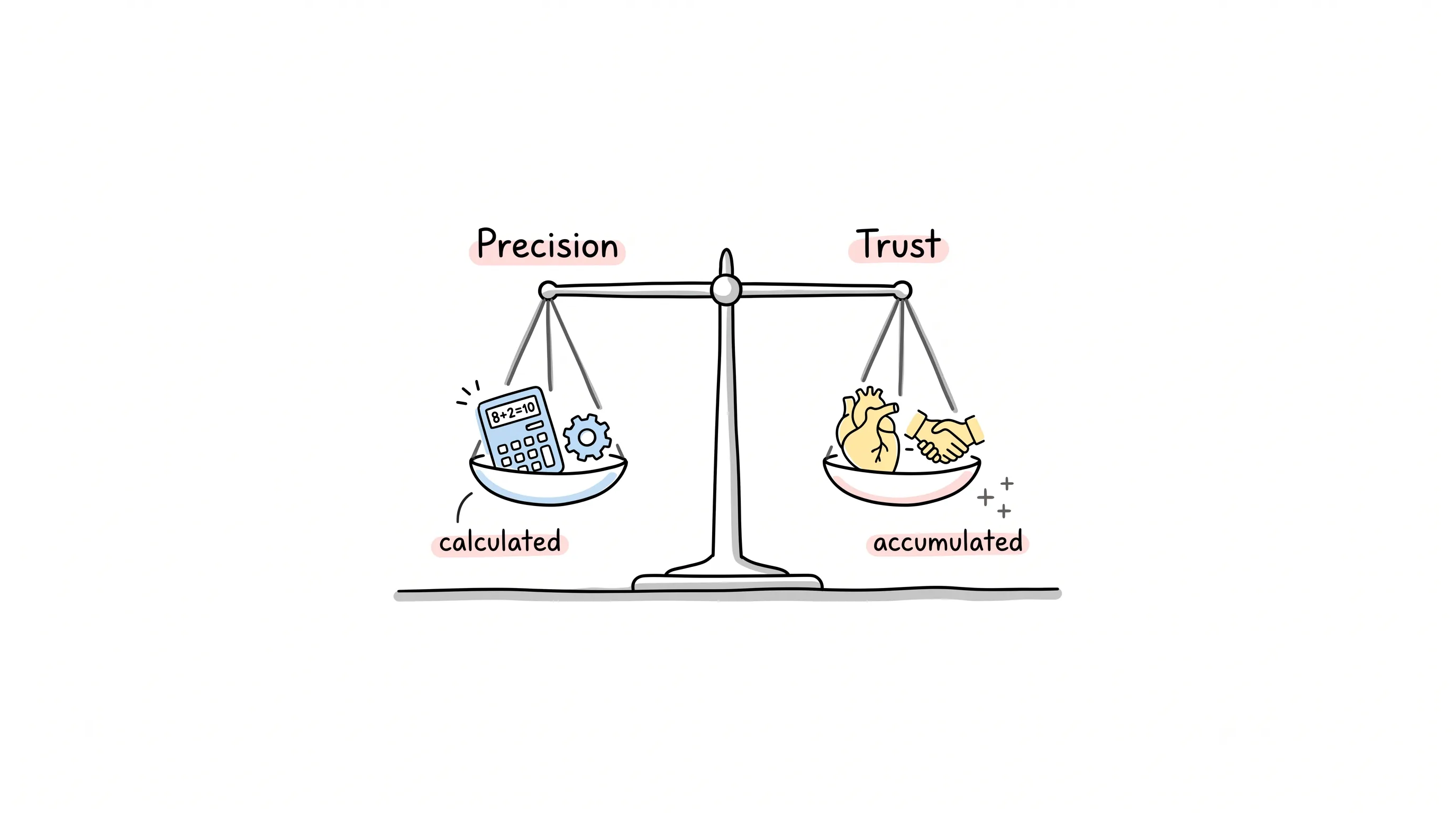
It remembers every page I browse, and I enjoy the convenience of being remembered. The balance between the two comes down to one sentence:
Precision is calculated; trust is accumulated.
Here's hoping the next time AI reads your mind, it's all delight and no dread.
Continue reading
Related articles

Cross-Border Business: Time to Upgrade Your AI Toolbox
A learn article explaining how AI tools help cross-border e-commerce sellers clear five hurdles: language, regulation, logistics, payments, and fraud. It outlines a five-compartment toolbox, a five-step adoption path, and metrics such as conversion rate and CLV, while cautioning against over-reliance on AI.

AI Is Taking Over the Dirty Work of Social Media Marketing, One Task at a Time
This learn article outlines four social media marketing tasks AI can handle — audience analytics, content drafting and design, ad targeting and creative testing, and spam moderation — and cautions that taste, judgment, and data security remain human responsibilities.

AI Is Already This Good — Why Is Your Social Media Marketing Still Pure Manpower?
An overview of 18 AI tools for social media marketing, organized into six categories covering audience research, content creation, scheduling, comment and DM handling, ad management, and visual production, plus notes on personalization, prediction, and emerging trends.