
The Man Who Built Marketing Automation Is Now the One Tearing It Down
A learn article reports that Jon Miller, co-founder of Marketo, has launched Phave, a new marketing automation platform for enterprise B2B that uses AI decision-making instead of static rules, with touchpoint sequencing and agent access via MCP.
Yesterday — September 23 — a piece of news stopped me mid-scroll.
Jon Miller, co-founder of Marketo, is back. Phave, the platform he has been quietly building for more than two years, just launched. And he's back to his old trade: marketing automation.
Interesting. The man who built this category with his own hands has come full circle to say: this road needs to be torn up and rebuilt.
What is marketing automation (MAP)?
You've heard the term. The promise was always lovely: help B2B companies find prospects in a sea of people, nurture them along the way, and turn them into orders. Fewer hands, less effort.
But.
Then it grew crooked, hardening into a rigid, rules-based system: marketing teams feed prospects onto an assembly line and blast them with emails without end, never mind how complicated B2B buying actually is.
Miller puts it bluntly: buyers changed long ago; the old generation of marketing automation hasn't moved an inch.
Buyers ran a decade ahead. The system is still standing still.
Why say that? Let's first look at what B2B buyers have actually become.
Rules Can't Handle "Ambiguity"
A quick word on who Miller is.
This isn't his first rodeo. After Marketo, he founded Engagio, an account-based marketing platform. In 2020, Engagio was sold to Demandbase. And it was during the Engagio years that he kept hearing the same complaint: the old platforms can't keep up.
Can't keep up how?
Buying decisions typically came down to one or two contacts making the call. Now it's an entire buying group deciding together; buyers do a mountain of research anonymously before revealing who they are; and marketing's job no longer ends at the sale — it runs all the way to post-sale retention.
Yet the foundation of the old systems is still the same old trio: static leads, linear campaigns, hand-built rules.
So why did everyone put up with it?
Miller sees right through it: not satisfaction, but a lack of alternatives.
Old products survive this long not because they're good, but because users have nowhere else to go.
That's why Phave doesn't patch the old platforms. Miller's team spent two years heads-down building a wholesale replacement aimed at enterprise B2B marketing organizations. By launch, it was already running marketing operations at 10 companies.
Contacts, target accounts, multi-person buying groups — in Phave, all of them are first-class citizens: each with its own intent score, each with its own buyer journey.
That's the foundation. The real dividing line is the decision engine.
What is a decision engine?
The old marketing automation playbook: a lead does X, trigger Y; score crosses a threshold, hand off to sales. Hard-coded if-else, all the way down.
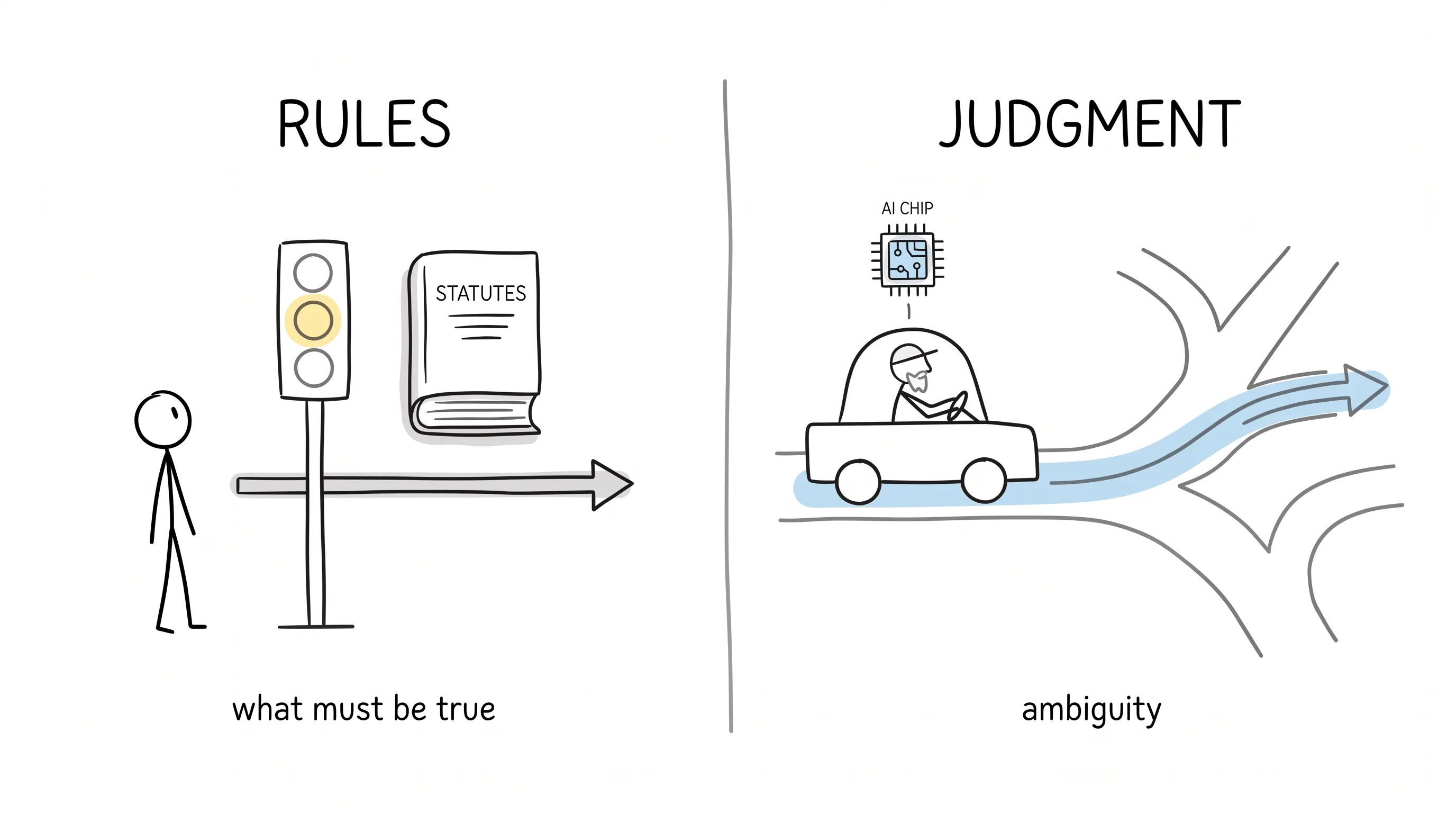
One line from Miller feels like it hits the root: rules are good at handling "what must be true," but they can't handle ambiguity, and they can't tell you which option is better. And B2B buying is precisely all ambiguity and complexity.
Think of the veteran driver you know.
Traffic law is rules — it governs everybody. But "should I yield at this intersection, when is it safest to merge" — no statute can write that down. It takes judgment.
What Phave does is put a veteran AI driver behind the wheel. When it hits a scenario no rule covers, it reads the context in front of it and works out the most sensible next move.
Campaigns Are Albums, Touchpoints Are Songs
Phave has another design I find especially clever: the playlist.
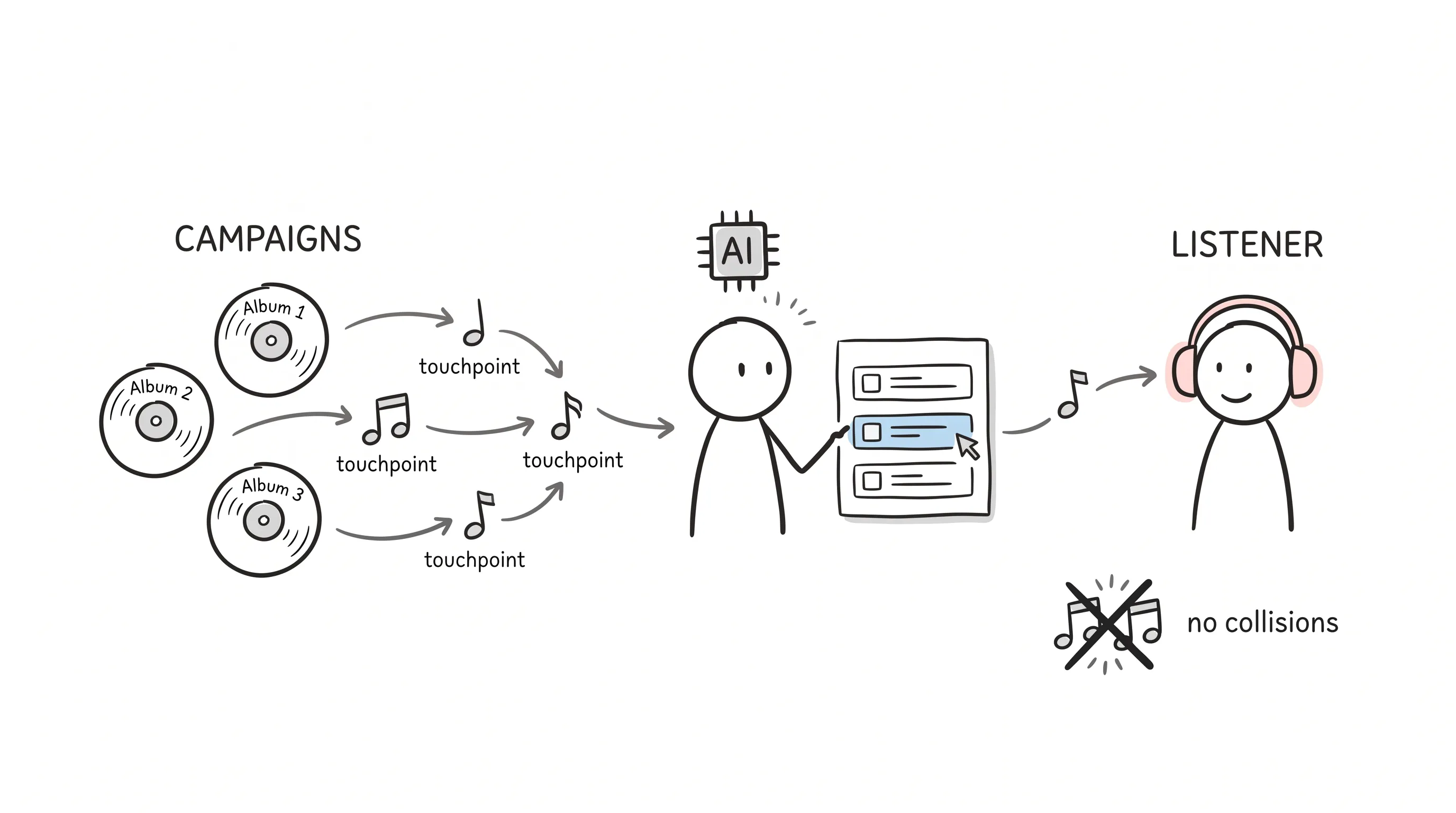
The metaphor is borrowed from music platforms. Miller explains it like this: campaigns are albums; individual touchpoints are songs. The AI doesn't compose a brand-new song for every person. It takes the songs that already exist and plays them, one by one, in the order that works best for that person.
The playlist reads context continuously, drawing on real-time data across three layers — the individual, the account, the buying group — to decide what to play next.
Say the system notices that a certain buyer always opens email on Tuesdays and never shows up to webinars. From then on, outreach adjusts itself: send email on Tuesday, stop forcing webinars on them.
The design also fixes, along the way, a chronic ailment of marketing-ops departments: collisions.
On traditional platforms, several teams each run their own campaigns and, without realizing it, keep double-bombing the same audience. Phave acts as the central dispatcher: if a high-priority product launch must reach a certain account on Wednesday, then the webinar invitation it collides with automatically slides to Friday.
In a word: no collisions.
Marketers Start Getting Work Done Through AI Agents
There's one more layer — this is the real ambition.
Phave is designed for an era in which marketers work mainly with AI agents rather than clicking through dashboards by hand every day. The platform exposes 319 tools through MCP (Model Context Protocol) — external agents and internal systems alike can call them directly and get work done.
- Not 3. Not 19.
Marketing-ops leads can also write custom "skills" for their agents: how campaigns get named, how UTM parameters are standardized, how the workflow runs — spelled out line by line. From then on, no more manually checking standards every time; agents execute straight from best practice.
Miller reveals that early customers are already building campaigns 2 to 3 times faster.
Why do I say this story is worth chewing on?
Because this isn't just another product launch. The person who built the "marketing automation" category is the one turning around to say: this old road is a dead end.
The category founder has turned his back. What are the people following behind still hesitating for?
Whoever truly reads how buyers behave today deserves the market that's being reshuffled.
Here's to Miller. And here's to every marketer who has been blasted by batch email and tormented by it too — may your own playlist arrive soon.
Continue reading
Related articles

Cross-Border Business: Time to Upgrade Your AI Toolbox
A learn article explaining how AI tools help cross-border e-commerce sellers clear five hurdles: language, regulation, logistics, payments, and fraud. It outlines a five-compartment toolbox, a five-step adoption path, and metrics such as conversion rate and CLV, while cautioning against over-reliance on AI.

AI Is Taking Over the Dirty Work of Social Media Marketing, One Task at a Time
This learn article outlines four social media marketing tasks AI can handle — audience analytics, content drafting and design, ad targeting and creative testing, and spam moderation — and cautions that taste, judgment, and data security remain human responsibilities.

AI Is Already This Good — Why Is Your Social Media Marketing Still Pure Manpower?
An overview of 18 AI tools for social media marketing, organized into six categories covering audience research, content creation, scheduling, comment and DM handling, ad management, and visual production, plus notes on personalization, prediction, and emerging trends.