
The EU Wants to Pass the Digital Fairness Act: This Time, the Fines Bite Where It Hurts
This article explains the EU's proposed Digital Fairness Act, which targets deceptive interfaces, undisclosed influencer marketing, and addictive design, with fines of up to 6% of global annual turnover. It also notes scrutiny of AI-generated content in influencer marketing.
On November 11, the European Commission put forward a new proposal with a refreshingly blunt name: the Digital Fairness Act.
I had to smile when I read it. What it's going after this time is something every one of us has been put through: tricks.
What do I mean by tricks?
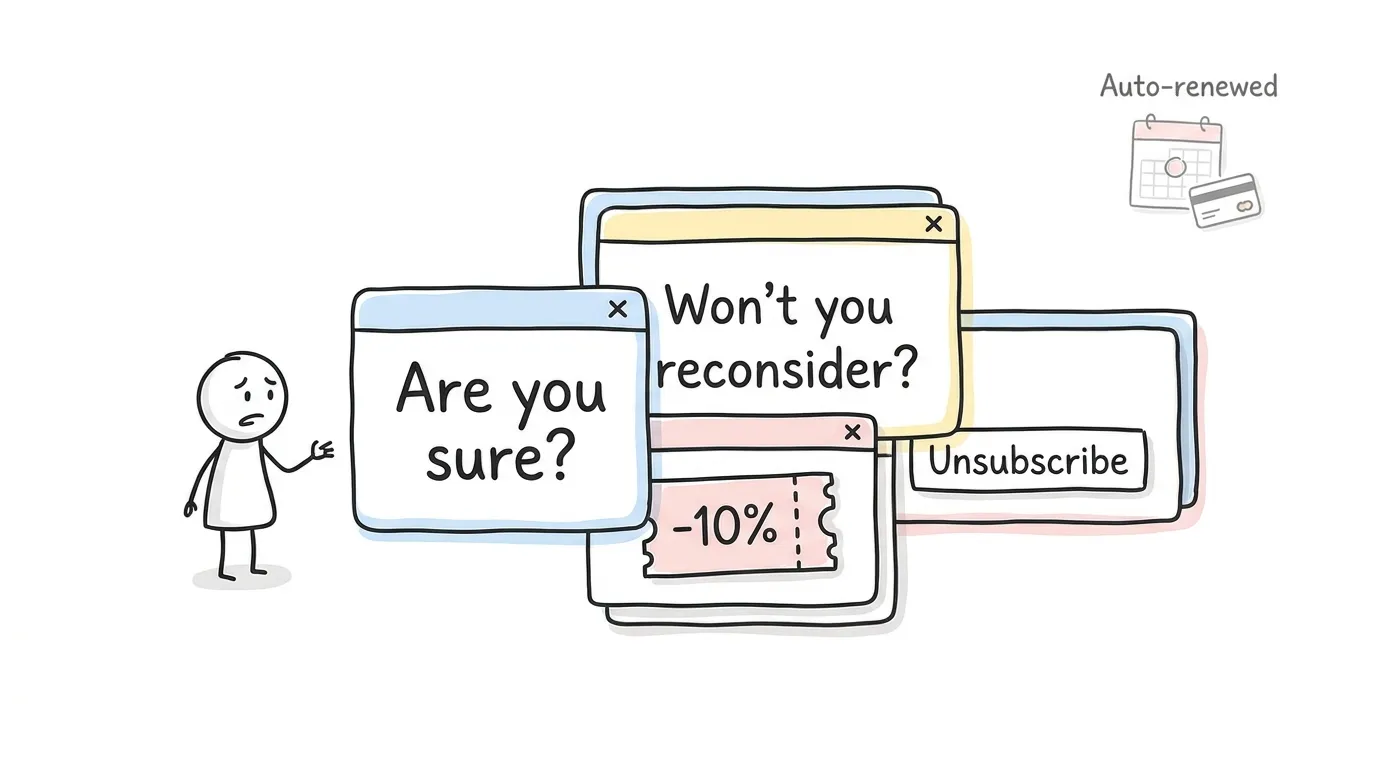
You want to cancel a subscription. The "unsubscribe" link is buried deeper than clues in an escape room. When you finally click your way in, a pop-up asks, "Are you sure you want to leave?" Then another: "Won't you reconsider?" — and while it's at it, slips you a discount coupon. Five clicks back and forth, you're fed up, you give up. Next month, the charge hits your card again.
Or take the "7-day free trial" you claimed. On day 8, auto-renewal kicks in — silently. By the time you spot it on your bill, three months have gone by.
These deliberately engineered interfaces, built to catch you the moment you slip up, have a name: deceptive design.
Put simply, it pits the product's goals against the user's interests. Your time, your money, your attention — all of it is just KPI to them.
Alright — enter the star of the show.
This proposal takes aim squarely at all of that. And it doesn't stop at one thing — it calls out three by name:
First, deceptive interfaces. The ones described above.
Second, influencer marketing. That "authentic review from a regular user" in your feed may well be a paid placement; the person raving about the product has taken the sponsor's money. Selling things is fine. Misleading people is not.
Third, addictive design. The kind you can't stop scrolling. You think "just one more" is your own decision; in fact, it's the tuned output of hundreds of engineers.
Oh, and AI. One detail from the proposal's illustrations stuck with me: a designer retouching an AI-generated model photo on a computer. The model's name is Aitana Lopez — not a real person, but something AI made up. AI content plus influencer marketing, layered on top of each other: the EU is clearly already wary of how deep these murky waters go.
So what happens if you get caught?
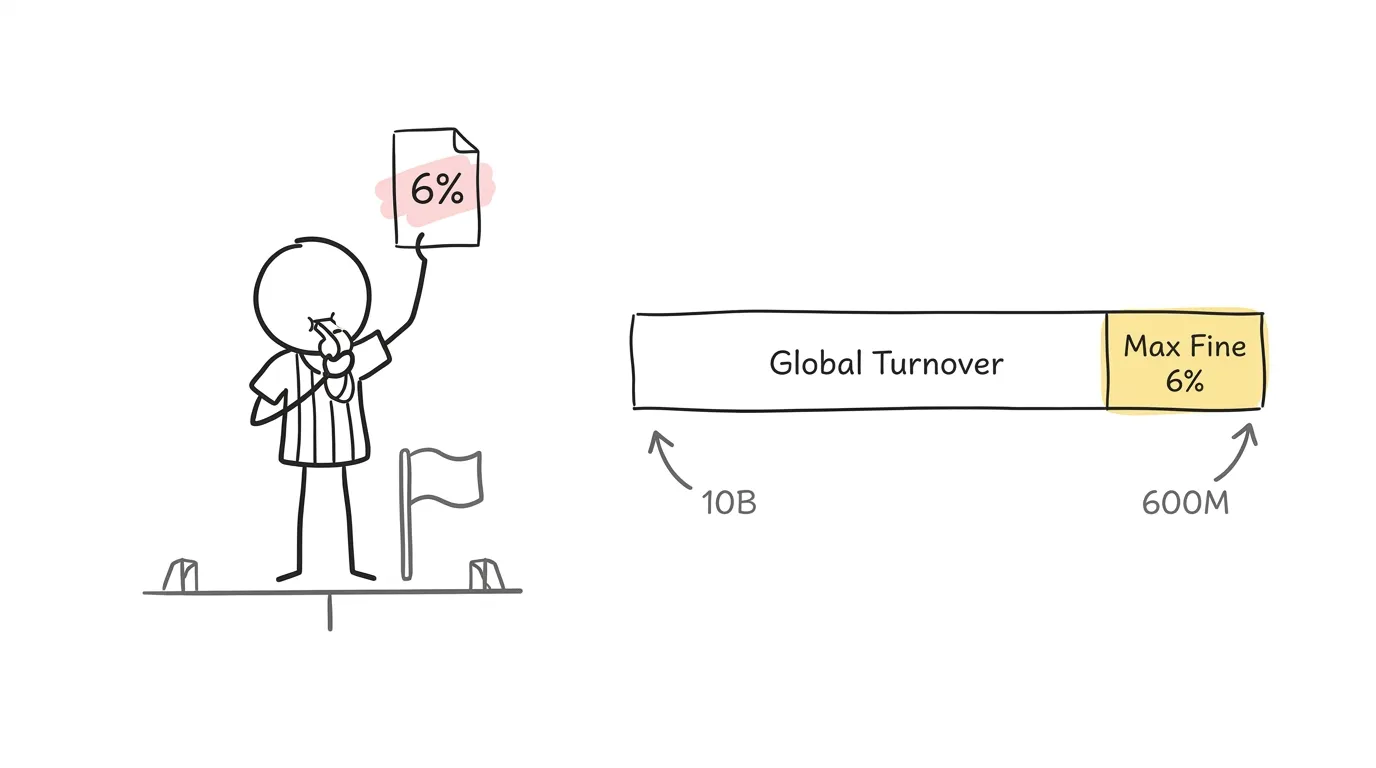
Fines. How high can they go? 6% of global annual turnover.
Let's do the math. For a company with 10 billion in global annual revenue, the ceiling on the fine is 600 million. And note: the base is global turnover, not just the slice you earn in Europe. Wherever you do business, that's what gets counted.
It's still a proposal — there's a way to go before it takes effect, and the implementing details still have to be worked out. But the direction is crystal clear: any business that makes money off human weaknesses had better think twice.
My take: this is good news for people who build products the honest way.
Think about it: competitors who profit from tricks are, at heart, cheating. You work hard polishing your product; they work hard studying how to make you click the wrong button. Now the referee has stepped onto the field: cheaters get fined 6%.
Tricks earn quick money; the Act collects the debt, slowly but surely. Sooner or later, the bill comes due.
So if you build products, do marketing, and your business reaches Europe, this proposal is worth pulling up and reading right now. Don't wait for the fine notice to land on your desk before it becomes your first briefing document.
May every "Buy Now" button you design have a clear conscience.
Continue reading
Related articles

It's 2026: Stop "Buying" AI Tools for Your Marketing Team — Start "Hiring" AI Agents
This learn article explains how AI agents differ from standalone AI tools in marketing, outlines three agent categories — build-your-own platforms, CRM-native agents, and vertical tools — and covers use cases across SEO, social media, advertising, and reporting, plus criteria for choosing one.

Did the Money You Spent on AI Marketing Ever Come Back?
A guide to measuring AI marketing ROI across three layers: ad reports, sales pipeline, and the financial ledger. Covers metrics such as ROAS and CPA, eight dashboard metrics, industry benchmarks, and common measurement mistakes.

How to Pick a Creative Automation Platform: First, Figure Out What These Eleven Actually Do
A learn article sorts eleven creative automation platforms — including Bannerflow, Celtra, Smartly.io, and Storyteq — into four functional groups and proposes five evaluation questions covering publishing reach, automation depth, ease of adoption, team fit, and verifiable evidence.