
The Email Is Sent — and the Test Is Just Beginning
Commentary on Claritas's Email Advantage launch: an AI tool for acquisition emails that tests in small batches, adjusts audiences and subject lines mid-campaign, measures incremental revenue via holdout groups and attribution, and reuses identity-resolved audiences across email, digital ads, and social.
A few days ago, a product launch stopped me mid-scroll.
Claritas has launched a new product called Email Advantage, built specifically for acquisition emails — emails designed to bring brand-new customers in the door. What it does, in one sentence: the email is sent, and the test is just beginning.
What does "the test is just beginning" mean?
Let's first look at how most acquisition emails are done.
One subject line. Sent to everyone. Then let fate decide.
A million emails go out. The data comes back. A review meeting is held: next subject line, send again. Meeting adjourned. The test is over, and so is the campaign. It's like turning in an exam, only to get the answers afterward — and then be told there's another exam next week.
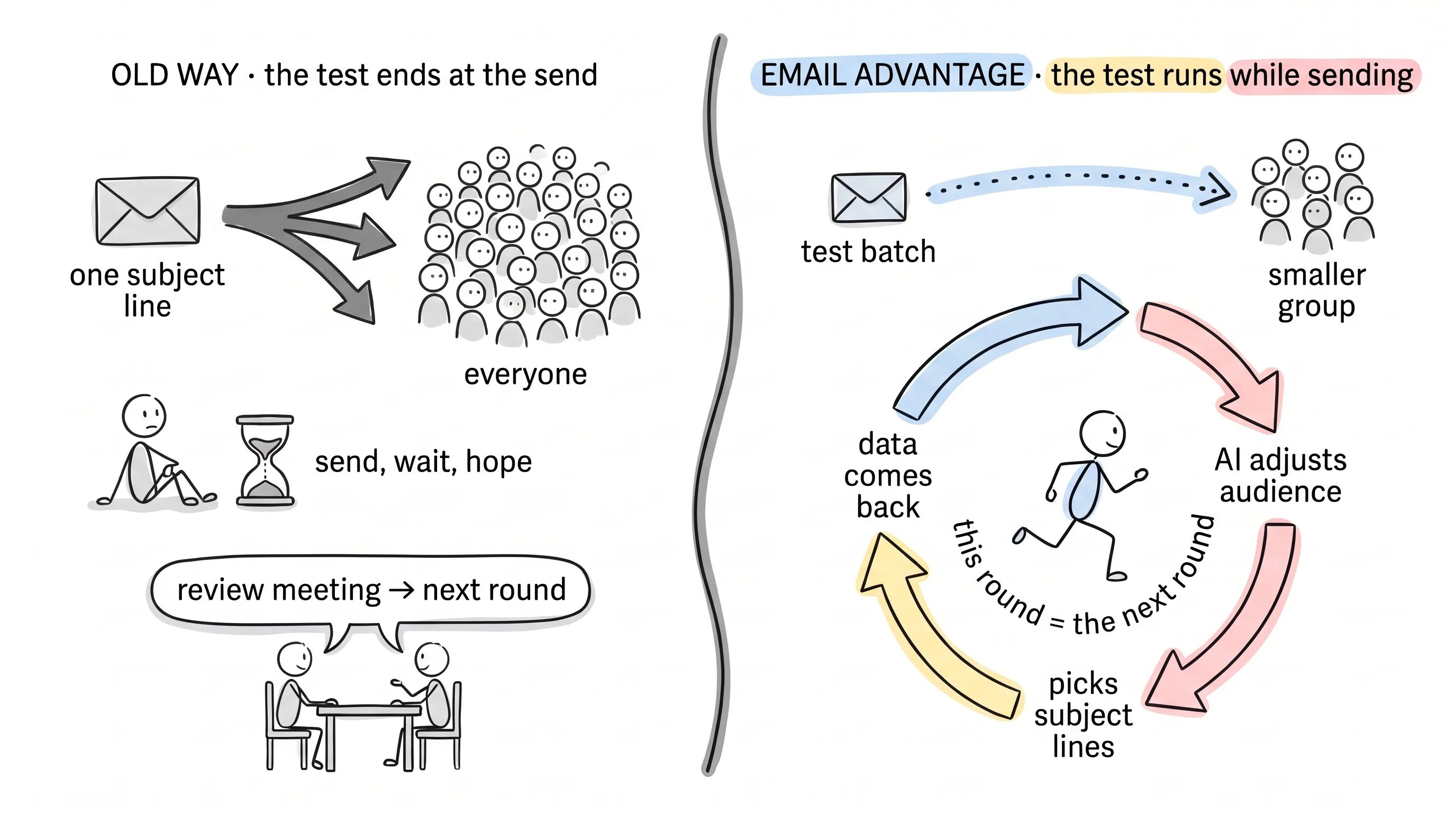
Claritas does the opposite.
The answers are already on the way before the email is even done sending.
What Does "Learning While Running" Mean?
Email Advantage's approach: start with small-scale structured tests. Send a batch, look at the data, then decide who gets the next batch. Across the whole campaign, the audience keeps changing — and getting more precise.
Subject line testing works the same way. It doesn't pick one champion for the whole audience. Whichever segment responds to a given subject line gets that subject line. That's strong.
Quinn Jalli, Claritas's Senior Vice President of Email and Digital Products, says they've seen too many acquisition email programs that lock in a subject line at the start and never touch it again until the send is done. Email Advantage's approach is to keep the whole campaign learning — match the right subject line to the right people, and as conversion data comes in, keep refining the targeting.
So what does this AI actually do? Two things. It adjusts the audience. It picks the subject lines. By the time this round of sending finishes, the work is done too.
Most marketing tools I've seen compete on who "sends most accurately." This product competes on who "adapts fastest." The moment the data comes back, the system moves. This round is the next round.
The Real Math Is the Increment
So how do you know it actually works?
This is the part I most want to praise. It sets open rates and click counts aside and settles a harder account first: how much real, hard-cash new business did these real-time adjustments actually bring in?
To do that, Claritas uses two tools.
One is a holdout control group. Leave some people untouched, then compare them with the people who received the optimized treatment. That way you can see: when an email brings in 1,000 orders, how many of those orders are the extra ones the system's live adjustments created?
The other is attribution. Which touchpoints did a buyer touch before buying, and how much credit does each one get? All counted.
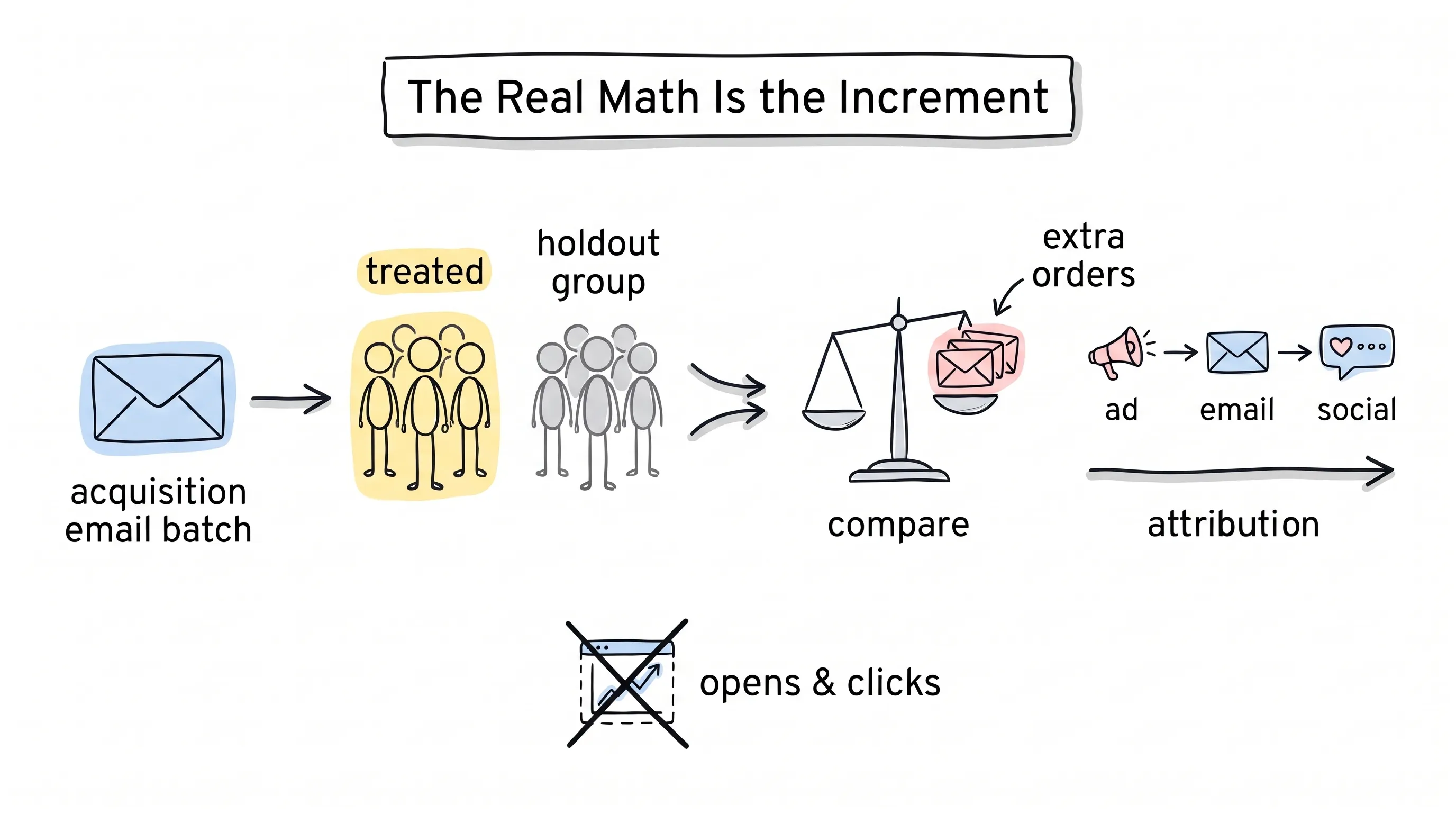
Trust me — this is the only way the math gets done. That's strong!
The Same People, Moving Across Channels
There's one more layer.
Claritas also wants to take that same set of people onto digital ads and social media.
How? Identity. Claritas builds its audiences with its own Identity Graph and email-to-consumer identity resolution, and only makes judgments on high-confidence matches. Meaning: first confirm that the person sitting behind that email address is really who you think it is — then talk about sending.
Your one set of people — every email you send recognizes the same identity. Why? Because you have one customer, and he has one identity. Email, digital, social — all the same identity.
Jalli says email is one of the most direct ways to reach a potential customer, but it only delivers its full value when it's part of a larger chessboard. So marketers can use the same audience across email, digital, and social, and through cross-channel attribution see exactly how much each touchpoint contributed.
And once new data or engagement signals appear, automated triggers make email and digital ads move together. Meaning: the moment something stirs on one channel, the other channel can follow.
Moving the Test from the Finish Line to the Road
Your day used to go like this: test, get results, review meeting, next round.
Outside the boundary, everything is just resources; inside the boundary, all resources become movable. This product moves the "boundary" from the next round to this one.
With "running on the road," it becomes: watch the data, move the system, and keep the cash coming in as you run.
The next morning you open the campaign dashboard. The report is still there, but you now have one more thing: knowing where to make the next cut.
My original idea, like most people's, was: an A/B test should settle it in one shot. After seeing this product, I've taken that idea back.
What about you?
And here's my wish for you: every time you send an email from now on, you never have to wait for the next round.
Continue reading
Related articles

It's 2026: Stop "Buying" AI Tools for Your Marketing Team — Start "Hiring" AI Agents
This learn article explains how AI agents differ from standalone AI tools in marketing, outlines three agent categories — build-your-own platforms, CRM-native agents, and vertical tools — and covers use cases across SEO, social media, advertising, and reporting, plus criteria for choosing one.

Did the Money You Spent on AI Marketing Ever Come Back?
A guide to measuring AI marketing ROI across three layers: ad reports, sales pipeline, and the financial ledger. Covers metrics such as ROAS and CPA, eight dashboard metrics, industry benchmarks, and common measurement mistakes.

How to Pick a Creative Automation Platform: First, Figure Out What These Eleven Actually Do
A learn article sorts eleven creative automation platforms — including Bannerflow, Celtra, Smartly.io, and Storyteq — into four functional groups and proposes five evaluation questions covering publishing reach, automation depth, ease of adoption, team fit, and verifiable evidence.