
Only Three in Ten Marketers Can Honestly Say Their Creativity Is Consistent
A summary of the WFA and LIONS 'Clients and Creativity 2026' report, which surveyed senior multinational marketers on creative excellence and AI adoption. It covers barriers such as short-termism, adoption of systematization and early agency involvement, and current AI use cases in creative work.
The other day I was flipping through an industry report when a set of numbers stopped me cold. I stared at the screen for a few seconds.
The World Federation of Advertisers (WFA) and LIONS released a joint report this year, titled Clients and Creativity 2026. It surveyed more than 160 senior marketers, covering 86 brands across 26 industries — behind them sits $141 billion in annual global advertising spend.
A big sample. A heavy one.
And the result?
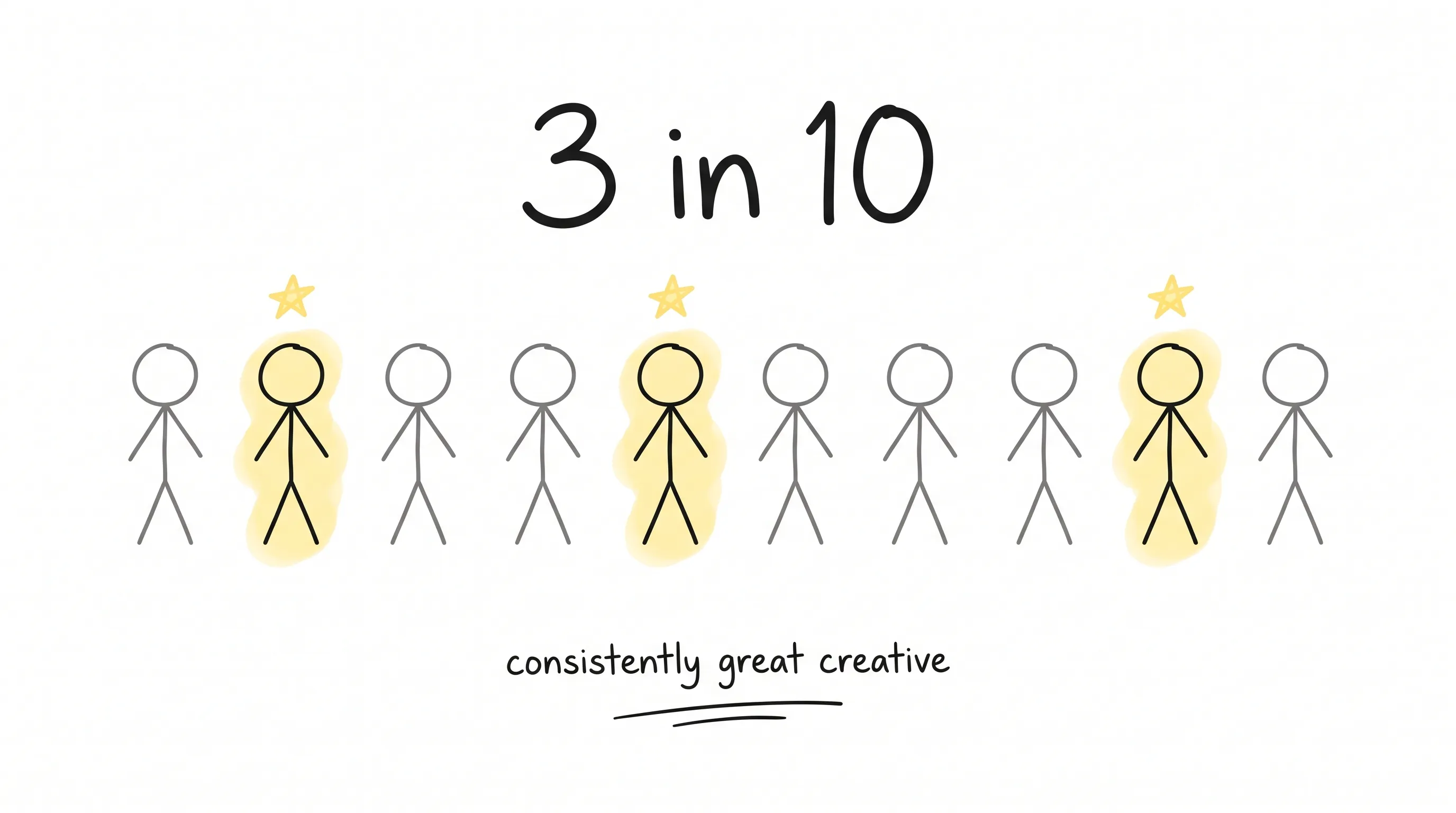
Only three in ten of the multinational marketers surveyed dared to say: our team consistently and reliably delivers excellent creative.
Three out of ten.
So what about the other seven? Is their creativity riding on luck, on flashes of inspiration, or on the odd project that suddenly catches fire?
Nobody can say for sure. Not even them.
What Is Creative Excellence?
What is creative excellence?
Simply put: the ads, content, and campaigns you produce are simply better than your peers'. And not better once — better, all the time.
That should be a marketer's lifeline, right?
But here's the thing. 53% say they value creative excellence. They value it — yet once it lands on individual teams, priorities turn patchy. Some teams treat it as the number one job; others keep pushing it down the list until it drops off entirely.
And here's the part that stings more. WFA's successive surveys all point to the same finding: for many CMOs, creative excellence doesn't even crack the top three of the priority list. Some brands admit outright that they're still figuring out how to define creative excellence in the first place.
If you haven't even defined it, on what basis do you demand consistent delivery from your teams?
Three Roadblocks
So what's standing in the way?
The report lists several barriers. Let me read you three numbers.
68% — short-termism. This month needs sales, this quarter needs conversions, so creative work — slow to show results, hard to quantify — naturally gets pushed to the back of the queue.
45% — fear of risk. Bold creative comes with a built-in "what if it flops?" So people would rather settle for the mediocre-but-safe option.
37% — not enough money. Building creative capability takes people, time, and budget. And budget is always tight.
Three numbers, blocking the road to "consistent delivery" for seven out of ten people.
The Prescription Was Written, but Only Half Was Taken
Here's the interesting part: it's not that people don't know how to fix this.
63% of multinational companies are already exploring new ways of working and new processes to lift their creative output. And the direction is strikingly consistent — just two paths:
One is systematization. Use templates and processes to align marketing teams across dozens of markets, so good practices can be replicated. 63% chose this path.
The other is bringing agencies in early. 57% of brands want creative partners involved from the early stages of campaign development, rather than handing in homework at the very end.
There's consensus on direction. But how far has it actually been put into practice?
Only 48% of companies have written creative excellence into their global marketing capability-building systems. Only 44% dare to say the belief in creative excellence has permeated the whole marketing organization.
Half the medicine is still sitting in the box.
Everyone at Cannes Was Talking AI. Only 35% Are Getting Results from It
At this June's Cannes Lions International Festival of Creativity, the hottest topic in the room was AI.
It's the most electric week in the global advertising world — who wouldn't want to talk about the future?
But the data is cold.
While everyone was discussing how AI will unleash creative productivity, only 35% of respondents are actually using AI to improve creative effectiveness. Note: effectiveness, not just efficiency.
And there's a harsher line: "Our current use of AI prioritizes efficiency over effectiveness." Only 13% disagreed with that statement.
Which means nearly nine in ten effectively admitted: we use AI mainly to save money.
WFA CEO Stephan Loerke put it bluntly: everyone says AI can lift creativity, and creativity is indeed the proof of marketing effectiveness — but before you look at AI, you have to look at the whole process first. Technology will keep evolving; what really matters right now is how CMOs build a culture of creative effectiveness inside their organizations, rather than taking AI and running scattered pilots at isolated points along the creative process.
Put simply: Don't rush to ask what AI can do. First get clear on what you want AI to do.
So has everyone gotten clear on it?
No.
Only 11% of organizations have an agreed AI vision or action plan. The biggest group, 39%, is still working on it. The remaining 57% are more blunt: they toss the problem to their agencies — you sort it out for me, and while you're at it, prove where AI is actually worth it.
11%, 39%, 57%. Add them up and you still don't get a tidy answer.
AI Is Sitting on the Bench Right Now
So where has AI actually earned a foothold in creative work?
The report names three: concept testing, 55%; idea generation, 52%. And 47% use it to analyze consumer data and mine new insights.
Notice anything? All three are "support" roles. AI is still on the bench, doing warm-ups, fetching balls, handing out water.
Yet the expectations were anything but low.
74% believe AI can help us measure the business impact of creativity. That's the perennial headache of the marketing world: how much business does creative actually drive? Nobody can quite say. 38% are already doing it. And 78% believe building their teams' AI capability is the key to creative excellence in the future.
Expectations say All-Star. Reality says bench player.
And in between sits another worry. 58% of surveyed marketers fear the same thing: creative homogenization. The report has a phrase for it — "a sea of creative sameness." Everyone uses similar models, similar prompts, similar data, and ends up producing similar ideas. Every brand starts to look the same.
At that point, what reason does a consumer have to remember you?
The Boss's Optimism Is the New Risk
There's another set of numbers that made me draw a sharp breath.
64% of marketers say senior leadership's expectations of the money AI will save are optimistic to a fault. 61% say those inflated expectations are pulling everyone's attention away from marketing effectiveness.
Picture this scenario:
You're the CMO of a multinational company. The boss slams the table: AI is this powerful, so next year the marketing budget gets cut 30% — and output had better not drop. What do you do?
You have no choice but to force AI down the cost-cutting road. Creative effectiveness? That can wait. And so creative excellence — a priority that couldn't crack the top three to begin with — gets pushed even further out of sight.
The moment AI gets treated as a cost-cutting tool, it's doomed to never produce great creative.
The Ones Who've Cracked It
So has anyone actually figured it out?
Yes.
LIONS Chief Content Officer Paul Kemp-Robertson offered one example: AB InBev, Budweiser's parent company, has now been named Creative Marketer of the Year at Cannes for the third time.
Note: the third time.
Why them again? Kemp-Robertson says it's because they finished the grunt work early: systematizing creative so it can be replicated and scaled; using measurement to link creative to growth; being willing to spend real money on talent and skills; and only then, giving AI a role.
What role? The supporting spot that amplifies the work — not the driver's seat that makes decisions for you.
First the system, first the talent, first the measurement — AI comes last.
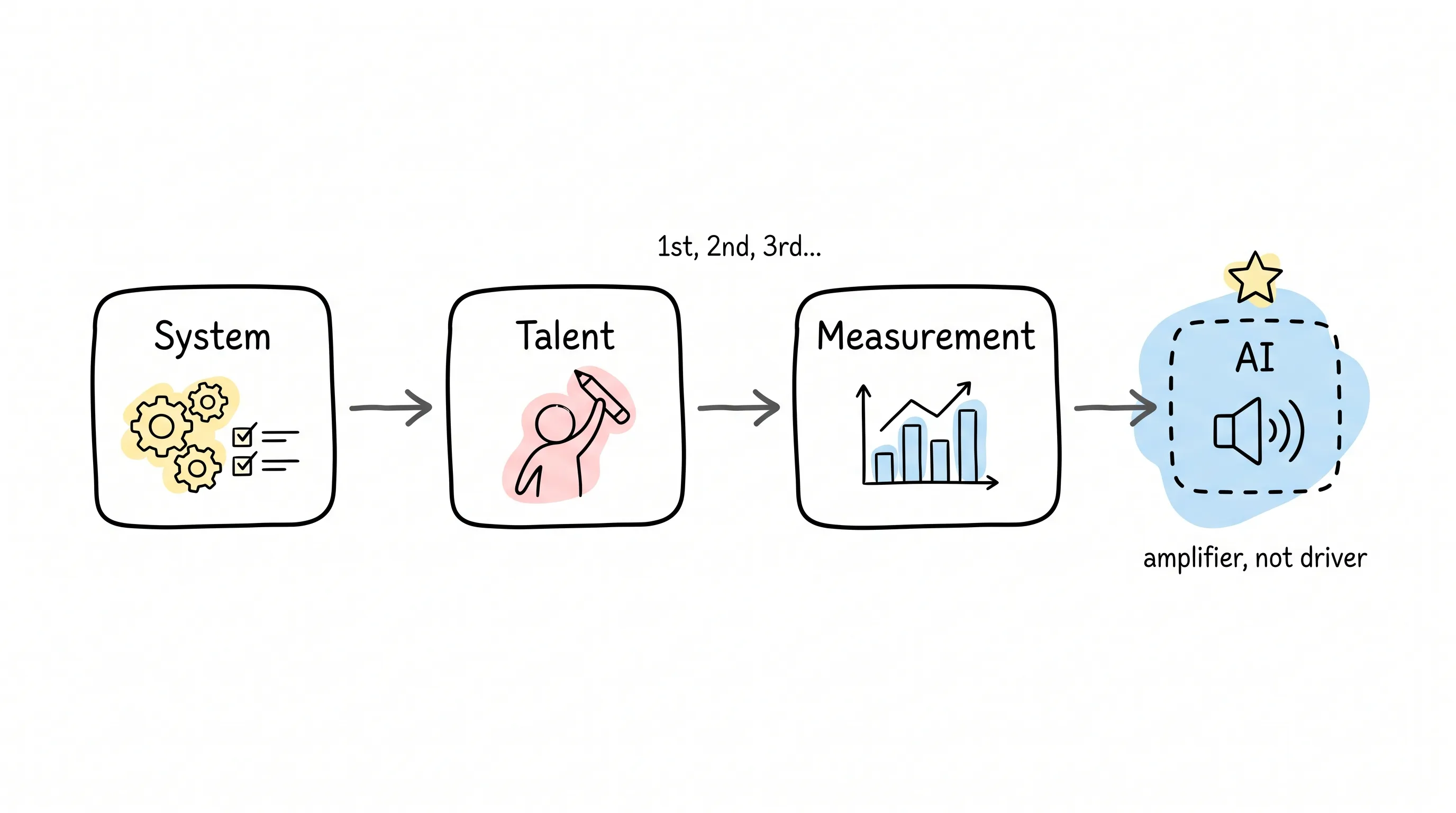
That order cannot be shuffled. Not one step.
Finally
Back to that report from the beginning.
$141 billion in ad spend, 160-plus executives, 86 brands — and when you boil it all down, the question is just one line: creative excellence — do you want it or not?
If you want it, don't just say it. Define it, rank it in your priorities, build the system, invest in talent, and let measurement do the talking. AI is powerful — but in this endeavor, it's an amplifier.
And an amplifier cannot amplify what you never had.
Here's hoping you're one of the three in ten. Consistent creative, and the confidence that comes with it.
Continue reading
Related articles

Cross-Border Business: Time to Upgrade Your AI Toolbox
A learn article explaining how AI tools help cross-border e-commerce sellers clear five hurdles: language, regulation, logistics, payments, and fraud. It outlines a five-compartment toolbox, a five-step adoption path, and metrics such as conversion rate and CLV, while cautioning against over-reliance on AI.

AI Is Taking Over the Dirty Work of Social Media Marketing, One Task at a Time
This learn article outlines four social media marketing tasks AI can handle — audience analytics, content drafting and design, ad targeting and creative testing, and spam moderation — and cautions that taste, judgment, and data security remain human responsibilities.

AI Is Already This Good — Why Is Your Social Media Marketing Still Pure Manpower?
An overview of 18 AI tools for social media marketing, organized into six categories covering audience research, content creation, scheduling, comment and DM handling, ad management, and visual production, plus notes on personalization, prediction, and emerging trends.