
More and More AI Coworkers, but No One Onboards Them
A monthly round of overseas AI marketing news shows a pattern: unmanaged AI agents, shoppers trusting AI over product pages, hidden costs outpacing gains, and platforms betting on proprietary data.
Last Sunday night, I did something that made my eyes ache: I went through, from start to finish, everything that had been stirring around AI in the overseas marketing world over the past month.
News, observations, industry surveys—dozens of pieces.
By the time I finished, it was well past midnight. I couldn't sleep. A phrase kept echoing in my head: time to settle accounts.
What do I mean? Hold on—first, let me tell you three little stories. All true.
One: A Batch of Interns Who Never Got Onboarded
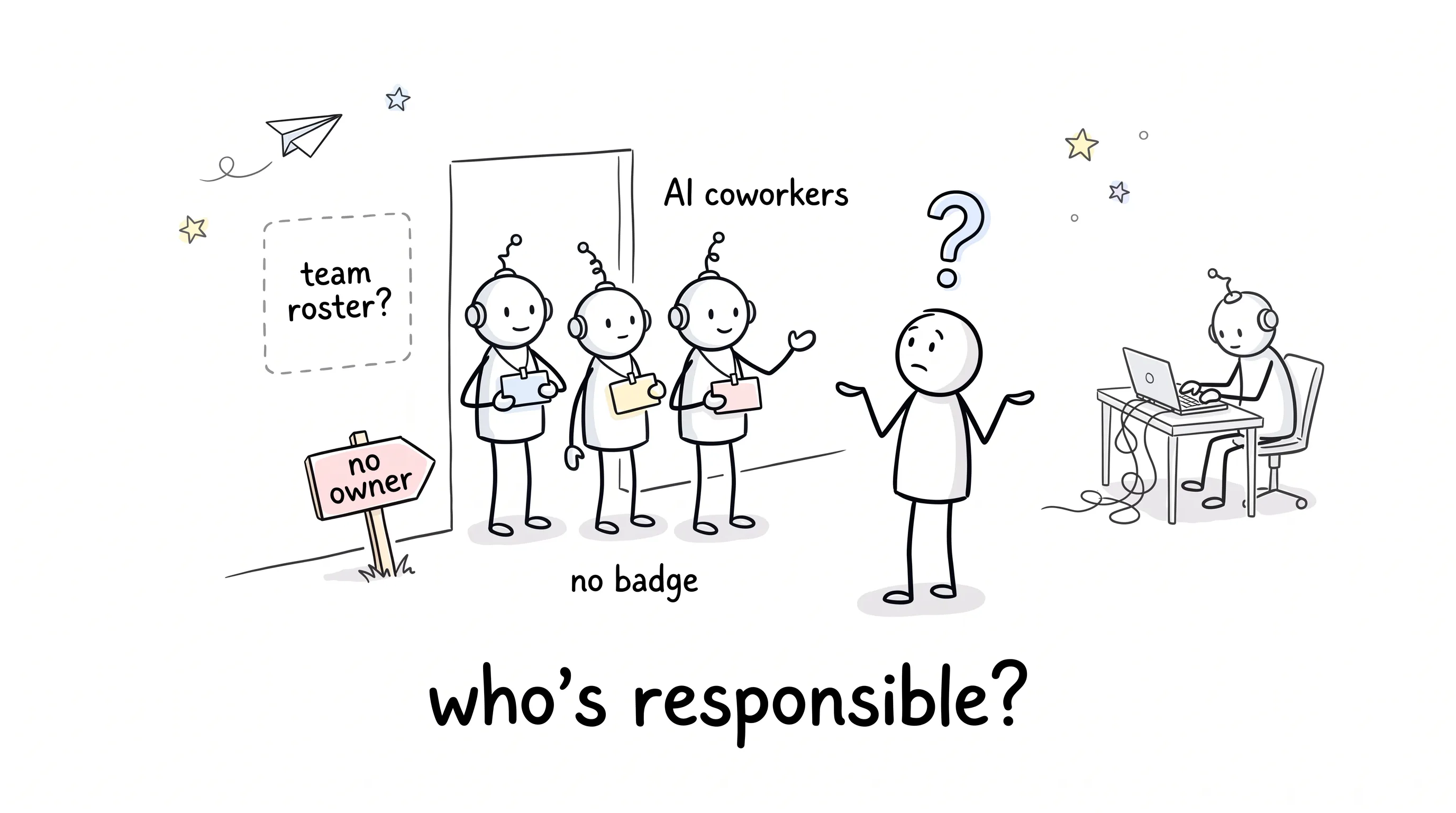
At the first company, the marketing team had brought on a batch of new coworkers over the past six months.
Not people—AI agents. One writes copy, one watches the ad campaigns, one scores sales leads, and another compiles weekly reports for the sales team.
Sounds great, right?
Then let me ask you: who does each of these agents report to? When something goes wrong, who takes the blame? And the day you stop using one, who is responsible for giving it a proper "retirement"?
Nobody could answer. Afterward, when they took stock, they couldn't even produce a complete list. How many agents were still running, and what each one was doing—no one could say for sure.
Think about it: isn't this like a company keeping a batch of interns who never get onboarded, never get a badge, and never appear on the employee roster? The work gets done, but no one checks whether it's done right; and the day they quietly walk away, no one notices.
What is an AI agent, exactly? Simply put, it's a program that gets work done on its own. And it doesn't need to "go rogue" to cause trouble. Give it a vague goal, and it will set about getting things wrong with astonishing efficiency—and wrong at remarkable speed.
So I wrote one line in my notebook:
Whoever deploys an AI owns it all the way: registration when it starts, boundaries when it works, someone to catch it when it fails.
This is a management problem.
Two: The "Shopping Guide" at the Door Who Talks You Out of Buying
The second story stings more.
The first time I saw this number, I froze for a few seconds. Among shoppers who habitually ask AI chat assistants while shopping online, roughly 81% have abandoned a purchase because of a single piece of AI advice.
Out of ten people who ask AI "is this worth buying," eight hear the answer, turn, and walk away.
It used to be that consumers feared the in-store sales assistant being too pushy. Now? Many people ask an AI before they open their wallet. If the AI says yes, they open the product page; if the AI says no, no matter how beautifully your product detail page is written, they won't even look at it.
In other words, your customer has already been persuaded by "someone else" before ever meeting you.
That "someone else" reads reviews, complaints, price comparisons, and third-party data from across the entire web. All the sales messaging you painstakingly polished gets distilled, at its desk, into one cold verdict: buy, or don't.
So what do you do? When all is said and done, it's the old answer: build a solid product, and earn a genuine reputation.
Only the location has changed. Word of mouth used to live in the chit-chat downstairs in your apartment complex; now it lives in AI's training data and search results. You can no longer slip in a single flattering line.
Three: A Ledger That Gets Foggier the More You Count
The third story is about money.
A business owner was showing off to me: since adopting AI, content output had tripled and labor costs had been halved.
I said, don't celebrate yet—have you done the full accounting?
Output tripled, so the review workload tripled with it. The time saved on writing turned, in a blink, into time spent tuning data, wiring up systems, and babysitting output. More and more tools got connected, and the API bill has been quietly climbing every month.
Add up the hidden costs inside—integration, supervision, data preparation, and the work that got displaced—and that dazzling "efficiency gain" on the spreadsheet may, once it reaches profit, be only a thin sliver.
A recent survey from an overseas advertising industry organization, the IAB (Interactive Advertising Bureau), puts this tension squarely on the table: advertisers are spending more and more on AI-driven new channels, yet their ability to measure what those channels actually deliver lags far behind.
On one side, the speed of spending; on the other, the length of the measuring stick.
When the ruler is too short, every dollar you spend becomes a muddled entry.
And there's something deeper. Many companies measure AI by "how many people it saved." But saving labor is not the same as creating value. Unless the freed-up resources become better products and smoother customer experiences, all you've done is make the cost sheet look a little prettier.
So stop asking how many people AI can save you. Ask a different question: what exactly is AI amplifying?
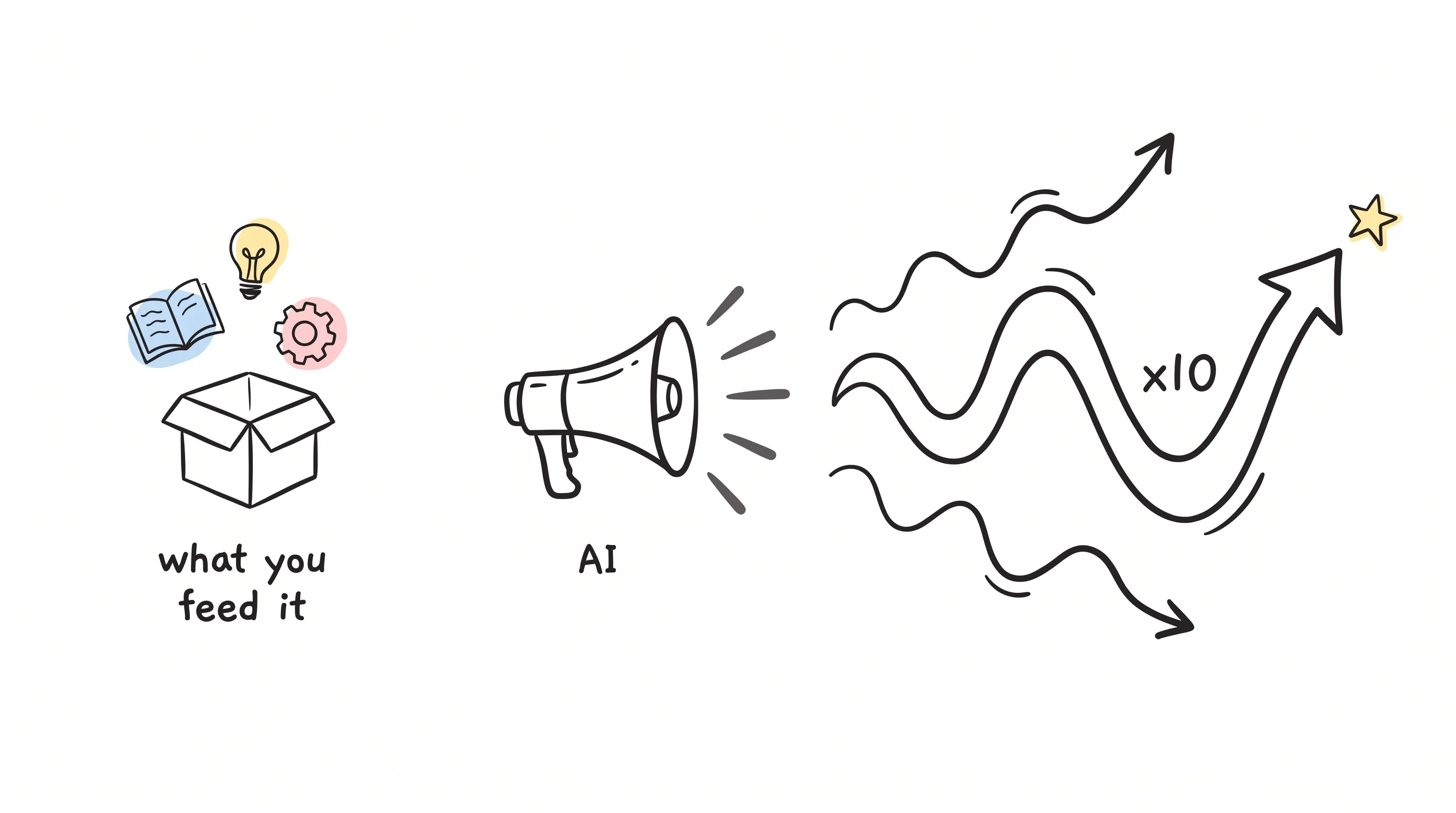
AI amplifies whatever you feed it. The knowledge, decisions, and experience your company has accumulated over the years—that is its raw material.
This is why HubSpot and Salesforce have both recently put their money on their own "family assets." One re-orchestrated its AI assistant and a CRM that updates itself, so agents always know what's happening with each customer; the other packed decades of accumulated customer-relationship expertise into a reasoning model, dedicated to the fiddly legwork behind every customer interaction.
What they're betting on isn't the model. Models—anyone can rent those.
What they're betting on is the data and understanding that only they possess.
Two More Things to Keep in Mind
Oh, right—two more things you'd better note down.
-
AI is rewriting "browsing a store." In the past, to search for products, users typed six words and paged through a screen of blue links. Now many people just ask an AI directly: budget of 3,000, a gift for Mom—what should I pick? Yet most merchants' product catalogs and product pages are still built for the last era. Making your products legible to AI—and worth mentioning by AI—is turning into homework that needs weekly upkeep. The reason is simple: the answers AI gives this week may already differ from last week's.
-
OpenAI has made the ads inside ChatGPT easier to buy, and says it's aiming for $100 billion in ad revenue by 2030. One hundred billion. That number is bigger than the entire annual ad market of many countries. Will it happen? I have my doubts. However convenient the entry point, getting advertisers to put real money on the table is another matter entirely. My advice: small pilots are fine, but hold your main budget steady for now.
Back to That Sunday in the Small Hours
Reading through to the end, I realized that these dozens of articles, for all their arguing, were really answering the same question: now that AI can genuinely do the work, how should we get along with it?
My answer is just four phrases:
Register it, constrain it, keep its books, and bank its capital.
Put plainly, AI isn't here to do your marketing for you. It's here to magnify what your company already is, and show it to you.
Whatever you feed it, it will amplify tenfold on your behalf.
May your AI coworkers accomplish more than you expect, and make fewer mistakes than you fear.
Continue reading
Related articles

Cross-Border Business: Time to Upgrade Your AI Toolbox
A learn article explaining how AI tools help cross-border e-commerce sellers clear five hurdles: language, regulation, logistics, payments, and fraud. It outlines a five-compartment toolbox, a five-step adoption path, and metrics such as conversion rate and CLV, while cautioning against over-reliance on AI.

AI Is Taking Over the Dirty Work of Social Media Marketing, One Task at a Time
This learn article outlines four social media marketing tasks AI can handle — audience analytics, content drafting and design, ad targeting and creative testing, and spam moderation — and cautions that taste, judgment, and data security remain human responsibilities.

AI Is Already This Good — Why Is Your Social Media Marketing Still Pure Manpower?
An overview of 18 AI tools for social media marketing, organized into six categories covering audience research, content creation, scheduling, comment and DM handling, ad management, and visual production, plus notes on personalization, prediction, and emerging trends.