
Meta's AI Butler, Muse, Is Growing a Face, Moving Into Your Glasses, and Coming for Your Wallet
A recap of Meta's Connect conference covering the Muse AI agent, including its realtime avatar, smart glasses integration, Mac task execution, dedicated email address, Muse Charm keychain, and retail payment partnerships with Shopify and Stripe.
A couple of days ago, Meta's annual Connect conference kicked off. I binge-watched the keynote replay, and only one sentence was left in my head: this company has pushed all its chips onto a single table.
And the bet? An AI agent called Muse.
Muse only launched in early September. By the time of this conference, it was — at the absolute most — a few weeks old. Yet for this "newborn," Zuckerberg, the man in the black T-shirt on stage, put it in no uncertain terms: Muse is the core of our entire vision, and over the next few years it will grow into the "personal superintelligence" that billions of people use to reach their goals.
So what is a personal agent?
Put plainly, it's AI that keeps working for you even when you haven't come to it. AI of the past was like a teller behind the counter: you ask one question, it gives one answer; if you don't ask, it just stands there. Muse is different — it's more like a butler: it hooks into your email, your calendar, and your various apps, picks up tasks on its own, runs the errands itself, and comes back to report when the job is done. Under the hood is a multimodal model Meta trained specifically for agent work, called Muse Spark.
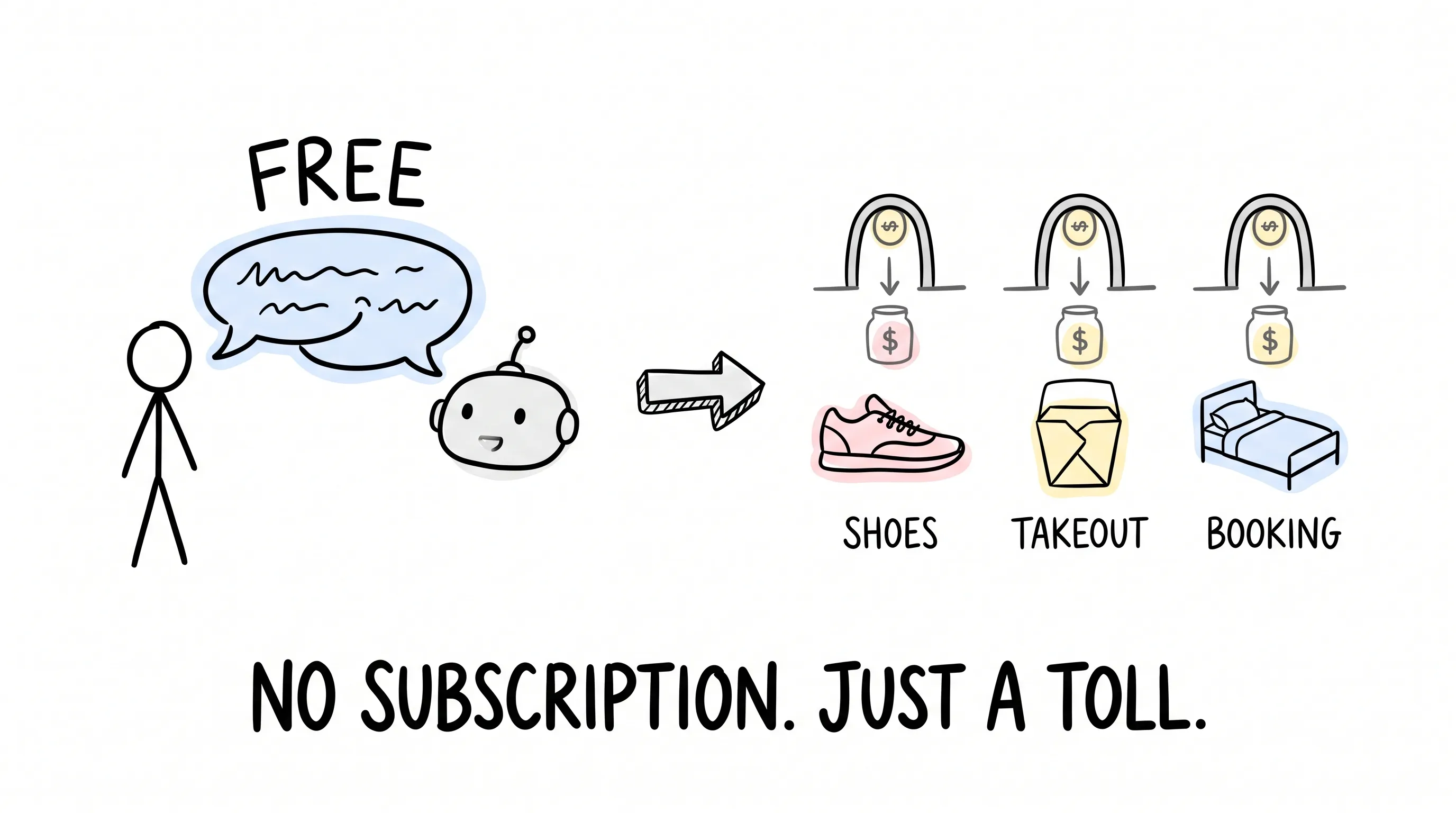
So how does this business make money? Zuckerberg laid that out too: Muse gives you a large amount of tokens for free, but down the road, Meta will take a small cut of each transaction.
It doesn't charge you a subscription fee — it charges a toll on your life.
Think about it: chatting costs nothing, but the moment you have it buy a pair of shoes, book a room, or order takeout, it skims a little off each one. The more people use it, the more transactions happen, and the bigger that toll gets. So have you noticed — every new feature Muse announced this time is really answering the same question: how do we put it in the room for more transactions?
Where should I start? Let's start with the few things that left the deepest impression on me.
First: It Grew a Face
One of the buzziest announcements of the conference: Muse's digital avatar.
A new model called Muse Realtime Avatar can sculpt a one-of-a-kind face, a body, and a voice for your agent. Then you video-call it, chat in real time, and hand it tasks while you talk.
AI assistants never used to have faces. You spoke into a chat box, like shouting into a doorbell intercom. Now it has features and expressions — the intercom has turned into a real person sitting at the other end of the screen, on video with you. Meta internally even gave this face a name: Jolly.
Watching the demo — how should I put it — it had very much the flavor of the metaverse back in the day.
Next: It Moved Into Your Glasses
This feature is my favorite. Picture the scene:
You're walking through a mall in Meta's smart glasses, and you see a pair of shoes. You say: look this up for me, and compare prices while you're at it. An answer comes through the glasses; when the search is done, it asks you: want to place the order? You say: place it. And that's that — you keep shopping, and it has already finished the job.
From now on, say the wake word and Muse stands by inside your glasses. It can coach you through workouts, log your meals, book your doctor's appointments — whatever you take a fancy to, it buys for you. And it always does its work in the background first, then comes back to report.
When can you use it? The official line is "in the coming months."
Then: It Started Taking Over Your Computer
On a Mac, you can line up a pile of tasks, hand them to Muse, and then walk away.
Meta's Chief AI Officer Alexandr Wang put it this way on stage: you can leave your computer, and it will keep finishing the tasks you lined up, one by one. It runs your little business for you, gets your work done for you.
You might want to ask: isn't that exactly what OpenAI's and Anthropic's agents have been doing all along? That's right — the work is similar. But the difference is in the play: other agents are still sitting in a browser tab, while Meta has carried Muse straight into glasses, computers, email, and keychains — the dishes come out of the kitchen and straight onto your table.
And One Especially Interesting Detail
Muse is about to have its own email address.
Just listen to that — what does an AI need an email for?
Because agents work in the background all year round, they need their own "employee badge": to receive tasks, hand over progress, and find you for confirmation. Before long you'll be able to pull Muse into an email thread, or simply forward an email to it and let it handle the matter. Launching "soon" — exactly how soon, nobody said.
An agent having its own email address means it has started moving into your contacts as an "employee."
Finally: The Money, and the Counters
This is where Zuckerberg's real hunger is.
Meta brought in Stripe and Shopify. Muse can browse Shopify's entire product catalog directly, picking and ordering on its own, paying with Shop Pay — with PayPal added on top of that. On the retail side, Best Buy, Gap, Sephora, Walmart, and Wayfair — the whole lineup is connected; travel has Expedia; groceries are about to connect Instacart; and in the toolbox there's also GitHub, Notion, and Granola.
The even better math is on the developer side. Meta opened up the platform — anyone can build a "connector" for their own app. The result: more than 1,500 applications in under a week.
On stage, Wang said: getting in as a new platform takes off — that is a once-in-a-generation opportunity.
Every time a new platform's dividend arrives, the barrier is low, the crowd is small, and the window is short.
Oh Right, There's Also a Keychain
The grand finale of a keynote usually has a "one more thing." This time, it was a little pendant called Muse Charm.
Palm-sized, pocketable, hangs on your keyring. On the front, a small screen displaying your agent, Jolly. To talk, just press a finger on the fingerprint sensor in the corner — no unlocking your phone, no opening an app. By Zuckerberg's account, they stuffed the entire Muse experience, realtime voice and digital avatar included, into this keychain. Shipping in December, before the holidays.
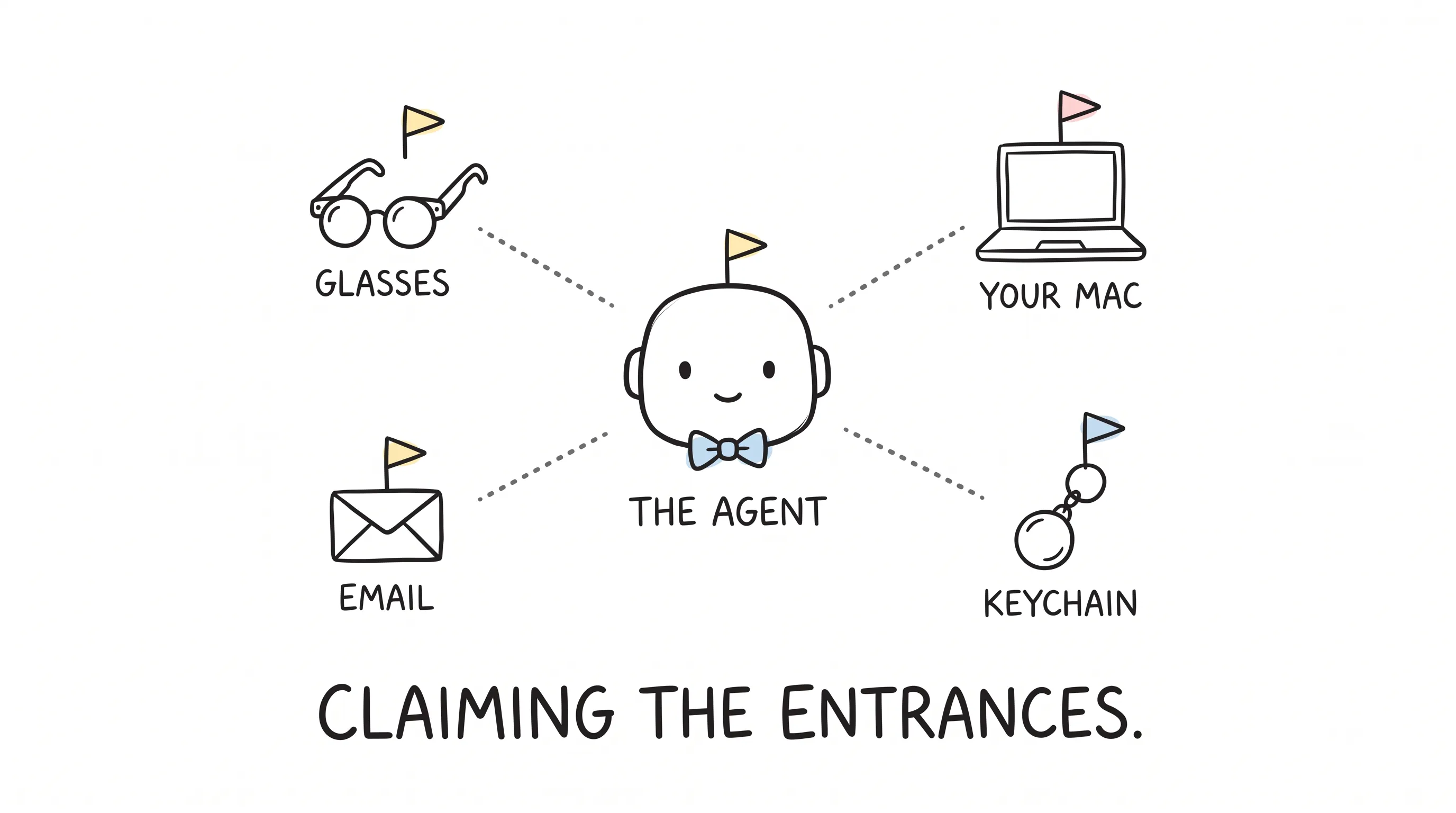
The "AI pendants" on the market have almost become a running joke these past two years. But this one is not quite the same: behind the pendant stand the glasses, the email inbox, the Mac, and a whole row of retail counters. The device is just a doorbell — what's truly powerful is the house behind the doorbell.
At the End of the Day, This Is a Fight Over the Entrance
In the mobile era, the entrance was the app. In the agent era, the entrance might be the glasses on your face, the keychain in your pocket, the email address living in your contacts — or a wake word you call out in passing.
Muse has only been live a few weeks, and its growth rate is already quite frightening. Whether it will finally grow into that "personal superintelligence" Zuckerberg talked about, I don't know.
But I do know one thing: when a company starts sculpting faces for its AI, issuing it an email address, building it a keychain, and staking out counters, what it's making is no longer a product.
It's claiming land. And the land it's claiming is the way you will live with AI for the next ten years.
And here's to you staking your claim on that land early.
Continue reading
Related articles

Cross-Border Business: Time to Upgrade Your AI Toolbox
A learn article explaining how AI tools help cross-border e-commerce sellers clear five hurdles: language, regulation, logistics, payments, and fraud. It outlines a five-compartment toolbox, a five-step adoption path, and metrics such as conversion rate and CLV, while cautioning against over-reliance on AI.

AI Is Taking Over the Dirty Work of Social Media Marketing, One Task at a Time
This learn article outlines four social media marketing tasks AI can handle — audience analytics, content drafting and design, ad targeting and creative testing, and spam moderation — and cautions that taste, judgment, and data security remain human responsibilities.

AI Is Already This Good — Why Is Your Social Media Marketing Still Pure Manpower?
An overview of 18 AI tools for social media marketing, organized into six categories covering audience research, content creation, scheduling, comment and DM handling, ad management, and visual production, plus notes on personalization, prediction, and emerging trends.