
Meta Wants to Run Your Ads. My Advice: Keep a Grip on That Budget.
A monthly roundup of social media marketing updates, covering Meta's Advantage+ AI ad tools, Instagram's direct livestream boosting and long-video tests, TikTok Shop's Black Friday seller features, and BookTok's influence on book sales.
A few days ago, a livestream popped up on my Instagram.
A British company that grows roses. The owner sat in the greenhouse, spent twenty minutes or so explaining how to keep roses safe through the winter, and answered viewers' questions along the way. At peak, maybe a hundred people were watching.
Small scale, right?
But here's the interesting part: I hadn't thought about this shop in weeks. The moment the livestream started, it jumped to the top of my Stories.
A plain little livestream, a free way back in. So I went back through last month's social media moves and picked out the nine worth a few minutes of your time. Here they are, in order.
1. Meta: AI Wants to Take Over Your Budget
Start with the biggest mover.
In October, at Advertising Week New York, Meta rolled out a new batch of AI ad tools. If you've been inside its Ads Manager lately, you'll have felt it: nearly every week, some new AI feature pops up.
Most of them live under one family name: Advantage+.
What is Advantage+?
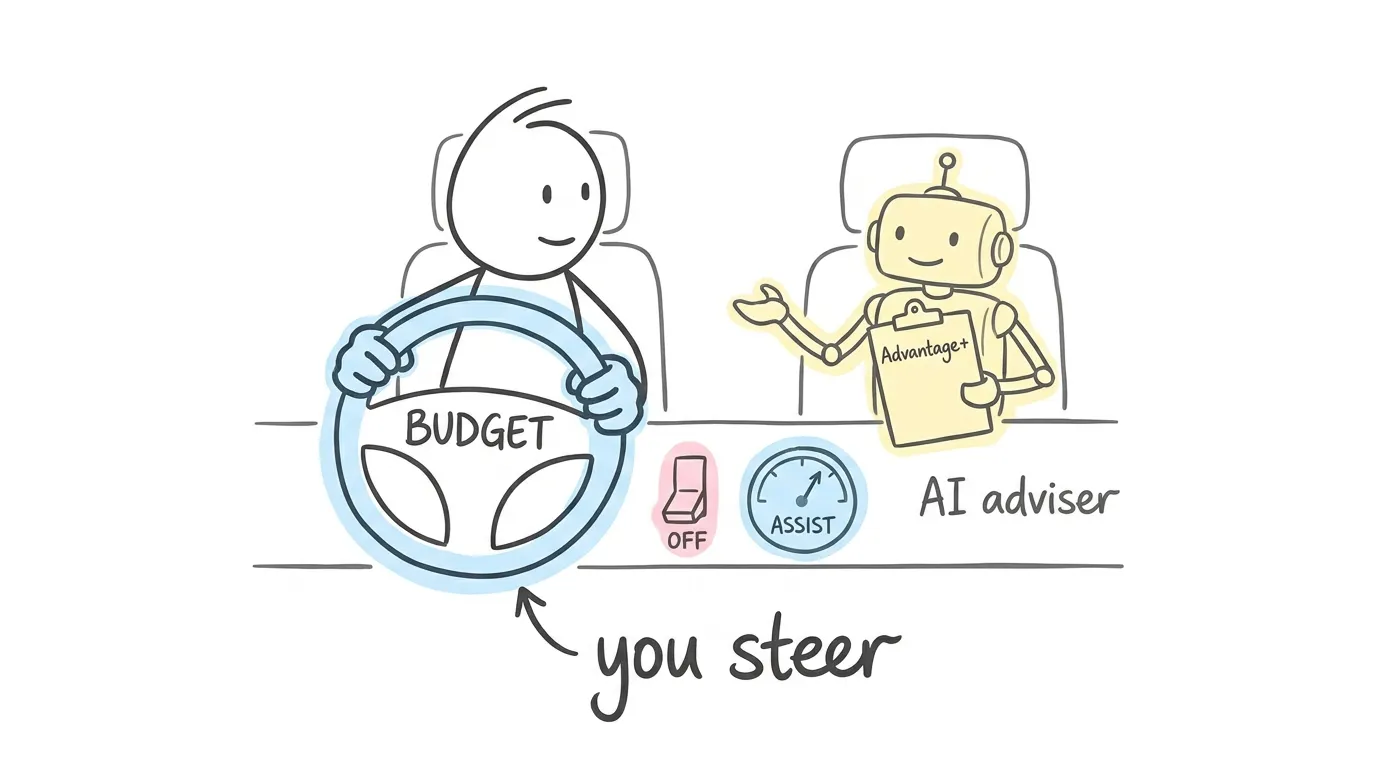
Put simply, it's the umbrella name Meta gave to every part of advertising where "AI decides." Think of it as driver-assist for your ads: one feature added this month, another next month, and the steering wheel is taken away inch by inch. Meta's endgame is clear — you provide the budget and the goal, and it handles everything else.
Here's what's worth knowing among the new arrivals:
The creative tools are open now. The system first looks at which of your videos perform best, then lets you take the top performer and change the opening, swap the music, adjust the length, add captions, rework the ending — all without leaving Meta, no third-party editing software needed. The logic behind it is "creative diversification": run dozens of versions at once, let the algorithm pick, and it quickly finds what audiences respond to.
The AI assistant has grown a memory. It used to be a customer-service bot with no recall; now it knows how last quarter went, knows your seasonal swings, and remembers the goals you set for it. More aggressive still, Meta has given it "agent" abilities: mid-conversation, it can adjust your targeting, shift your budget, generate creatives.
Two more are in testing. One: feed it your brand voice and strategy documents, so the copy it writes sounds like you, not like AI. And by the way — if your company doesn't have a voice document yet, now is the time to write one. The other: scheduled tasks that send you reports on a fixed schedule and raise the alarm when the numbers look off.
And the last one gave me chills.
Static images, turned into video with one click. This one is fully rolled out, and the official line is that it helps brands that can't afford to shoot video, since video usually builds awareness faster. Fair enough. But think for yourself: a photograph stretched by AI into a moving, talking picture has a subtle wrongness to it, and you can feel it as you scroll.
So should you use this stuff?
My judgment is clear: Use it boldly as your adviser. Just don't hand it the wheel — not this month.
Listen to the AI's optimization suggestions. Keep budget control in your own hands. I know a media buyer who launched a new campaign, found two days in that AI had "optimized" it until it looked nothing like the brand, and shut it down overnight to start again from scratch.
And one trap many have fallen into: Meta pre-checks those automation options for you.
Before you publish, go through every checkbox, one by one, with your own hand.
2. Instagram: Livestreams Can Finally Be Boosted Directly
Now back to that rose company.
Why did it land at the top of my Stories? Because Instagram changed the rules this month: livestreams can now be boosted directly.
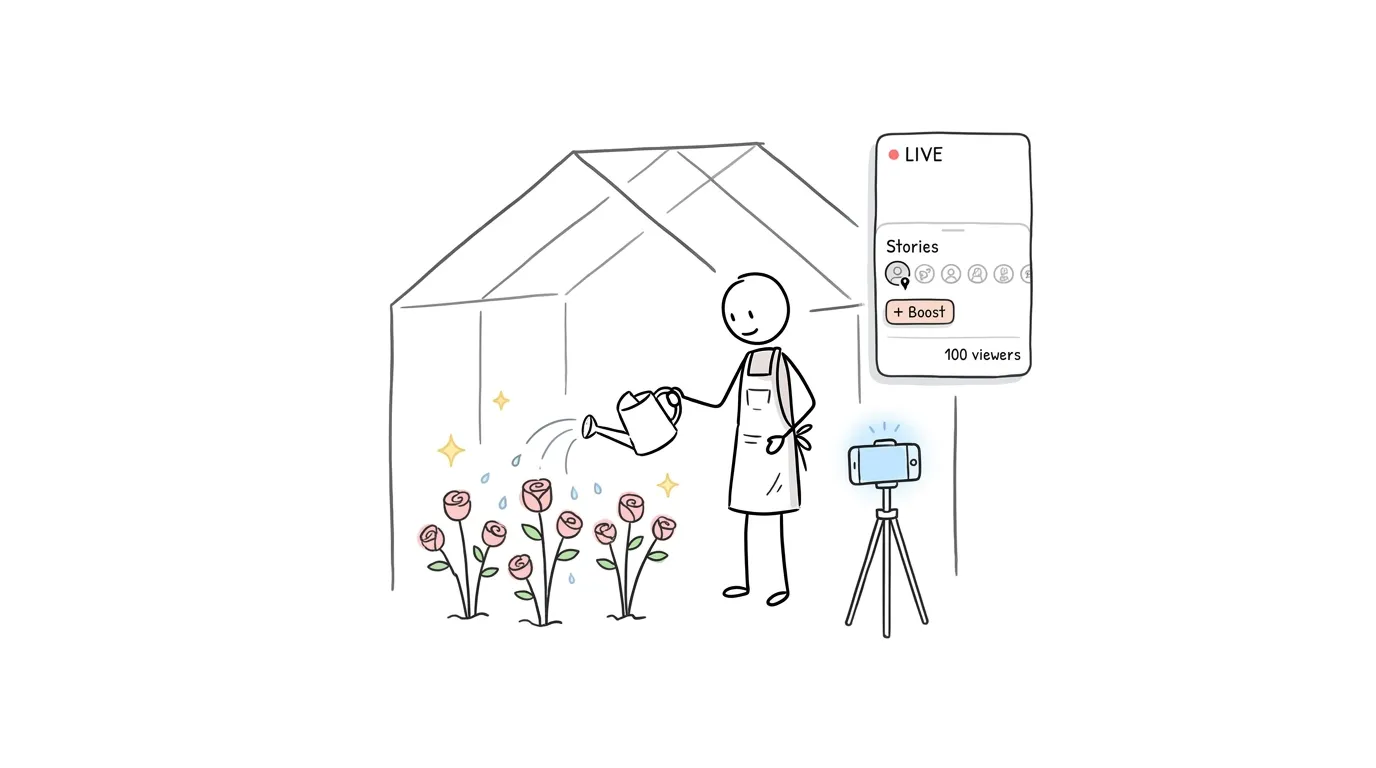
Before, if you wanted to buy reach for a livestream, you had to detour into Ads Manager and build a campaign. Not anymore. Before you go live, tap "Boost" in the livestream interface, and the stream itself becomes an ad — running across Feed, Stories, and Reels. You end the stream, the ad stops.
Two cautions. One: to avoid a delivery delay, schedule at least two hours ahead. Two: topping up through the iPhone app means Apple takes a cut, so it may cost more than going through the backend. Know what you're spending.
For big companies this may not matter. For small businesses, it's a real lowering of the barrier: paid promotion went from "someone who knows how to build ad campaigns" down to "anyone brave enough to go live."
Rose growers can talk about overwintering. Mechanics can talk about seasonal maintenance. Restaurant owners can show the kitchen. Your expertise has always been one livestream away.
3. A 90-Minute Video — Would You Watch It to the End?
Instagram is also testing a new format in Brazil called Features, supporting uploads of up to 90 minutes, with a small U.S. test to follow.
Ninety minutes. You read that right.
Doesn't that sound crazy — a short-video platform hosting 90-minute uploads?
Think about what people have been watching these past two years. After too many ten-second hits, some viewers want a full meal. Episodic, serialized content is rising on several platforms at once, and in-depth videos over two minutes keep growing. Ninety minutes is a big leap, but the direction is no surprise.
The supporting moves: long videos can be clipped into segments and turned into Reels that funnel viewers back to the full piece; viewers can save a video and cast it to a TV app to keep watching; and in the Explore page, long videos get a large placement spanning two grid tiles.
Short is for reach. Long is for retention.
4. Open the App, Straight Into Reels?
Instagram is toying with that old idea again: making you land in Reels the moment you open the app.
Last time it forced the change, users pushed back hard enough that it was rolled back. This time it has learned: the option is voluntary. You can set Reels as your home page, with Stories still on top and the classic feed one swipe away — and you can switch back anytime. India tested a similar layout last year; which markets it extends to this time hasn't been announced. You might run into it; you might not.
Why does it keep coming back after failing?
The math is simple. More than half of all time spent on Instagram is spent inside Reels, and the platform's engagement growth is basically carried by Reels too. If enough people flip their home page over and Reels numbers climb again, I wouldn't be at all surprised if one day it simply becomes the default.
Platform redesigns are never about sentiment. They're about your dwell time.
5. Three Small Updates, Quickly Noted
A few smaller moves this month — too small for their own section, too good to skip.
Meta's free editing tool Edits has shipped a Mac version: multi-track timeline, color grading, 4K watermark-free export, unlimited auto-captions, and styles you saved on your phone carry over once you sign in. If you make videos, install it. It's free anyway.
LinkedIn's pinned comments are back. Don't underestimate this little feature: put external links in a pinned comment instead of the post body; pin updates like "the event is full"; pin one reply at the very top when someone challenges you. You can use it on your very next post.
Reddit has added a "For You" feed to its home page: half communities you've joined, half new communities pushed by interest, rolling out worldwide. Veteran users are already grumbling in the forums — stop copying everyone else. But go look at that screen and tell me what it resembles. It's like your favorite old restaurants suddenly finding a food street built at their door. You don't have to go. But that street was built precisely to pull you in.
6. TikTok: The Store Shelf Moves Into the Livestream
Black Friday is closing in, and TikTok Shop has shipped a whole batch of new tools for UK sellers.
Product photos can generate a swipeable shelf that appears in the recommendation feed — one tap to buy. A minimum of two images; the official advice is five to seven. You don't have to shoot a single thing; the barrier is close to zero. It's also adding subscription purchases: replenishable goods like skincare and pet food can arrive on a schedule, like a milk delivery. This move is unmistakably stepping onto Amazon's lawn.
The livestream features are even more interesting — four at once: group buying, where you set a sales target and the whole room unlocks a group discount once it's hit; tiered price drops, where everyone who joined shares lower prices as the target is reached; second-chance sales, for when the top bidder doesn't pay or you have surplus stock and can go back to the runner-up; and livestream-exclusive inventory, stock reserved for the livestream that can't be bought anywhere else.
The tools are the shelf. As for actually selling the goods — TikTok produced a video series on how three brands did it, and when I finished watching I realized all three are the same principle told three ways:
First, volume. One fashion brand appeared in roughly 6,000 creator videos in a single month; one fragrance brand had more than 80,000 videos made about it across platforms, sending samples to 1,000–5,000 creators every month. If you're nowhere in the recommendation feed or search results, you effectively don't exist.
Second, go live. One cookware brand uses livestreams to answer buyer questions, gather feedback, and test content directions. The official figure: sellers who go live grew sales 84% year over year. Can you run TikTok Shop without going live? Yes. It's just like renting a storefront on a busy street and not putting a door on it.
Third, start early. Black Friday and Cyber Monday product and content registration: do it now. If you haven't, make it the first thing you do tomorrow.
7. The Closing Story: Books, Rescued by Short Video
One last story — a particular favorite of mine.
TikTok just named its first European BookTok Book of the Year, and the winner is a fantasy-romance novel, Fourth Wing.
What is BookTok?
The crowd on TikTok that exists to recommend books. Under that hashtag, 88.4 million posts have piled up. From January to August 2026, they joined with a market research firm to rank titles on combined sales data and on-platform discussion — the top five were all romance and fantasy-romance. The list started in Germany in 2023, extended to Austria and Switzerland in 2024, and the UK, Italy, and Spain joined as new arrivals in 2026.
The data is more interesting than the list. A survey spanning ten countries found that among readers aged 16 to 39, roughly four out of five love reading more than they did a few years ago; 49% say TikTok made them spend money on books; 53% say it led them to new genres. And one line I really want you to see: 34% of UK BookTok users attended an in-person book event in the past year.
Think about it: for how many years did everyone sigh that young people had stopped reading?
And what brought books back wasn't the book-review magazines, wasn't the author signing tours — it was a crowd of young people holding a book up to the camera, eyes shining: you have to read this one.
Recommendation has moved from the bookshop counter into the feed. If you sell books, go find BookTok creators to work with. If you sell movies, courses, or anything that needs "to be recommended" — the logic is exactly the same.
Back to the Greenhouse
A rose-growing company spent nothing on ads. One livestream with about a hundred viewers, and it reappeared at the top of an old customer's screen.
Every month, the platforms keep inventing new tools, new entry points, new switches to hand you. However lively it all looks, before you switch anything on there is really only one question worth asking first:
Does this change bring you closer to your users, or further away?
Answer that, and you'll know whether that switch should be flipped.
Here's to next month — may your budget still be in your own hands.
Continue reading
Related articles

It's 2026: Stop "Buying" AI Tools for Your Marketing Team — Start "Hiring" AI Agents
This learn article explains how AI agents differ from standalone AI tools in marketing, outlines three agent categories — build-your-own platforms, CRM-native agents, and vertical tools — and covers use cases across SEO, social media, advertising, and reporting, plus criteria for choosing one.

Did the Money You Spent on AI Marketing Ever Come Back?
A guide to measuring AI marketing ROI across three layers: ad reports, sales pipeline, and the financial ledger. Covers metrics such as ROAS and CPA, eight dashboard metrics, industry benchmarks, and common measurement mistakes.

How to Pick a Creative Automation Platform: First, Figure Out What These Eleven Actually Do
A learn article sorts eleven creative automation platforms — including Bannerflow, Celtra, Smartly.io, and Storyteq — into four functional groups and proposes five evaluation questions covering publishing reach, automation depth, ease of adoption, team fit, and verifiable evidence.