
Meta Shoved AI Into Its Whole App Family — Then Took Away the Advertisers' Steering Wheel
This article recaps Meta's AI rollout across its ecosystem: the Muse assistant, ads automation defaults, revised attribution and metrics, removal of manual placement selection, and new creator tools. It suggests advertisers shift focus from manual setup to judgment and align old and new reporting metrics.
A few nights ago, a friend of mine who runs a cross-border e-commerce business messaged me in the middle of the night.
He had opened his ads dashboard, planning to hand-pick his ad placements — and the option was gone.
He asked me: is the dashboard glitching?
I told him: it's not a bug. It's Meta, on purpose.
And that was only the newest move in a whole string of moves Meta has made over the past year.
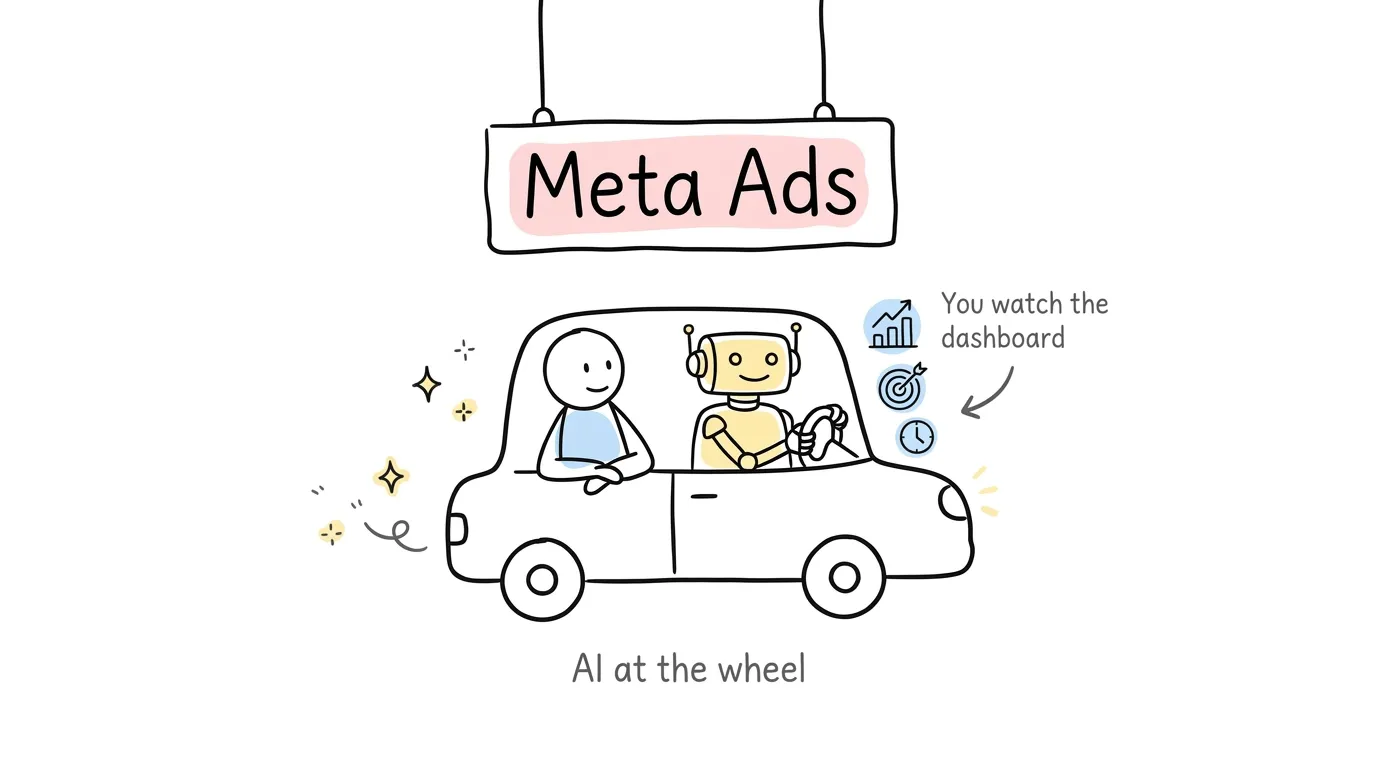
What Has Meta Actually Been Doing This Year
Lay out the full list of Meta's 2026 updates, and one storyline is impossible to miss: it has stuffed AI into every corner of its own ecosystem.
Ads, search, chat, creation, smart glasses — nothing was spared.
Let me walk you through three threads, and it will all make sense.
Thread One: Muse Is Becoming the Universal Assistant
What is Muse?
It's Meta's AI personal assistant.
At the start of the year, it was still just a chat assistant. By October, the pace suddenly picked up: an announced expansion into the EU, a launch on iPad, parental supervision added to Meta AI, and a preview of its arrival in WhatsApp.
Then, in November, a whole batch of features landed within a single month: Email address, Spaces, plus "Expressive Avatars" and Voice Mode.
Even more worth chewing on is Muse Wonder, released in October. One model family, two flagships: Muse Wonder, and Muse Wonder Full.
Wow, that update cadence.
This is not just adding features. This is Meta raising a general-purpose assistant, step by step, into the butler of your digital life.
Search follows the same logic. In June, Facebook Search rolled out an AI Mode powered by Meta AI.
For small businesses it's even more direct. In October, Muse for Small Business launched, helping small teams organize workflows and automate daily chores. Going back a bit further, at the Conversations event in London in June, Meta officially announced AI business agents across Messenger, WhatsApp, and Instagram: automatically answering common customer questions, collecting customer details, qualifying leads, booking appointments and orders — and it announced deeper integrations being built with Shopify and Zendesk.
Pay attention to the last half of that sentence: these AI agents are, going forward, meant to be charged by subscription and usage.
The free assistant is turning into a business.
Thread Two: The Ads System Takes Away Your Steering Wheel
This is the part that stings the most.
First, a timeline.
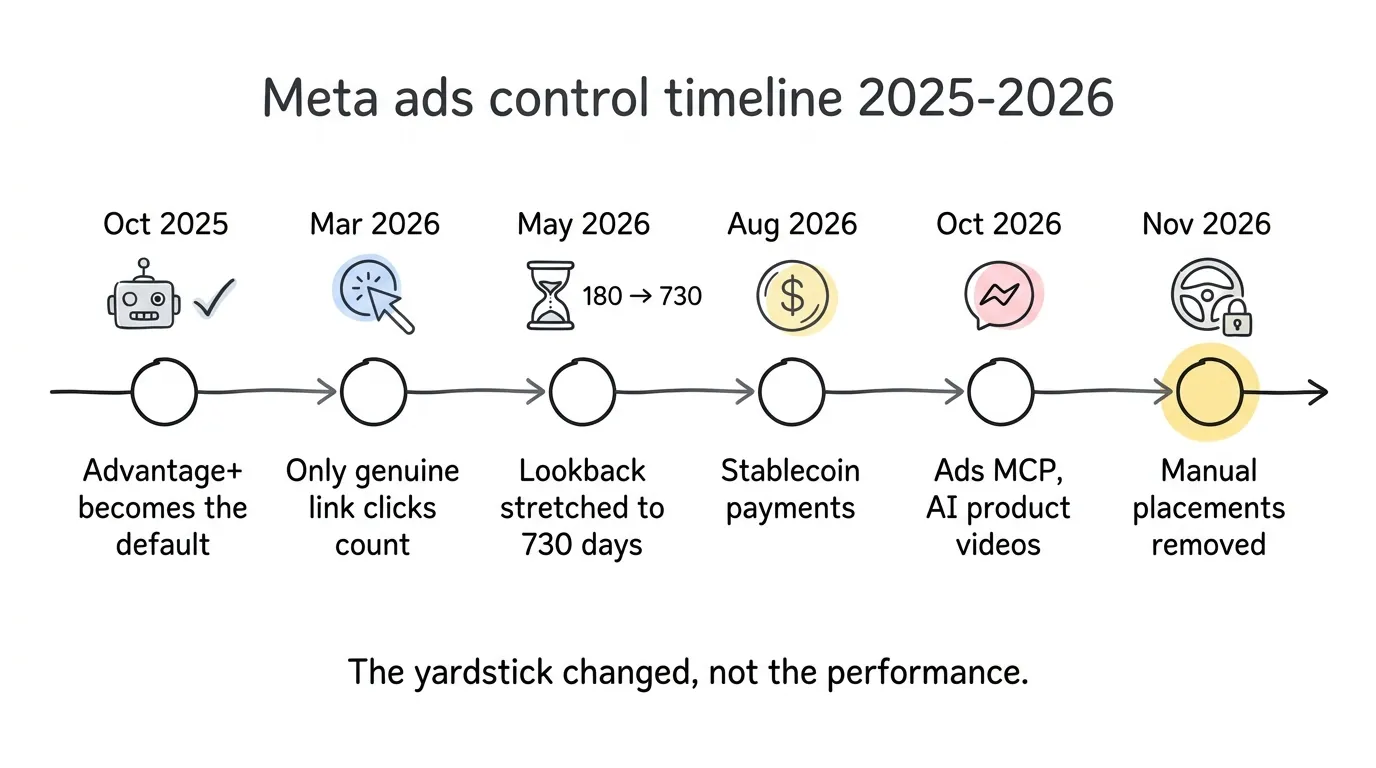
As early as October 2025, Meta made its Advantage+ automation tools the default for new ad campaigns. Back then, most people didn't think much of it.
Then, this March, the attribution rules changed: click attribution would only count genuine link clicks, while interactions like likes, comments, and shares were split off into a new "Engage-through attribution."
In May, two moves: one, the lookback window for purchase events was stretched from 180 days to 730 days — advertisers can now look back a full two years; two, the "Engagement" metric was renamed "Interactions" across the board, and it no longer counts clicks.
What does that mean?
Your numbers may look worse, but your content hasn't gotten worse. The yardstick changed, not the performance.
In August, ad campaigns started supporting stablecoin payments.
At October's New York Advertising Week, Meta threw out a whole pile at once: Direct checkout in Messenger, Meta AI, and Muse; AI-generated product videos; AI audience discovery; even building ads through conversation — uploading creatives, previewing, assembling drafts — all of it doable by external AI tools via Ads MCP.
And then came this month. Meta launched the Breakdown tool, letting advertisers break down how each individual creative element performs; at the same time, manual placement selection was removed from Leads, App promotion, and Sales campaigns.
And the step my friend ran into? Exactly this one.
Two small things are easy to overlook. First, since March, the "Sponsored" label on in-stream ads has been standardized to "Ad" — blunter and more direct. Second, also starting in March, running ads in Austria, France, Italy, Spain, Turkey, and the UK now comes with an extra regional surcharge related to the digital services tax.
Think about it: taken as a whole, what is the platform saying?
I'll hold the steering wheel. You just sit tight and watch the dashboard.
Thread Three: Creators Got New Gear
Meta hasn't forgotten the content side either.
This month, Facebook's AI creation assistant Creator Assistant updated six features in one go: auto-replying to comments, a web entry point (housed in Meta Creator Dashboard), creative guidance for storyboards and shot scripts, opportunity alerts for niche trends, highlighting audience questions inside comments, and generating replies in the creator's own voice.
That last one, personally, I find the most interesting. AI replies to comments for you — but it still sounds like you.
Things are loosening up on the audience-growth and monetization front too. In March, Creator Fast Track opened to Instagram, TikTok, and YouTube users — anyone with a Facebook account could apply; this month, the program first landed in Brazil. In October there was also a new algorithm trick: users can tell Facebook in plain language what they want to see, and the system delivers exactly that. For the first time, the algorithm now takes its orders from the user's own words.
Tools for Page admins keep growing too: in July, the professional dashboard gained "Creator Activity"; from October, the About page can showcase credentials and services.
Scroll back further, and the 2025 wave never stopped either: Brand deals monetization tools launched in October that year; that November, Threads rolled out a full set of ad formats; and in December the feed was rearranged, turning "For you" into a more immersive layout.
Hardware is spreading out as well. In July, Discord got the Meta Horizon App Store; content shot on AI smart glasses gained two new formats, Multi-cam and Spin view; in October, Ray-Ban users received four new features, including pedestrian navigation and sharing location from phone to glasses.
So, What Should You Do
Three things.
First, stop clinging to manual operations. Placements can be taken away today, and something else can be taken tomorrow. Move your energy from "how to set things up" to "how to judge" — keep an eye on new tools like Breakdown, and figure out which creative is actually doing the work.
Second, recalibrate your reporting. Metrics were renamed, attribution was overhauled, and the lookback window went from 180 days to 730. Don't compare old numbers directly with new ones. Align the yardsticks first; talk about growth after.
Third, treat AI as a colleague, not just a button. Subscriptions and usage-based billing are both written into Meta's plans. The teams that get comfortable with it one day earlier will already be running ahead by the time paid usage actually arrives.
Finally
Later, I sent my friend one line in reply.
I said: nothing in the dashboard is broken — the rules of the game have changed. It used to be about who operated the finest; from now on, it's about who sees the farthest.
Once you understand that, the options that disappeared stop being so scary.
Here's to you, running one step ahead of the rules.
Continue reading
Related articles

It's 2026: Stop "Buying" AI Tools for Your Marketing Team — Start "Hiring" AI Agents
This learn article explains how AI agents differ from standalone AI tools in marketing, outlines three agent categories — build-your-own platforms, CRM-native agents, and vertical tools — and covers use cases across SEO, social media, advertising, and reporting, plus criteria for choosing one.

Did the Money You Spent on AI Marketing Ever Come Back?
A guide to measuring AI marketing ROI across three layers: ad reports, sales pipeline, and the financial ledger. Covers metrics such as ROAS and CPA, eight dashboard metrics, industry benchmarks, and common measurement mistakes.

How to Pick a Creative Automation Platform: First, Figure Out What These Eleven Actually Do
A learn article sorts eleven creative automation platforms — including Bannerflow, Celtra, Smartly.io, and Storyteq — into four functional groups and proposes five evaluation questions covering publishing reach, automation depth, ease of adoption, team fit, and verifiable evidence.