
Marketing Is Switching Operating Systems
Deloitte's 2026 Marketing Trends, decoded through a real dinner conversation: AI is now a utility, blind spending is over, trust gets a price tag, discovery moved to algorithms, and the organization has to change first. Five shifts every marketer should act on now.
Last week, I had dinner with a friend who works in consumer goods.
Before the dishes had even arrived, he let out a sigh. He said that when he goes to see the CFO now, the opening question has changed. It used to be, "What campaigns do you want to run this year?" Now it's, "That last chunk of money we gave you — did it come back?"
If you can't answer, the budget gets cut.
It suddenly reminded me of a report I read back in February — Deloitte's 2026 Marketing Trends. When it first came out, reading it felt like an outlook. After hearing my friend that day, reading it again felt like a diagnosis.
Why do I say that?
Let me give you three numbers first.
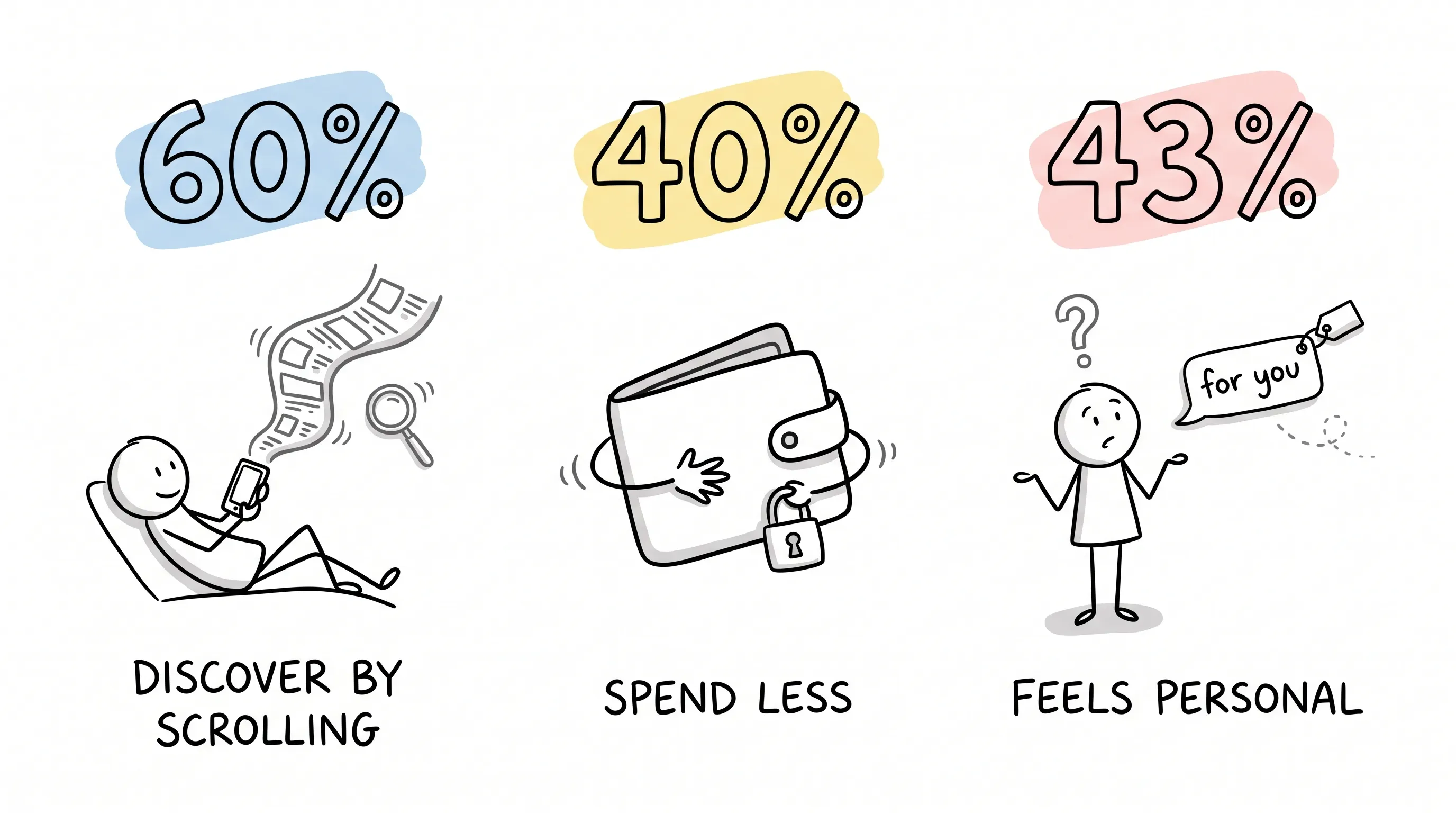
Number one: 60%.
Six out of ten consumers say they discover new brands through the content they scroll past, recommendations from friends, and discussions in communities. And search? Search is for "verifying afterwards." First you scroll, then you look it up.
Discovering a brand no longer runs on search. It runs on scrolling.
Number two: 40%.
Four out of ten consumers are cutting back on non-essential spending. Personal care, household goods — if it can be saved, it gets saved.
When wallets are clamped shut, no matter how loudly you shout, people won't necessarily pay.
Number three: 43%.
Of all the painstaking personalized interactions brands put together, only 43% are recognized by consumers as made just for them. What about the remaining 57%? Either people don't notice it's personalized — or they take it as an intrusion.
All that effort, and less than half the consumers buy it. That stings.
Behind these three numbers, Deloitte lays out five shifts that are rewriting marketing. Let me take them one by one.
One: AI Has Gone from Toy to Utility
What do I mean by "utility"? A utility is a basic supply you just switch on and use — not a new toy you occasionally take out to play with.
In the past, many teams used AI to write a bit of copy, make an image, give it a try, then set it aside. Deloitte's judgment is blunt: the output of generative AI has gotten good enough to go straight to the customer. The experimentation phase is over.
Time to scale it up.
How? Don't practice on your hardest processes. Pick the ones that can be automated end to end: email copy and its many variants, testing paid ad creative. And how far do you take it? Until every manual step is eliminated, not a single one left.
So where does the human fit?
The human is still there — just moved to a more expensive place: signing off on clearly defined risk points. The copy that finally reaches the customer. Any statement involving compliance commitments. At those two spots, a human must sign.
AI produces. People sign off.
That said, don't assume AI comes cheap. It needs to be fed data, it needs whole systems, and the books need to add up. Running it at scale takes investment — and patience.
Two: Blind Spending Is Over
What happened to my friend is the footnote for this section.
Europe's economy is sputtering, consumers' purchasing power is shrinking, and corporate budgets are under pressure across the board. CFOs have pointed the magnifying glass at marketing: every dollar spent has to explain what it bought.
What is blind spending? Spending where you can't explain the return. That way of spending is coming to an end.
Deloitte's advice boils down to two things.
First, the whole company uses one ROI model. Who backs it? The CFO. Even if it's imperfect for some scenarios. Why? Because consistency matters more than precision. If every department does its own math, then in the CFO's eyes, each one is just cherry-picking its best-looking numbers. An imperfect but unified model is the one that holds up.
Second, every quarter, take the bottom 20% of your spending — either cut it or fix it. And do it in full view of the entire management team. Let everyone see that you mean it.
Budgets aren't begged for. They're calculated.
Three: Trust Is Getting a Price Tag
AI has knocked the cost of content to the floor — and worn down something else along with it: trust.
Deepfake videos and fabricated information are everywhere, and layered on top of privacy anxiety, they've sanded away the digital world's "seeing is believing." The genuine gets harder to recognize, so the genuine gets more expensive.
What counts as authentic? For many brands, the answer is a slogan: "We love the planet."
That's not authenticity. That's rhetoric.
Deloitte's example is writing your brand claims as commitments that can be verified: "Cut packaging plastic by 20% before 2027." There's a number and a deadline, and whether you did it takes one look to find out.
Actually do it, and the brand wins back two things: loyalty, and a price premium. In a market where it's hard to tell real from fake, those are hard currency.
A promise without a number is no promise at all.
Four: Attention Shattered, Discovery Went to the Algorithm
Remember that 60% from earlier? That's where this section starts.
Think about it: a consumer's day is now shredded across AI search, retail media, creator accounts, and one niche community after another. Hoping to reach the masses through a single channel? That road is closed.
So what do you do?
Deloitte's advice is surprisingly restrained: for each audience segment, pick just 3 "must-win" channels.
Just 3. Fewer is how you win.
Then, prepare one core narrative and "adapt" it to each platform, rather than "reinventing" it on every platform. It's like the same dish: served at the hotpot restaurant, it gets the hotpot restaurant's plating; on the delivery platform, it gets the delivery platform's photo. The dish is the same dish. Creative works the same way — speak in each platform's own language, keep up with each platform's rhythm.
And one more thing: don't fixate only on the two big numbers, impressions and conversions. Small touchpoints need measuring too. Micro-conversions are the tick marks on the new map.
Five: The Organization Has to Change First
The playbook has completely changed, but the org chart is still the old one. That's the most awkward tension right now.
The old walls between function-based departments have to come down. Teams should be built around "outcomes": one team, fully accountable for growth as an outcome. Not marketing owning a segment, design owning a segment, and tech owning another.
Even the order of operations matters: educate first, deploy second.
First let the team understand what agentic AI can do and where the risks are; then pick the marketing processes it's best suited for. Do it the other way around, and it will crash and burn.
While you're at it, fix the legacy systems and patch the holes in your data. There's also a practical problem: skills in data, AI, and automation simply can't be hired on the market. Most of the time, the answer is just one — retrain the team you already have.
Skills you can't buy, you have to grow.
Finally, Back to That Dinner
Before we parted, my advice to my friend was: go back, pull up a list of everything you spent over the past year, and tackle the bottom 20% starting next quarter.
He pulled out his phone and went through the books right there.
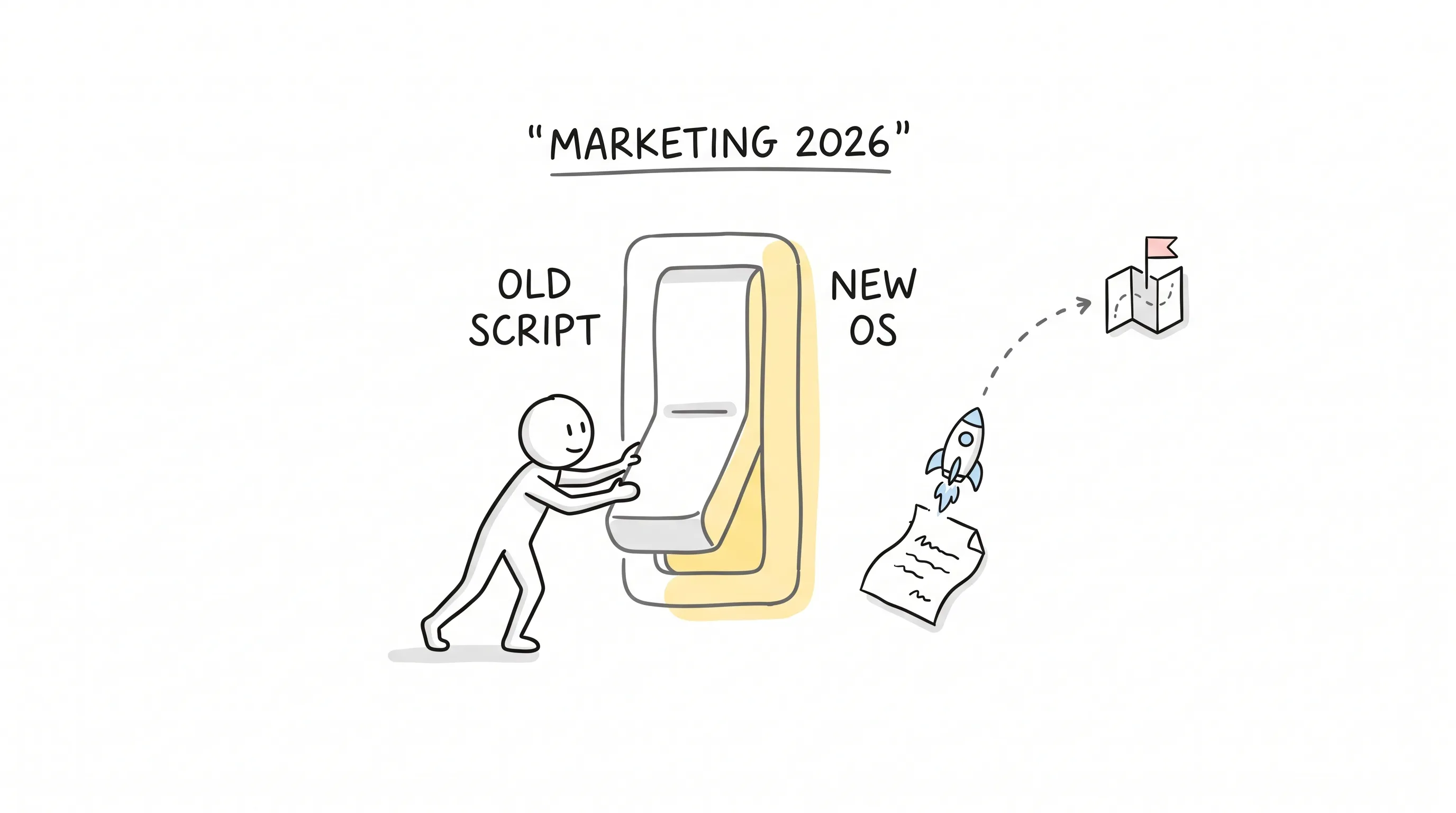
Slow growth, tight budgets, more rules — the old script really can't go on. But look at it another way: the page where the script turns is exactly the page where the lead role changes hands.
Whoever sets out first gets the new map first.
Here's to you being the one who sets out first.
Continue reading
Related articles

Cross-Border Business: Time to Upgrade Your AI Toolbox
A learn article explaining how AI tools help cross-border e-commerce sellers clear five hurdles: language, regulation, logistics, payments, and fraud. It outlines a five-compartment toolbox, a five-step adoption path, and metrics such as conversion rate and CLV, while cautioning against over-reliance on AI.

AI Is Taking Over the Dirty Work of Social Media Marketing, One Task at a Time
This learn article outlines four social media marketing tasks AI can handle — audience analytics, content drafting and design, ad targeting and creative testing, and spam moderation — and cautions that taste, judgment, and data security remain human responsibilities.

AI Is Already This Good — Why Is Your Social Media Marketing Still Pure Manpower?
An overview of 18 AI tools for social media marketing, organized into six categories covering audience research, content creation, scheduling, comment and DM handling, ad management, and visual production, plus notes on personalization, prediction, and emerging trends.