
It's 2026. Can Your AI Marketing Withstand an Audit?
An explainer on why AI-driven marketing in 2026 must be explainable, privacy-compliant, and auditable, covering transparency logging, consent management, and AI governance practices.
A few days ago, I had dinner with a friend who works in marketing. This year he handed nearly all of his company's campaign operations over to AI: automated segmentation, automated copy, automated scheduling. Efficiency doubled, and his life got a lot easier.
I said, congratulations.
He waved it off. Something, he said, had sent a chill down his spine. Last week a client sent him a message: Why did you show me this ad? What was it based on?
He froze. He had no answer.
I told him: that's no longer a marketing question — it's a compliance question. And these days, the answer to that kind of question has to survive regulatory scrutiny first.
Why do I say that? Let's break it down.
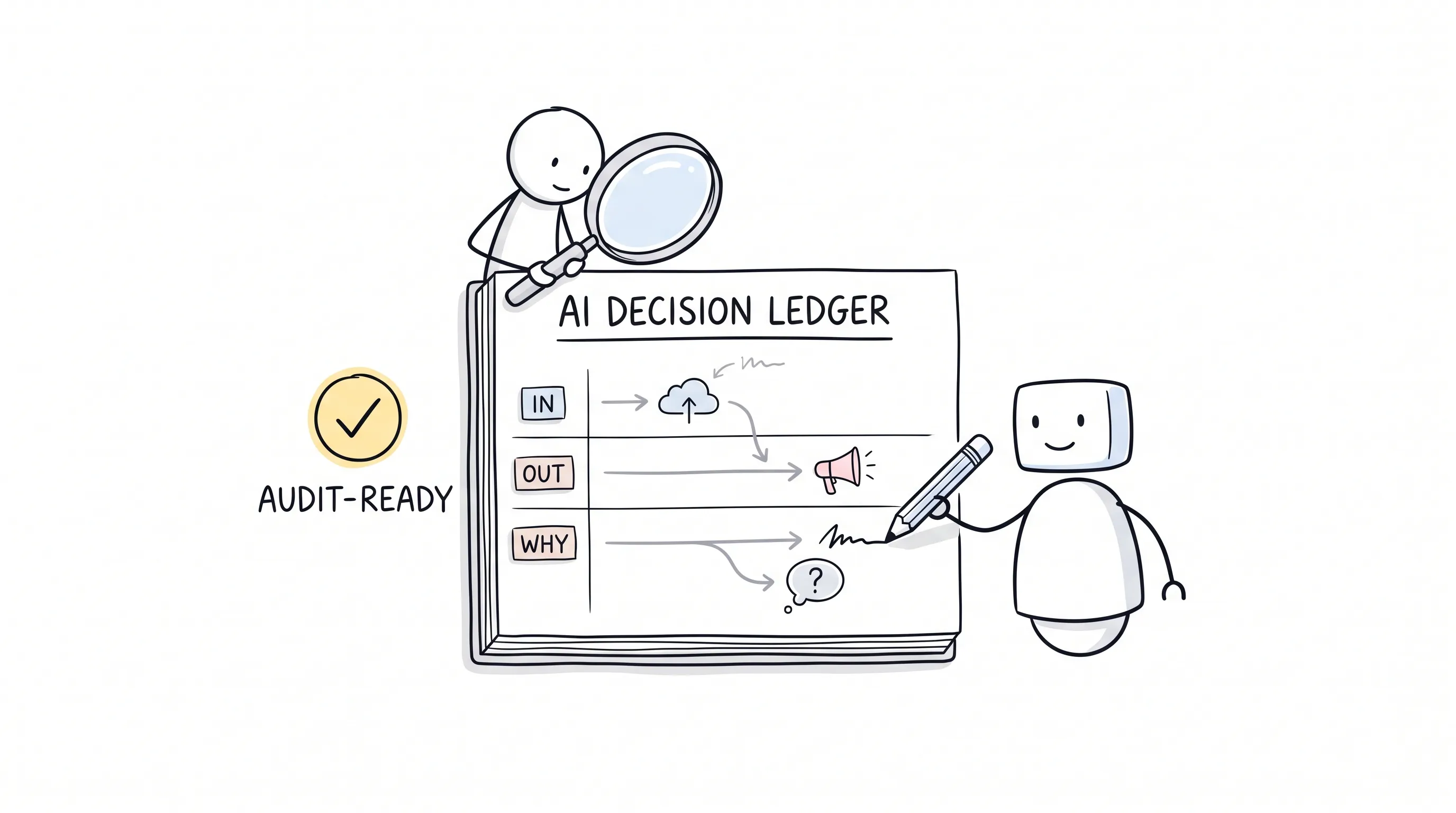
What Is AI Transparency?
Plenty of marketers think "transparency" just means: don't lie.
It goes further than that.
AI transparency means that whenever your automated system makes a decision, you can explain the reasoning. Why did this group get sorted into "high-value"? Why did this copy go to A and that copy to B? What made it okay to push the same thing to him three times in a row?
Your internal team has to understand it. Your customers have to follow it. Your auditors have to find the records.
Think about it: starting this year, auditors and compliance officers have begun going to marketing teams, hands out. What for? Detailed logs of AI decisions. How the model works, where the data came from, how that segmentation of a thousand-plus people was computed — every single item has to be produced on demand.
Produce them, and you're transparent.
Can't produce them, and you're a black box.
The phrase "black box" stings. But regulators don't care whether you got there by accident or on purpose. A black box is a black box.
So what do you do? Two moves.
First, log every AI input and output. Make it visible and traceable for your team: every campaign leaves a trail, and one lookup shows who changed what, on which day.
Second, explain things to customers in plain words: this content was AI-assisted, here's what we used it for. Write it in human language, not legalese. And give users a path: if they don't accept the outcome, they can appeal it and ask for a second look.
Put simply: you don't just have to do right — you have to be able to prove you did right.
It only counts as done if you can prove it.
Data Privacy: Consent Can Be Revoked
Now, privacy.
You've probably heard a hundred times that consumer data is the fuel of AI marketing. But regulators in 2026 have spelled out, in fine detail, how that fuel may be used: what information you collect — tell your users. How long you store it — tell your users. What rights users hold — above all, tell your users.
What rights, exactly?
More than the moment they click "I agree." Users can change their minds at any time and revoke their consent. They can come and check, at any time, exactly what you hold on them. And if they don't want to be tracked for personalization, they can opt out.
And none of this can be smuggled past them in a page of legal jargon — it has to be explained in words they actually understand.
How do you handle this technically? Remember four terms: anonymization, secure storage, granular permissions — and data minimization.
That last one matters most: if you don't need to collect it, don't. The less you store, the smaller your risk — and the more at ease your users.
Now flip it around and think about how users feel. Someone searches for one word in an app; five minutes later their family members are scrolling past ads for it everywhere. That isn't intelligence. That's surveillance. Users can tell the difference — and they get better at telling it every year.
You assume users haven't noticed. They have — they just can't be bothered to fight you over it.
AI Governance: Who's Responsible, Plainly Put
"Governance" sounds grand — like you're about to draft a constitution for your company.
It's really not that mysterious.
Governance means answering a handful of questions: Who is responsible for AI decisions? How often do you review them? When something goes wrong, how do you fix it — and within what deadline?
One provision in this year's new rules is very concrete: marketing teams must formally document how their algorithm models were chosen, what training data was used, and how the output was analyzed. And note: this isn't paperwork you backfill after an incident — it has to exist as you go.
And there's one more thing that's especially easy to overlook.
Algorithms learn from historical data. Whatever bias sits in that history, they learn it — and may amplify it. So automated campaigns can't be left on autopilot: review the algorithms on a schedule, hunt for bias proactively, put a human gatekeeper on how far content personalization goes, and never manipulate users' emotions for the sake of conversion rates.
And when errors happen? You need an escalation path. Someone on the front line spots a problem — who picks it up? How fast must it be resolved? And once it's resolved, does the user get an answer?
If you haven't thought these through in advance, the day something breaks, you're the one panicking.
The Regulatory Yardstick Now Measures Marketing Too
At this point you might ask: is that really necessary? We're not some big tech company.
It is.
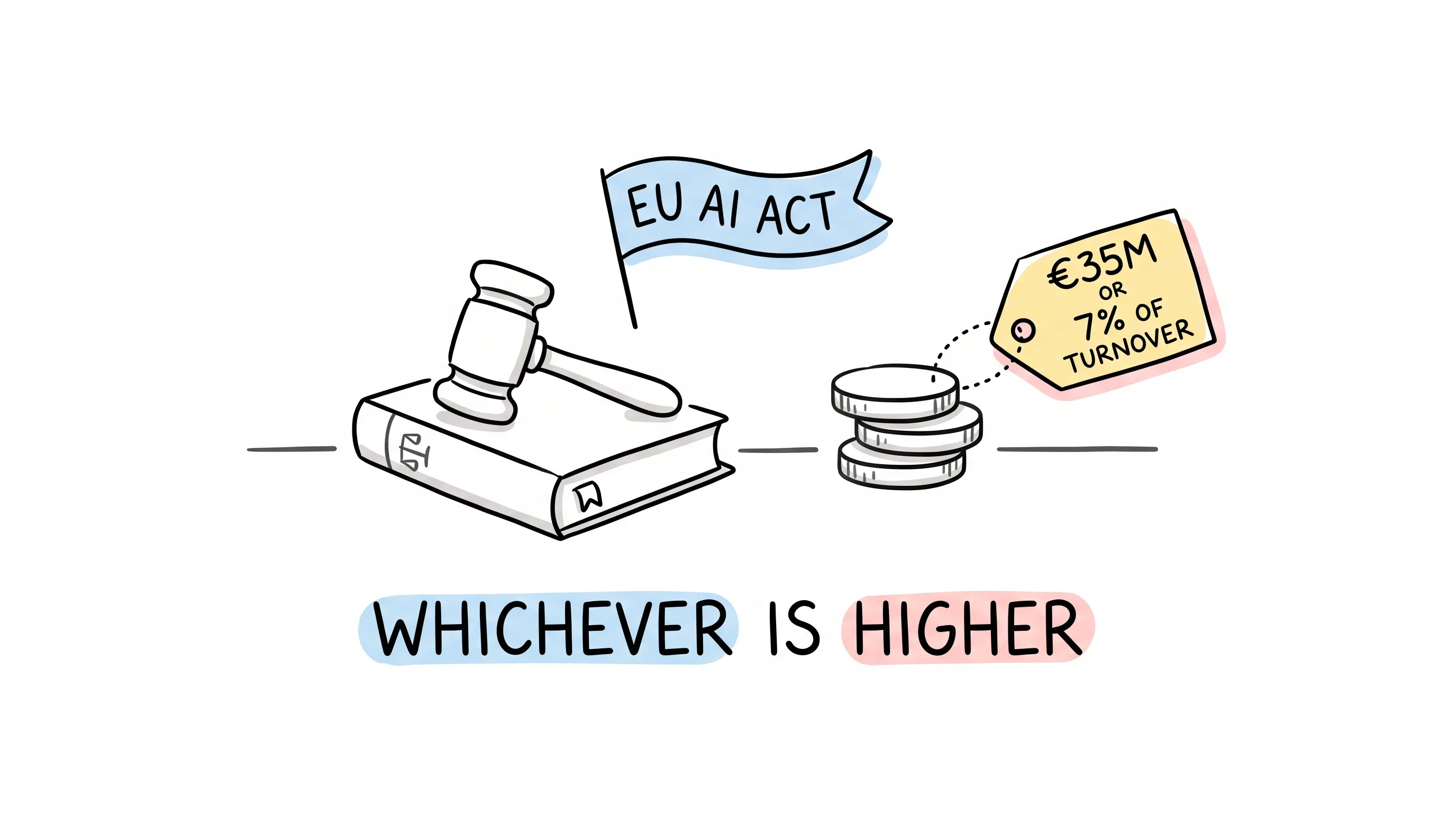
The EU AI Act has already taken effect this year, and its transparency and accountability obligations apply across the board, from high-risk applications to low-risk ones. The US is pushing its own rules, Australia's Office of the Australian Information Commissioner (OAIC) is in motion, and plenty of Asian jurisdictions are following suit. The direction is the same everywhere: you must be able to spell out how your AI works, explain why a marketing decision was made, and account for every piece of consumer data you collected.
How steep are the penalties? Under the EU AI Act, the most serious violations carry fines of up to €35 million, or 7% of global annual turnover — whichever is higher.
Do the math on that.
That's why the ones who move first never treat regulation as a nuisance. They treat compliance as a moat.
Compliance Is Actually an Opportunity
This is the part I most want to say.
For most people, the first reaction to "compliance" is cost: hiring people, buying systems, writing documentation.
Run it the other way.
Teams that get compliance right can adopt new tools with confidence, without worrying daily about legal risk knocking. When an audit arrives, they spread the documents on the table and walk the auditor through everything in ten minutes — while competitors are still combing through chat logs for evidence. And as users grow more privacy-conscious, they vote with their feet, handing their data to the brands that put them at ease.
Platforms that turn compliance into a product capability are already on the market. Robotic Marketer's Digital Dashboard, for example, brings user consent, access requests, and audit logs together in a single panel: data flows stay visible, decision trails stay traceable, and any anomalous metric triggers an alert. The real value of tools like this isn't the headcount they save — it's that you sleep soundly in the middle of the night.
Saving money is the small win. Saving peace of mind is the big one.
So What Do You Actually Do?
Four things. None of them is hard; the hard part is keeping them up.
-
Build privacy checks into every campaign. Before launch, ask: is this round of data collection actually necessary? Can users change their preferences in one click? Is the privacy notice written in plain human language?
-
Make impact assessments routine. Not a once-a-year performance, but a pass every time you substantially change a model or swap in a new data source. The same goes for bias detection: a one-time health check means nothing — you have to keep watch all year round.
-
Hold your vendors to your own standard. Do your partners and contractors meet the same privacy and governance standards you do? When they slip, the liability burns you all the same.
-
Turn accountability into culture. Encourage the team to challenge questionable decisions, and reward whoever finds a flaw instead of grilling them with "why are you making such a fuss." From the boss to the interns, everyone owns a share of what AI produces.
Not one of these four takes talent. All it takes is changing "we'll deal with it later" into "we start today."
Finally, Back to That Dinner
When the bill came, I told my friend: just remember one line.
Treat every AI decision like a ledger that could be opened for inspection at any moment. When that day really comes, you can hand it over with a smile — instead of adding the missing pages overnight.
He smiled and said okay.
I don't know whether he actually will. But I've watched too many teams pull all-nighters backfilling documents the night before the regulator shows up at the door. That kind of panic isn't worth it.
Automation that can't stand the light of day always comes due.
Here's to every AI campaign you run in 2026: may it withstand an audit — and let you sleep at night.
Continue reading
Related articles

Cross-Border Business: Time to Upgrade Your AI Toolbox
A learn article explaining how AI tools help cross-border e-commerce sellers clear five hurdles: language, regulation, logistics, payments, and fraud. It outlines a five-compartment toolbox, a five-step adoption path, and metrics such as conversion rate and CLV, while cautioning against over-reliance on AI.

AI Is Taking Over the Dirty Work of Social Media Marketing, One Task at a Time
This learn article outlines four social media marketing tasks AI can handle — audience analytics, content drafting and design, ad targeting and creative testing, and spam moderation — and cautions that taste, judgment, and data security remain human responsibilities.

AI Is Already This Good — Why Is Your Social Media Marketing Still Pure Manpower?
An overview of 18 AI tools for social media marketing, organized into six categories covering audience research, content creation, scheduling, comment and DM handling, ad management, and visual production, plus notes on personalization, prediction, and emerging trends.