
Is your ad volume ready to feed an AI optimizer?
An overview of eight ad-automation tools and how to match them to your monthly conversion volume, with rules-based automation suggested for low-volume teams and AI optimizers for high-volume ones, plus a caution list on trials and opaque pricing.
A friend running a media team asked me recently: should we adopt an AI ad-optimization tool?
I asked back: how many conversions per channel per month?
"Thirty or so," he said.
"Then don't buy one yet."
He was stunned. Isn't that contradictory? Everyone says AI media buying is the future — how come it doesn't apply to me?
Not contradictory at all. A recent review of ad-automation tools built for SaaS teams puts it sharply: the best tool isn't the smartest one. It's the best-matched one.
One: the terrain of eight tools
That review covered eight mainstream tools, and the terrain looks like this:
Optmyzr — the veteran of Google Ads automation: rules, reports, bulk edits, the works.
Madgicx — deep on Meta, with creative insights and audience optimization.
Adext AI — cross-platform audience testing; the machine finds its own best segment combinations.
Albert — the enterprise tier, for teams with serious budget.
Bïrch — the flag bearer of rules-based social automation: set the triggers, the machine follows the book.
Opteo — a Google butler for lean teams.
Smartly.io — creative production and media optimization welded into one pipeline.
Trapica — a lightweight option for self-serve advertisers.
Terrain mapped. But selection isn't "pick one of the eight."
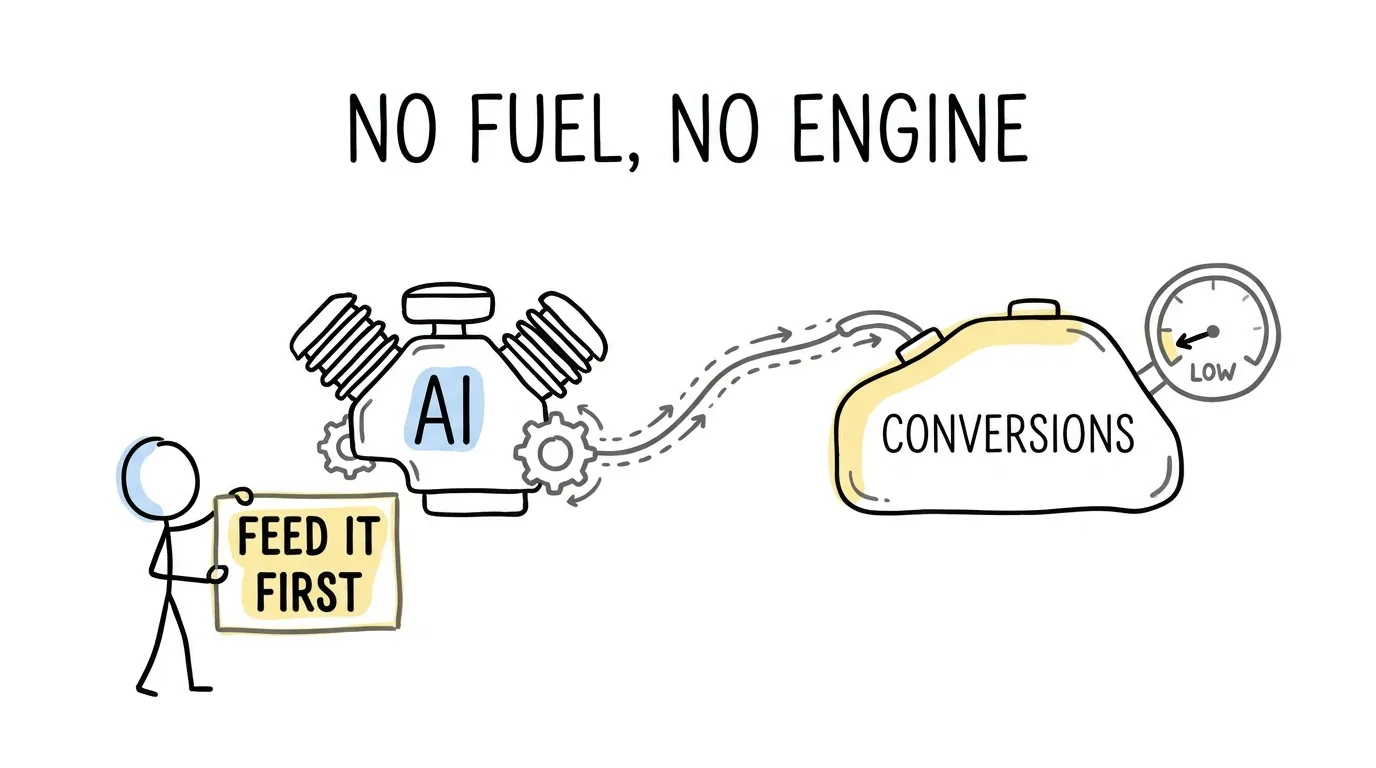
The real question is: can your conversion volume feed the AI?
Two: conversions are the AI's food
Machine learning has a humble precondition: there must be samples to learn from.
A channel converting a few dozen orders a month can't accumulate a meaningful sample. The "optimal strategy" the model learns is noise dressed as signal. You pay for AI and receive a placebo of randomness.
The review's author puts it directly: for sales-led B2B, conversion volume is too thin for most AI optimizers to learn anything — rules-based automation is more reliable there.
Meaning what? Set rules honestly: pause when cost crosses a threshold, scale when conversions hit target, refresh creative when fatigue shows. Plus a weekly human review.
Not sexy. Effective.
When does AI get its turn? Teams above a thousand monthly conversions. With a thick sample, the model has something to learn, and the machine's judgment can finally beat a human's.
Three: the most valuable part of the review is the caution list
What stuck with me most wasn't the recommendation — it was the warning.
One Meta-only tool hides its pricing until you're inside the app. The trial's billing terms contain traps nobody reads, and some users discovered charges on day 7.
Three lessons, copy them straight into your procurement handbook:
First, for opaque pricing, budget for the worst case before you even talk deal.
Second, set a day-6 reminder on every trial, solely to check billing.
Third, for single-channel tools, value them by asking "will we really stay on this one channel long-term?" — never pay twice for cross-platform features you won't use.
Four: a matching table — find your row
Compress the logic into four rows.
Tens of conversions a month, tight budget: rules-based automation plus human review. Tools in the Optmyzr/Opteo class; spend the savings growing sample size.
Hundreds a month, multiple channels: cross-platform management tools first — unify data and reporting before talking optimization.
Thousands a month, product-led growth: the AI-optimizer playground — the Madgicx/Adext class. Let the machine run.
Enterprise budgets, multi-brand, multi-market: the Albert/Smartly.io class, where the game is system integration and creative capacity.
Find your row at a glance.
Five: my take
The most counterintuitive truth about ad automation: it isn't an arms race. It's a food problem.
An AI's intelligence is fed by your conversion data. Without enough food, no machine runs.
So the order is always: volume first, then data, then intelligence. Skip the first two and buy the most expensive tool, and you've hired a Michelin-star chef — and handed him one potato.
May every dollar of your budget be spent on match.
Continue reading
Related articles

Did the Money You Spent on AI Marketing Ever Come Back?
A guide to measuring AI marketing ROI across three layers: ad reports, sales pipeline, and the financial ledger. Covers metrics such as ROAS and CPA, eight dashboard metrics, industry benchmarks, and common measurement mistakes.

How to Pick a Creative Automation Platform: First, Figure Out What These Eleven Actually Do
A learn article sorts eleven creative automation platforms — including Bannerflow, Celtra, Smartly.io, and Storyteq — into four functional groups and proposes five evaluation questions covering publishing reach, automation depth, ease of adoption, team fit, and verifiable evidence.
How to Choose a Creative Ad Tech Platform: Put 8 Side by Side, and the Gap Isn't Features — It's How Far the AI Actually Goes
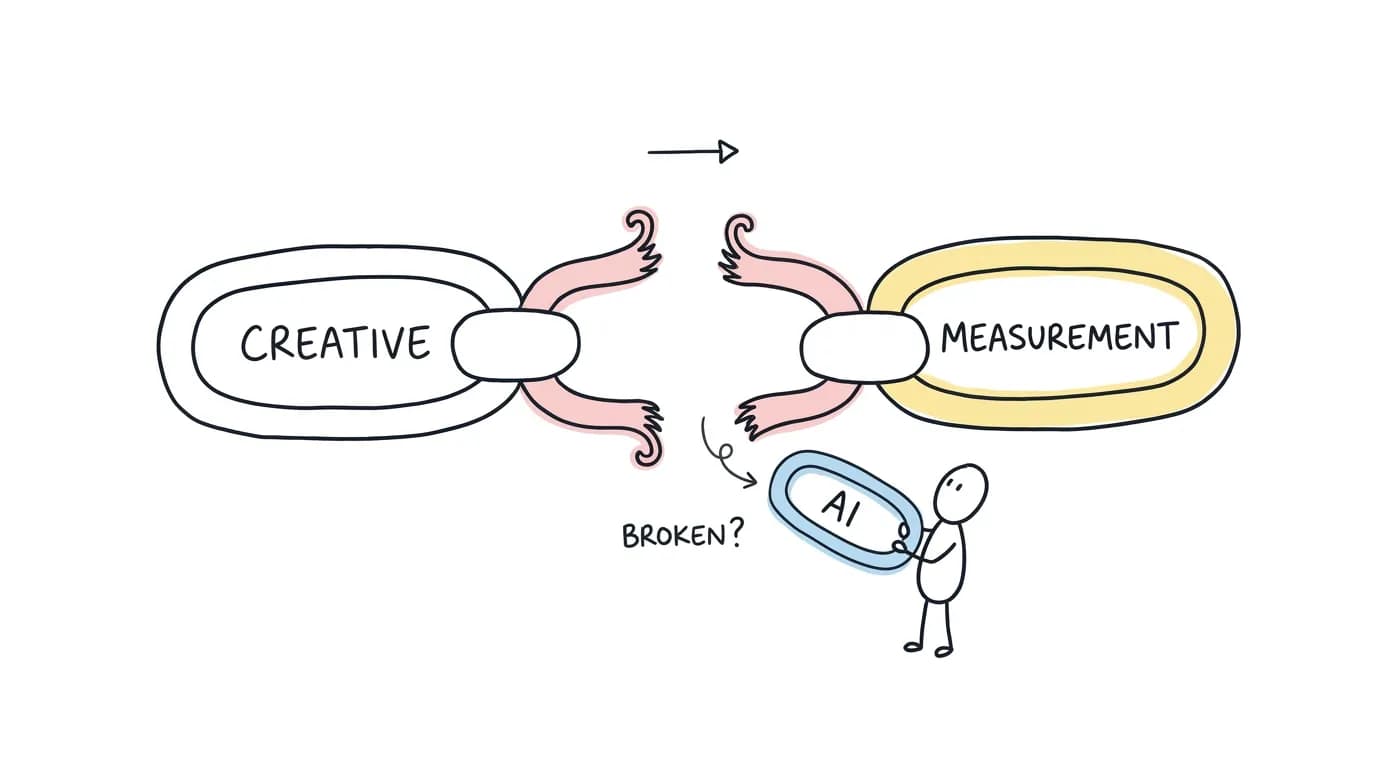
This article compares eight creative ad tech platforms—Innovid, Smartly, Clinch, Jivox, Celtra, Bannerflow, Google CM360, and VidMob—on channel coverage, creative production, ad serving, measurement, and AI agent capabilities. It suggests matching the platform to the broken link in the creative-to-media chain.