
How to Choose a Creative Ad Tech Platform: Put 8 Side by Side, and the Gap Isn't Features — It's How Far the AI Actually Goes
This article compares eight creative ad tech platforms—Innovid, Smartly, Clinch, Jivox, Celtra, Bannerflow, Google CM360, and VidMob—on channel coverage, creative production, ad serving, measurement, and AI agent capabilities. It suggests matching the platform to the broken link in the creative-to-media chain.
A few days ago, I had dinner with an old friend who runs brand media buying. He vented: his creative team turns out thousands of videos a month, his media team works overtime every day, and yet ROAS just won't move. And each side blames the other. Creative says: you buy badly. Media says: you make it badly.
I asked him one question: are creative and media at your shop two teams, two tool stacks, two workflows?
He paused. Then: yes.
That's what this piece is about. What is creative ad tech, exactly? Put plainly, it's the full set of tools that takes an ad from "made" to "launched" to "proven": producing assets, versioning them, serving them, measuring them, optimizing them — across CTV, video, display, and social.
In its Q2 2026 creative ad tech landscape report, Forrester put it bluntly: creative determines how media performs, and it's the single most effective lever for lifting ROAS.
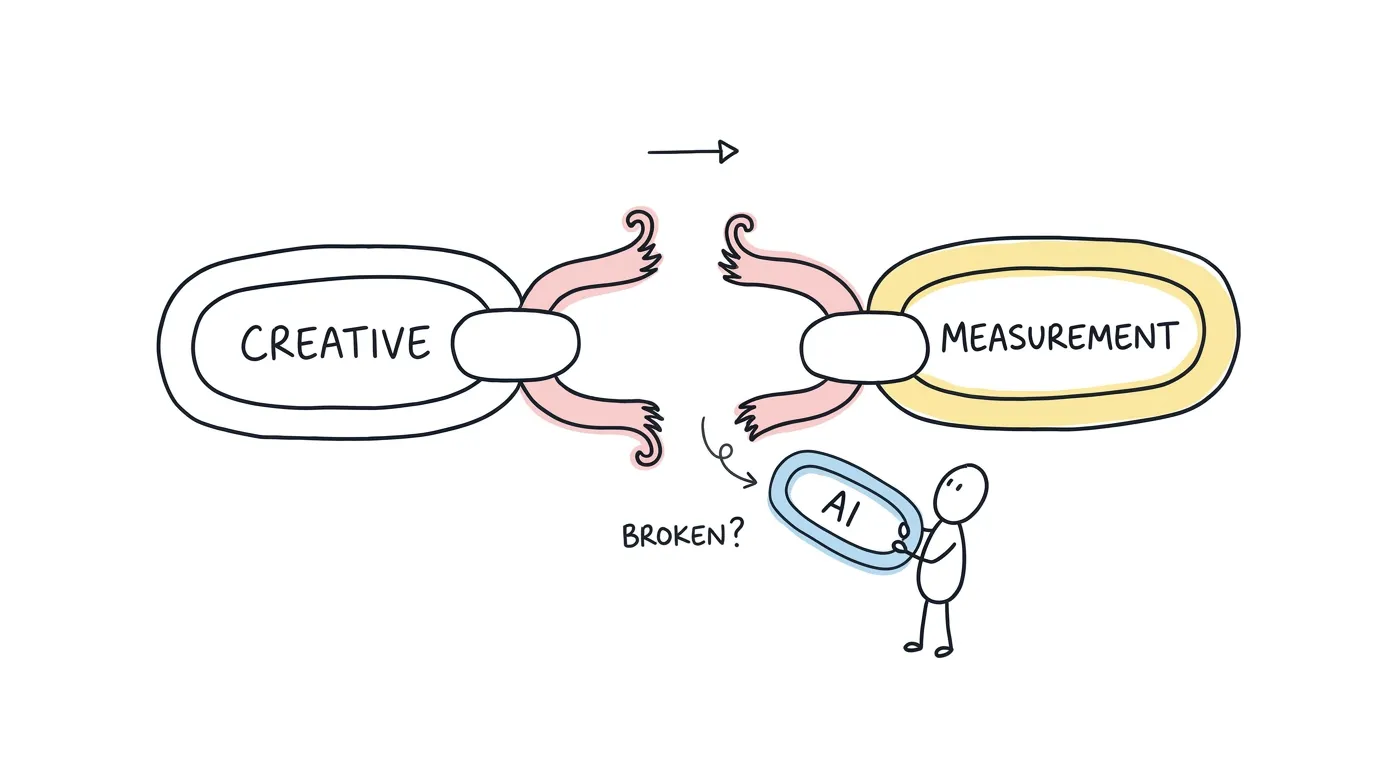
The problem is that most teams hold that lever and can't pull it. Why? Because creative and media live in two different worlds.
Three Things Are Happening in This Market
First, platforms are converging on "connection." Advertisers are worn out by tools that each govern one slice of the pipeline, and they now want platforms that link creative management, ad delivery, measurement, and optimization. When QKS Group assessed creative ad platforms in its 2026 SPARK Matrix, it stressed exactly this: the value lies not in any single feature but in connecting stages that used to operate in silos.
Second, generative AI has made "making assets" fast and cheap. Gartner's research finds 88% of CMOs expect generative AI to have a positive impact on marketing spend and strategy; Mediaocean's H2 2026 market report shows 60% of marketers plan to increase AI-related investment. But think it through: however fast you produce assets, that's only the first mile of a long march. What comes after? Personalization, trafficking, serving, measurement, optimization — none of it optional. A faster cook is no use if the dish never reaches the guest's table.
Third, agents have started doing real work. What is generative AI? It handles "making." What is an agent? It handles "getting it done." Campaign setup, scheduling, QA, reporting, in-flight optimization — one continuous run with no human handoffs in between.
Generative AI answers "do we have it." Agents answer "does it run."
Stack these three shifts together and the logic for picking a platform changes. Judging a platform by whether some AI feature looks flashy is useless. What matters is whether it can connect creative to media and to measurement — and whether its AI merely writes reports or can actually roll up its sleeves.
I Ran Everything Through Six Yardsticks
I put the eight platforms worth naming through six yardsticks:
- Channel coverage. CTV, linear TV, digital video, display, social, audio, out-of-home, retail media — everything at once, or excellence in just one?
- Creative production and personalization. Can it produce, version, and dynamically personalize at scale, including video and interactive formats?
- Ad serving. Does it serve in-house, or hand assets off to someone else's ad server?
- Measurement and creative insight. Can it tie individual creative elements to reach, frequency, conversions, and sales?
- Agent infrastructure. Does the AI only generate assets and arrange data, or can it genuinely act in campaign setup, scheduling, QA, and in-flight optimization?
- Enterprise readiness and independence. Will it hold up under multiple brands, markets, and teams? Does it integrate with your existing stack? And the most important question: does it sell media itself? Only a platform that doesn't sell media keeps measurement free from a seller's conflicts of interest.
Measurements done, here's everything on the table.
The 8 Platforms, One by One
Innovid: full-chain agents — the only one with AI spread across the entire lifecycle.
Built for global brands and agencies running large omnichannel campaigns. Its core is NIVO, an agent system that runs across the full chain of creative, delivery, measurement, and optimization. Nearly every comparable tool applies AI at a single step — usually asset generation. NIVO's approach is to connect data, decisions, and execution. In 2025 it added an orchestration layer, NIVO Action: its own agents coordinate the work, while brands can bring their own agents, data, and tools into the loop.
Does it have numbers? It does. In pilots with brands including Canvas, FanDuel, Optimum, Paddy Power, and Tailwind, agent-built campaign setups ran up to 90% faster than manual ones. In April 2026, the social campaign-builder interface Hypermode opened to general availability, with early customers reporting setup time savings of up to 80% across Meta, Pinterest, Reddit, Snapchat, and TikTok. In September, it connected to Meta's ads MCP server, letting advertisers drive workflows through conversation.
CTV is another of its signature strengths: interactive and dynamic CTV formats, reach and frequency management across linear plus streaming, performance measurement, verification — plus, from April 2026, purchase data and publisher attribution. And because it belongs to no media-selling giant, data ownership and delivery strategy stay in the advertiser's hands; backed by Mediaocean, it can also plug into Prisma for buying and Protected for brand safety. In Forrester's Q4 2026 Wave for creative ad tech, it took the highest band in the "current offering" category, with perfect scores on 13 sub-criteria.
Now the shortcoming: it's built for enterprise-scale, multi-channel programs. A small team that just wants a banner or manages a single social channel will find it like driving a truck to the grocery store.
Smartly: the handy tool for social-first delivery teams.
For performance teams whose budgets concentrate on social platforms and who want production and buying under one roof. It covers Meta, TikTok, Pinterest, Snapchat, Google, YouTube, Amazon, Reddit, and CTV. The AI investment is real: there's AI Studio, and there's Creative Predictive Potential, which forecasts how an asset will perform. But its AI lives inside social creative and social optimization — its own walled garden. For independent serving, or household-level frequency management across CTV and linear, you'll need other tools.
Clinch: for agencies that want to pay for outcomes.
Its Flight Control orchestration strings creative production, DCO, and serving together, with AI applied to asset variations, tagging, and workflow automation. Pricing isn't based on impressions — friendly to agencies. One caution: its automation revolves around its own platform. For deeper needs such as multi-tier decisioning or a single source of truth across channels, test that depth yourself before signing.
Jivox: a sharp knife for retail and commerce media.
For CPG, retail, and e-commerce brands that treat personalized commerce advertising as the top priority. Jivox IQ Enterprise uses DCO to personalize commerce ads at scale; DaVinci Commerce is an AI-native self-serve platform where advertisers, retailers, and agencies can launch a commerce campaign within five minutes — and it has hooked into AI shopping agents such as Perplexity's Buy with Pro. The drawback is just as plain: the blade is all on the commerce side. To run large-scale CTV, linear, or social programs, you'll need help — and that helper's AI doesn't talk to Jivox's.
Celtra: the floor supervisor of global mass production.
For the in-house studios of global brands that must produce tens of thousands of compliant assets across many markets and formats, this is home turf. Generative AI plus automation handles production; AI scoring predicts performance after launch. But its AI essentially stops at production and launch. In public materials through the fall of 2026, there's no agent that can schedule, manage frequency, or optimize across channels in flight. It's the front end of the creative assembly line, not the whole line.
Bannerflow: the steady workhorse of European display teams.
Focused on HTML5 display ads, DCO, and live updates to creatives already in flight, connected to more than 100 ad networks — you can change a creative without re-scheduling delivery, which is genuinely useful. Its automation concentrates on display production, automatic optimization, and A/B testing. But anything beyond display — big spends led by CTV and video, teams that want agents — it can't carry. And outside Europe, its presence is faint.
Google Campaign Manager 360 + Studio: the convenient pick if you're betting on the Google ecosystem.
Handy for teams that buy mainly in DV360 and want DCO directly inside Google's ad server. Google is rebuilding Studio into a standalone workspace inside CM360, and DCO is expanding to video; DV360 has begun replacing manual creative rotation with automated optimization tied to bidding strategy. But note: this automation is designed for Google's own media. It follows Google's playbook, not your omnichannel plan. Its creative tools have also churned heavily over the past two years: Ads Creative Studio was shut down in 2025, and creative project features are being removed from the CM360 interface. Think hard about how much of Google's story you want to buy.
VidMob: a creative intelligence layer — it diagnoses but doesn't prescribe.
For large advertisers who want to know exactly which creative elements drive results, viewed across brands, agencies, and markets, it excels. Its data pool reportedly spans more than 18 million assets and 300,000 ad accounts. In January 2026, its Maddie AI copilot opened to general availability, and Vidmob360 began exposing creative data to external agents via MCP. But its AI "tells you"; it doesn't "do it for you." It generates no assets and serves no ads. Use it, and you must pair it with a platform that can act — ideally one whose agents can act directly on its diagnoses.
How to Choose? Find Where Your Chain Breaks
- Omnichannel enterprise campaigns that need creative, independent serving, measurement, and optimization in one system → Innovid
- Social-first performance teams with modest budgets → Smartly
- Retail and commerce media → Jivox; for Amazon-heavy programs, Clinch is a viable alternate
- Global mass production and localization → Celtra; for Europe-heavy display, Bannerflow
- All-in on the Google ecosystem → CM360 with Studio
- Creative analysis only → VidMob, plus an execution platform that can act
- Agencies that want to pay for outcomes → Clinch
One last observation from running the measurements. Of these eight, the only one whose agents genuinely span creative, delivery, measurement, and optimization end to end — as of the fall of 2026, in public materials — is Innovid. The others aren't slacking; their territory is simply different: Smartly's AI lives on social media, Jivox's lives in commerce, Celtra's lives at the tail of the production line. So before you buy, get these questions answered: which tasks can the agent complete end to end without a human handoff? Does it act in flight, or report after the fact? How many channels does it cover? Does it plug into the workbench you already run? And those efficiency figures — measured against what baseline?
Oh, and the last time I saw that friend, I gave him one line: before you pick tools, map your "creative-to-media" chain, find the segment that's broken, and buy the tool that bridges that break.
Tools are bought to bridge broken links, not to join the crowd.
Here's hoping you get to pull that lever — for real.
Continue reading
Related articles

It's 2026: Stop "Buying" AI Tools for Your Marketing Team — Start "Hiring" AI Agents
This learn article explains how AI agents differ from standalone AI tools in marketing, outlines three agent categories — build-your-own platforms, CRM-native agents, and vertical tools — and covers use cases across SEO, social media, advertising, and reporting, plus criteria for choosing one.

Did the Money You Spent on AI Marketing Ever Come Back?
A guide to measuring AI marketing ROI across three layers: ad reports, sales pipeline, and the financial ledger. Covers metrics such as ROAS and CPA, eight dashboard metrics, industry benchmarks, and common measurement mistakes.

How to Pick a Creative Automation Platform: First, Figure Out What These Eleven Actually Do
A learn article sorts eleven creative automation platforms — including Bannerflow, Celtra, Smartly.io, and Storyteq — into four functional groups and proposes five evaluation questions covering publishing reach, automation depth, ease of adoption, team fit, and verifiable evidence.