
Everyone's Using AI, but Nobody's Doing the Math: 8 Signals from 58 Data Points
An analysis of 58 public generative AI statistics distilled into 8 signals: the market is growing, demand is real, and most organizations lack measurement frameworks. It also notes how AI summaries in search results reshape how content gets discovered.
A couple of days ago, I needed to look something up, so I opened a search engine.
Typed in the keywords, hit enter. At the top of the results page, the first thing that appeared wasn't ten blue links — it was an AI-written summary, with the key points laid out clearly. I didn't even bother clicking the links.
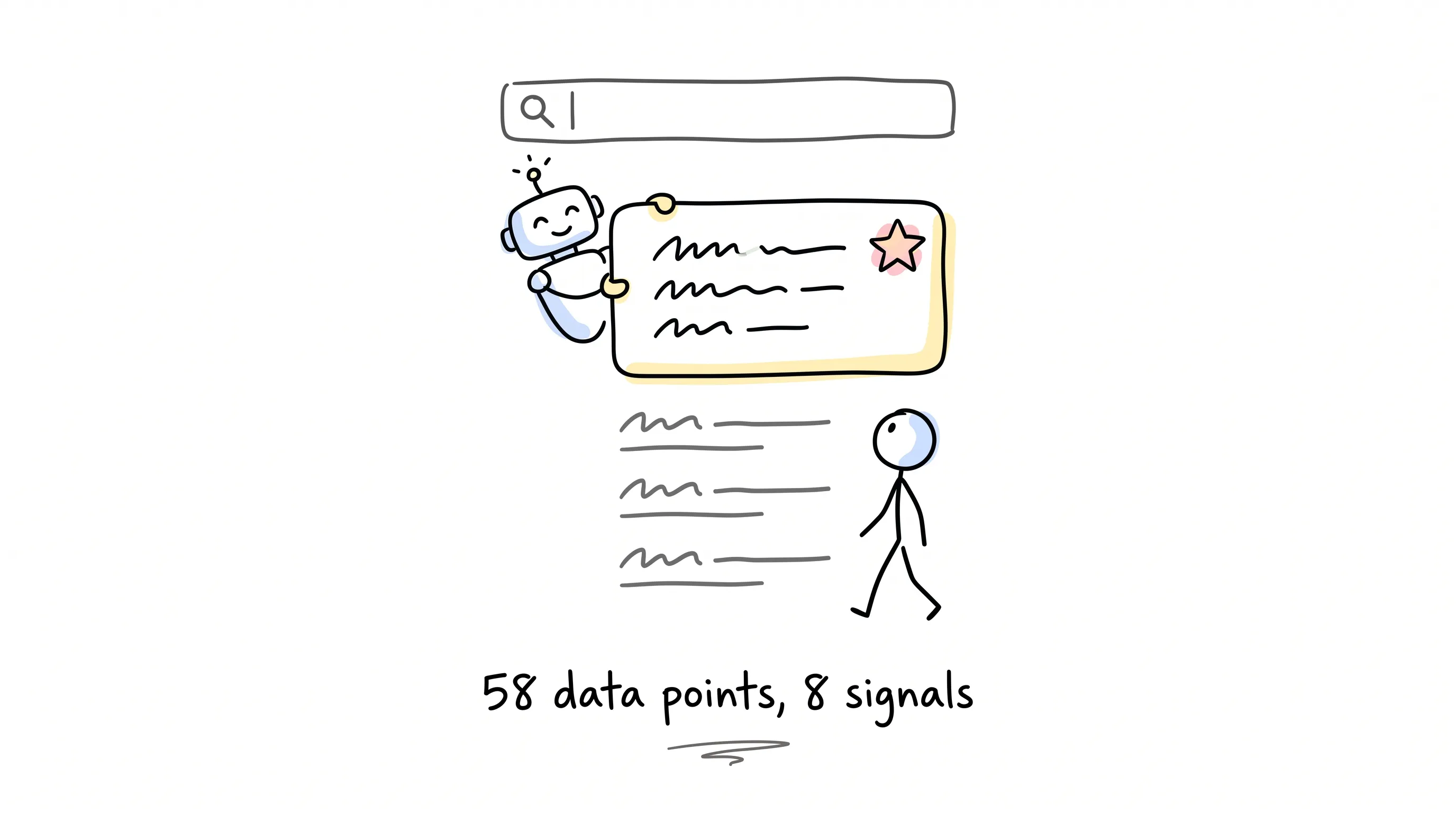
After reading it, I froze for a second: I honestly can't remember how many times I've repeated that exact motion.
Recently I came across an analysis that took a careful count of what's really going on behind all this.
58 Data Points, 8 Signals
In early 2026, Digital Silk, an agency specializing in branding, web design, and digital marketing, laid 58 publicly available generative AI statistics out on the table. The data comes from established research firms and covers both the US and the wider world.
From those, they distilled 8 trends.
Eight sounds like a lot. But group them together, and they're really three things: the market is growing, the demand is real, and companies can't keep up.
Let's take it layer by layer.
Layer 1: The Market Is Still Growing
Start with the most obvious part.
Estimates of market size keep moving upward. At today's pace of investment and adoption, this pie is only going to get bigger.
The tools keep multiplying, too. The number of generative AI tools in active use keeps rising. Creators, coders, process managers — everyone is giving them a try.
What does that tell us? It tells us this is no longer a game for a select few. The barrier to entry has dropped, so naturally more people are walking in.
Layer 2: The Demand Is Real
Now look at both ends. One end is companies hiring; the other is ordinary people getting hands-on.
On the hiring end, the signal is strong. Generative AI skills come up constantly in US job postings. Bosses have stopped just chatting about it — they've written it straight into the hiring requirements.
On the everyday-user end, it's even more direct. The statistics show that a sizable share of American consumers have already used generative AI tools. For what? Search, and content-related tasks.
For example, when you want to look something up, you just ask AI.
For example, the very scene I opened with.
The demand side voted with its feet long ago. The only ones still holding meetings about whether to adopt are the companies themselves.
Layer 3: Can't Keep Up
Here's where it gets interesting.
The data shows that plenty of organizations are experimenting with generative AI. But how many have set up a formal measurement framework for it? Very few.
What is a measurement framework? Plainly put, it's doing the math. How much went in, how much was saved, whether output actually changed — let the numbers speak.
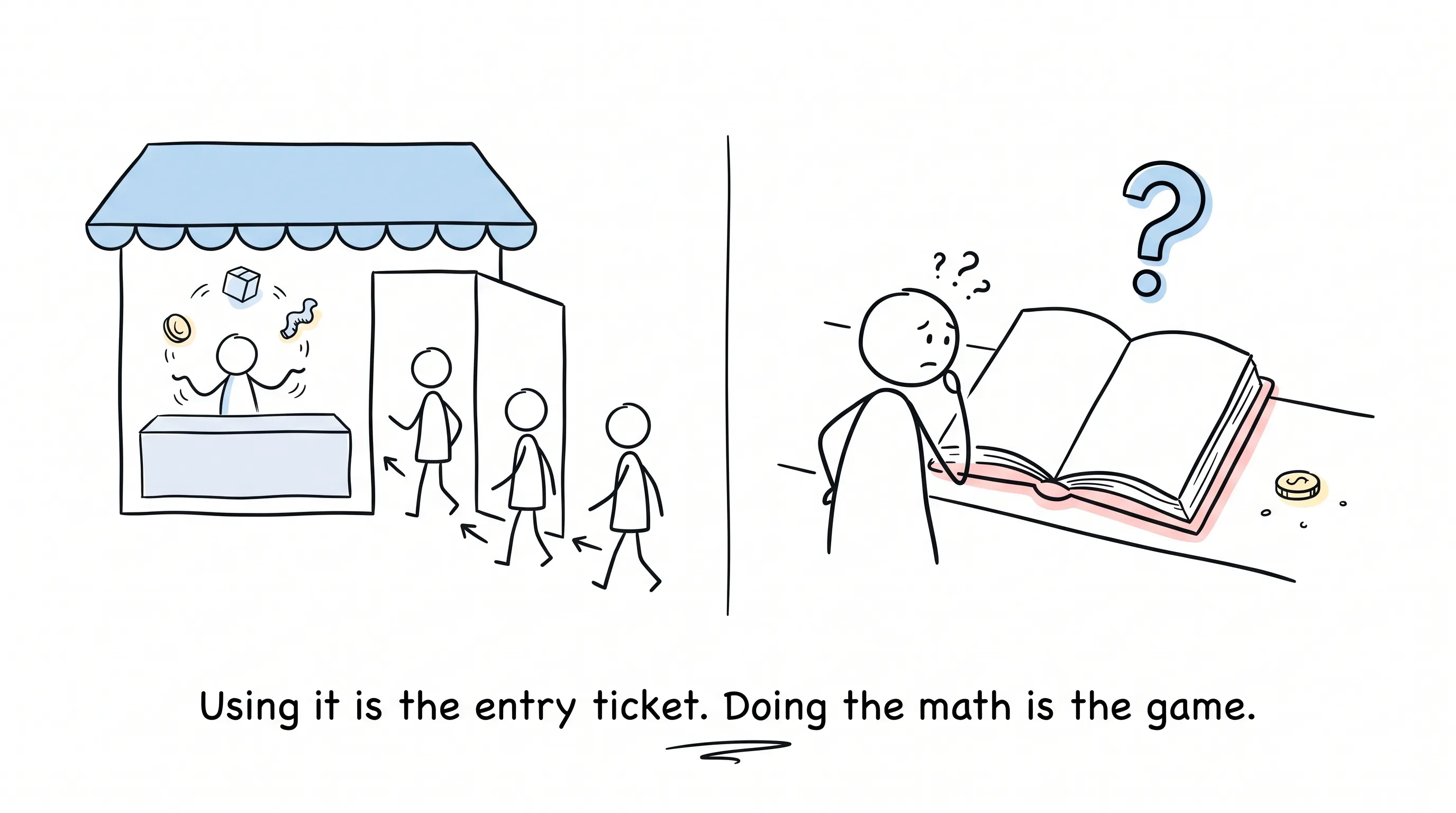
So where does that leave many companies today? They've opened a shop, customers walk in every single day, and the owner never keeps the books. Busy — absolutely. Profitable — no idea.
In discussions about workflows, generative AI comes up more and more, especially for roles that touch data processing, writing, and development.
People are using it, no question. But the math — nobody's doing it.
On top of that, add a roomful of governance headaches: is the data accurate, how hard is deployment, how do internal policies line up. Three things, and every one of them is a blocker.
Using it is only the entry ticket. Knowing how to do the math is what really puts you in the game.
Back to That Page of Search Results
Now, you can go back to the scene at the beginning.
On the results page, AI summaries are showing up more and more. The way users find information is being rewritten. Before, a human flipped through links; now AI reads it all first, then retells it to you.
For people who make content, there's no dodging this step. Your work has to be readable by AI first — and worth retelling — before a user ever gets to see it.
Oh, and one last thing. The publisher of this analysis puts it plainly themselves: pulling the statistics into one place is about seeing where adoption is happening and where people are still evaluating. It's a snapshot — it records what has already happened; it makes no promises about the future.
A snapshot is, in fact, the most honest thing there is. It doesn't guess at tomorrow; it just tells you where you're standing today.
As for where to go next, and how to start doing the math — that homework belongs to each company.
Here's to riding this wave of AI — fluent at using it, and clear-eyed about what it's worth.
Continue reading
Related articles

Cross-Border Business: Time to Upgrade Your AI Toolbox
A learn article explaining how AI tools help cross-border e-commerce sellers clear five hurdles: language, regulation, logistics, payments, and fraud. It outlines a five-compartment toolbox, a five-step adoption path, and metrics such as conversion rate and CLV, while cautioning against over-reliance on AI.

AI Is Taking Over the Dirty Work of Social Media Marketing, One Task at a Time
This learn article outlines four social media marketing tasks AI can handle — audience analytics, content drafting and design, ad targeting and creative testing, and spam moderation — and cautions that taste, judgment, and data security remain human responsibilities.

AI Is Already This Good — Why Is Your Social Media Marketing Still Pure Manpower?
An overview of 18 AI tools for social media marketing, organized into six categories covering audience research, content creation, scheduling, comment and DM handling, ad management, and visual production, plus notes on personalization, prediction, and emerging trends.