
Does ChatGPT Know Your Brand?
A learn article on why brands may be absent from AI-generated answers and how to evaluate AI content platforms. It groups vendors into categories, outlines selection criteria such as governance, brand voice, and incremental visibility, and discusses total cost and timing factors.
A few days ago, I had dinner with an old friend.
He's the CMO of an enterprise software company — a few hundred people, and every one of their clients is a large enterprise.
Halfway through the meal, he pulled out his phone and showed me a screenshot.
He had asked ChatGPT a question about their industry. The AI answered with total command of the subject — and at the end, it casually recommended a few service providers.
His company wasn't among them.
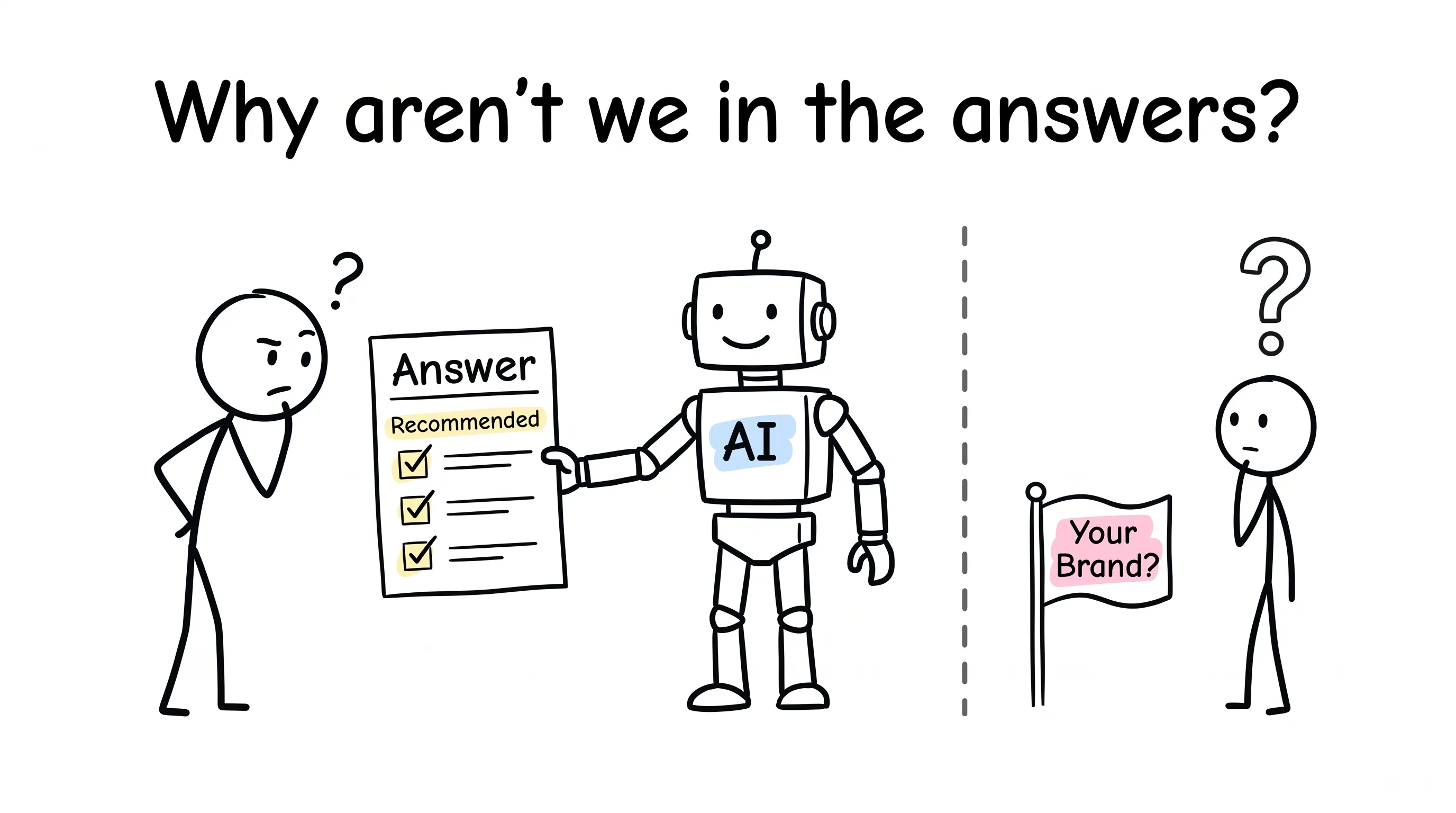
He told me that first thing that morning, the CEO had called him into the office and asked exactly one question: customers are already asking AI — so why aren't we in the answers?
A fair question.
A few years ago, the answer would have been SEO: hire writers, blanket keywords, trade backlinks, and get Google to rank you at the top.
Not anymore. More and more buyers take their questions straight to AI. AI does the first round of screening for them, and draws up the shortlist.
For your content, ranking high is no longer enough. It has to be seen by AI, cited by AI, treated by AI as an answer worth copying.
So he decided to bring in an AI content platform. Then he sent me his shortlist — eight vendors in total: AI Growth Agent, HubSpot, Jasper, Semrush, Ahrefs, Profound, Percolate, and Bynder — plus one more, Writer.
Nine names, and every one of their websites claims to be "the best fit for enterprises."
I told him: don't reach for your wallet just yet.
Buying the wrong platform costs more than not buying at all.
That night, I walked him through all eight vendors. Today I'm writing the whole approach up for you. Sooner or later, your company will need it.
First, Understand This: These Eight Aren't Even the Same Kind of Thing
This is the easiest trap to fall into in the entire selection process.
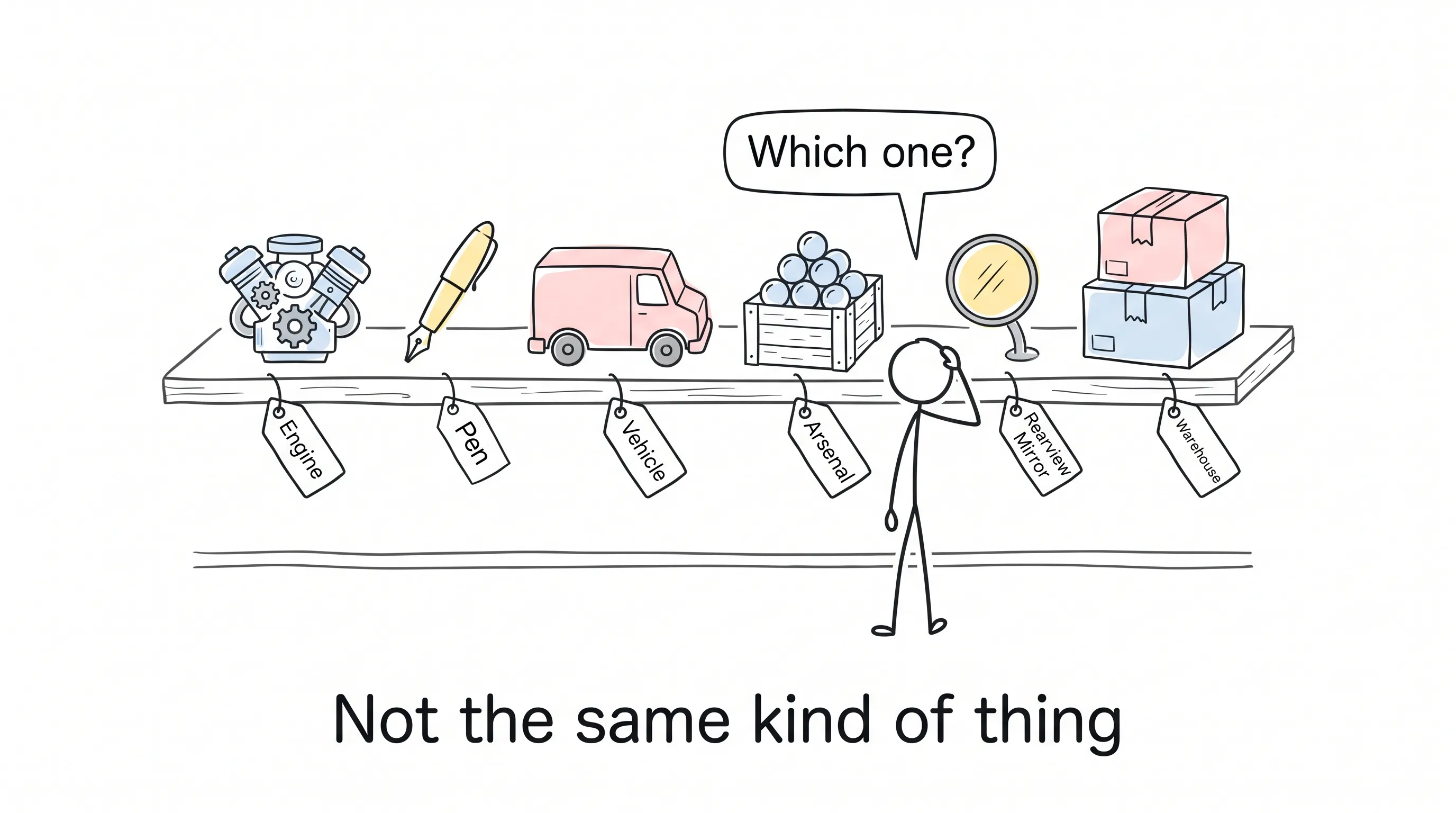
You think you're looking at eight competitors. In fact, the shelf holds five different animals.
The first kind is the fully automated content engine. The representative is AI Growth Agent.
You hand your brand over, and it writes on its own and publishes on its own. The content is alive: when it goes stale, it updates itself; when the numbers dip, it adjusts itself. From kickoff to the first article going live takes a week; indexing takes ten days. Deployment is "headless" — it hangs under your own domain via a reverse proxy or a subdomain — so you never have to lift a finger on your main site, and the content asset belongs to you.
The second kind is the AI writing platform. Jasper and Writer both fit here.
One is built to draft for humans; the other to police terminology and compliance. Fine pens, both of them. But everything that comes after the writing — publishing, technical optimization, repairing itself — is your job.
The third kind is the AI content feature that comes bundled with a CRM. HubSpot.
Its biggest advantage: the data and the money live under one roof, so attribution flows naturally. The cost is just as visible: your content has to live inside HubSpot, and the number of questions it can track is capped.
The fourth kind is the SEO data arsenal. Semrush and Ahrefs.
Where the keyword opportunities are, where your existing content is ailing — one lookup, and you've got your answer. But they don't write, don't publish, and certainly don't repair themselves. Plenty of ammunition; bring your own gun.
The fifth kind is AI search monitoring. Profound.
For a set of questions you define, it measures how many times you get mentioned in answers from ChatGPT, Perplexity, and the like, and where you rank. It watches. It doesn't act.
Oh right — there's also Percolate and Bynder. Strictly speaking, the two of them are a different species from everyone above: they handle content operations and digital assets — approvals, distribution, and asset governance across multiple brands. They don't generate content, and they don't do anything to prepare you for AI search.
Count them up: an engine, a pen, a whole vehicle, an arsenal, a rearview mirror — plus two warehouse managers.
Eight "competitors," and in truth hardly any two of them are even in the same lane.
Spending an engine budget on a rearview mirror — that's the most common accident in enterprise procurement.
Brand Voice: The Rules Have to Live at the Generation Layer
There's more than one yardstick. I drew up eight criteria for him; here are the ones that matter most.
First, governance. Can you configure your own approval workflows? Are role permissions clear? Can you pull up the revision history of every piece of content for an audit? In a company of several hundred, with in-house writers, agencies, and machines all producing drafts, without these three things you won't even know who to hold accountable when something goes wrong. In finance, healthcare, and legal, this one criterion is an outright veto.
Second, brand voice. What does it mean for rules to live at the "generation layer"?
An example. Say your company calls customers "members," never "users." You configure that rule once, save it, and from then on — whether you produce a hundred pieces a day or a thousand — every single piece complies automatically.
AI Growth Agent's approach is to build a manifesto for your brand: using journalist-style interviews, it asks up front how your brand speaks, which facts are non-negotiable, and which words must never be touched — everything settled before work begins and saved as a style memory, so every subsequent generation complies automatically. Writer takes the Knowledge Graph route: terminology violations get flagged in red on the spot, with replacement suggestions attached — the most reassuring setup for regulated industries, but it requires a dedicated implementation period. Jasper's brand voice profile works beautifully at the moment of drafting, but the rules don't carry through to the automated pipeline downstream, so you still have to schedule a round of human review specifically to catch drift.
Review takes people, and people cost money. Remember to write that line into the master ledger.
If the rules only live at the review gate, volume will eventually break the gate.
Third, security. SOC 2 Type II certification, SSO single sign-on, exportable audit logs. These three are now the entry ticket to enterprise procurement — fail the security review, and no amount of beautiful content gets you through the door. On this hurdle, established enterprise players like Writer, Percolate, and Bynder are the steadiest, and HubSpot gets to lean on the strength of the whole platform. When you run into a newer engine, ask outright for the latest certification reports — don't just listen to the sales story.
Fourth, integration. Content performance data has to be able to flow back to wherever you keep your books. Salesforce, HubSpot, Marketo — the money is counted inside the CRM, so if content data can't flow back, ROI stays a muddled ledger forever.
Fifth, no ceiling on scale. Some platforms cap how many keywords you can track, how many articles you can produce. The moment your team grows, they hike the price on the spot. Pick flat-rate, uncapped pricing, and scale never turns into a penalty.
Sixth, the technical foundation. The dividing line today: was this system born for AI search, or retrofitted from an old SEO tool? MCP interfaces, llms.txt, making AI crawlers find you on their own — these need to be factory-standard, not patches bolted on after the fact.
The two deepest criteria are still left: one is called incremental visibility, the other total cost. Each gets its own section, worked through one at a time.
What Is Incremental Visibility? This Is the Easiest One to Get Fooled By
Plenty of platforms will hand you a beautiful dashboard: how many times your brand was mentioned, how many times it was cited.
There's a trap in here.
Your brand already has visibility. Long-time customers mention you; industry articles cite you. All of that exists whether or not you buy a platform.
So the real question is: can the incremental portion the platform brings be separated from the base you already had?
What is incremental visibility? It means taking the portion of content this platform itself generates and publishes on its own, isolating how much new visibility that portion produced, and laying it out for you week by week.
If a platform can do that, you can take the number to your CEO and defend it. If it can't, all you're holding is a correlation: the dashboard went up — did business go up with it? Who knows.
AI Growth Agent is fairly ruthless on this point: crawler tracking granular enough to detect whether the specific crawler ChatGPT uses to fetch citation sources has ever come by; Google Search Console serving as an independent third-party audit; and custom UTM parameters that send attribution back into your own analytics.
While we're here, here's the three-layer method for keeping score — sooner or later you'll have to answer this question. Layer one, traditional search: impressions, clicks, and rankings in Search Console, reconciled week by week, to see what the new content moved. Layer two, AI visibility: citation rate and mention rate — even the order in which you get mentioned — across ChatGPT, Perplexity, and Google's AI search, none left out. Layer three, pipeline: how many more organic leads came in, and whether people who saw the content before entering the pipeline close deals faster.
Then there's the CRM line. HubSpot's attribution flows naturally inside its own ecosystem, at the price of your content being tethered to HubSpot CMS. AI Growth Agent has no native Salesforce or Marketo connectors; it loops back through Google Analytics plus UTM. Writer has an API, so you can assemble integrations yourself — but it takes dedicated engineering resources to keep running. Jasper and Semrush have no native ones at all; attribution has to be pieced together externally.
No silver bullet. It depends on where your books are kept.
One more detail worth pulling out on its own: HubSpot can monitor competitors' visibility in AI search.
The monitoring itself is beautifully done.
But it can report on visibility without producing any visibility of its own.
Seeing someone else's report card doesn't mean you can answer the exam yourself.
The Last Hurdle: The Math
The platform's quote is the only visible line in the ledger. The real costs hide behind it.
First, time. A traditional agency procurement cycle takes three months. Producing the first batch of content takes another three. Half a year is gone — and that's before counting the time to get indexed and start gaining traction. All told, close to a year. Throughout that year, project managers, legal reviewers, and brand gatekeepers keep drawing full salaries, and not a single article goes out.
Most TCO spreadsheets don't even have a column for this money.
Next, billing models. Per article, per prompt, per credit — each sounds light and easy, but at enterprise scale they all turn into fines.
Here's a number. A mature customer's brand search universe tracks 1,600 questions, and the system runs 3,000 searches a week to refresh the snapshots. Under a per-prompt billing model, that's an unreadable bill. Under a flat-rate model, that's just everyday operation.
Third, technical maintenance. Schema updates, robots.txt, sitemaps, redirects, 404 monitoring — every one of them eats engineering hours. Some platforms bundle all of it into the package; some hand it right back to you. That swing — one bundles it in, the other hands it back — is a full headcount.
The fourth item is the hardest to calculate, and the most expensive: opportunity cost.
If you start one month late, your competitor gets one more month of feeding the AI with its narrative. This position snowballs: the earlier player gets cited more and more, and gets treated more and more as an authority; for latecomers, the chase gets harder month after month.
The platform fee is the visible ledger. Time is the hidden one. The hidden one costs more.
So How Do You Actually Choose
Scenario one: no dedicated SEO, no engineers, no desire to accumulate a pile of agencies, and you want to be live within a week. Look at fully automated engines like AI Growth Agent. Manifesto, style memory, legal disclaimer configuration, anti-hallucination checks — configure once, effective for the long run, and every claim that goes out gets verified against the original source first. The prerequisite: you have to lay out your brand's particulars clearly at kickoff — the more specific the manifesto, the less drift later. Want to personally review every piece? Use a human-in-the-loop workflow — don't turn on full autopilot.
Scenario two: your company's entire system lives on HubSpot. Then HubSpot's own AI content is the smoothest path — attribution and workflow don't have to move an inch. But remember two things: the number of trackable questions is capped; and on the day you want to switch CMS, the migration bill is one you couldn't see at purchase time.
Scenario three: a regulated industry, where one wrong term is a legal problem, and you already have a mature content operations team. Writer's Knowledge Graph and enterprise-grade auditing are the hardest in this group. But remember: it's a pen, not an engine. Mapping your search universe, technical SEO, autonomous publishing — still your own homework.
Scenario four: you hold a whole portfolio of brands and need independent voices and independent search universes that don't bleed into each other. Either use a solution that supports multiple engines in parallel — like AI Growth Agent, one engine per brand — or use asset-and-approval managers like Percolate and Bynder. It comes down to whether what you lack is "generation" or "management."
Scenario five: you only want to know how you're performing in AI search, and content production is handled elsewhere. Profound does exactly this. But it's a rearview mirror, not a steering wheel. Installing a rearview mirror without ever stepping on the gas is paying money for anxiety.
Back to That Friend
By the end of that dinner, I had laid out the whole account for all eight vendors, spread across the table for him.
He stared at the "incremental visibility" line for a long time.
I said, think about the CEO's question again. Customers ask AI, and you're not in the answers. This isn't a ranking problem.
It's an existential question: in the world of AI, does your brand even count as a factual source worth citing?
As he was leaving, I added one more thing: go back and ask your CEO — the companies that do get recommended in the answers, how did they get in there?
He froze for a second.
Right. If you don't feed the AI your own account of yourself, it will know you the way others wrote you.
In AI search, if you don't train the model, the model will play you by someone else's script.
Here's to the day AI finally knows your brand.
Continue reading
Related articles

Cross-Border Business: Time to Upgrade Your AI Toolbox
A learn article explaining how AI tools help cross-border e-commerce sellers clear five hurdles: language, regulation, logistics, payments, and fraud. It outlines a five-compartment toolbox, a five-step adoption path, and metrics such as conversion rate and CLV, while cautioning against over-reliance on AI.

AI Is Taking Over the Dirty Work of Social Media Marketing, One Task at a Time
This learn article outlines four social media marketing tasks AI can handle — audience analytics, content drafting and design, ad targeting and creative testing, and spam moderation — and cautions that taste, judgment, and data security remain human responsibilities.

AI Is Already This Good — Why Is Your Social Media Marketing Still Pure Manpower?
An overview of 18 AI tools for social media marketing, organized into six categories covering audience research, content creation, scheduling, comment and DM handling, ad management, and visual production, plus notes on personalization, prediction, and emerging trends.