
Braze Strikes Again: Marketing AI Is Moving from Writing for You to Doing for You
Braze unveiled three tools at its Forge conference: Decisioning Studio Go for self-serve AI email decisioning, Agentic Standards for AI-run QA audits of campaigns, and Operator Connect, which uses MCP to bring its Operator assistant into external tools like Claude.
The other day I scrolled past a piece of industry news — and stared at my screen for a good few seconds.
Braze — the folks behind the customer engagement platform — used their annual conference, Forge, to roll out three new tools in one go. Late September, Las Vegas.
I'll walk you through all three, one by one. But first, let me explain why I stopped.
Because behind this batch of launches hides a signal:
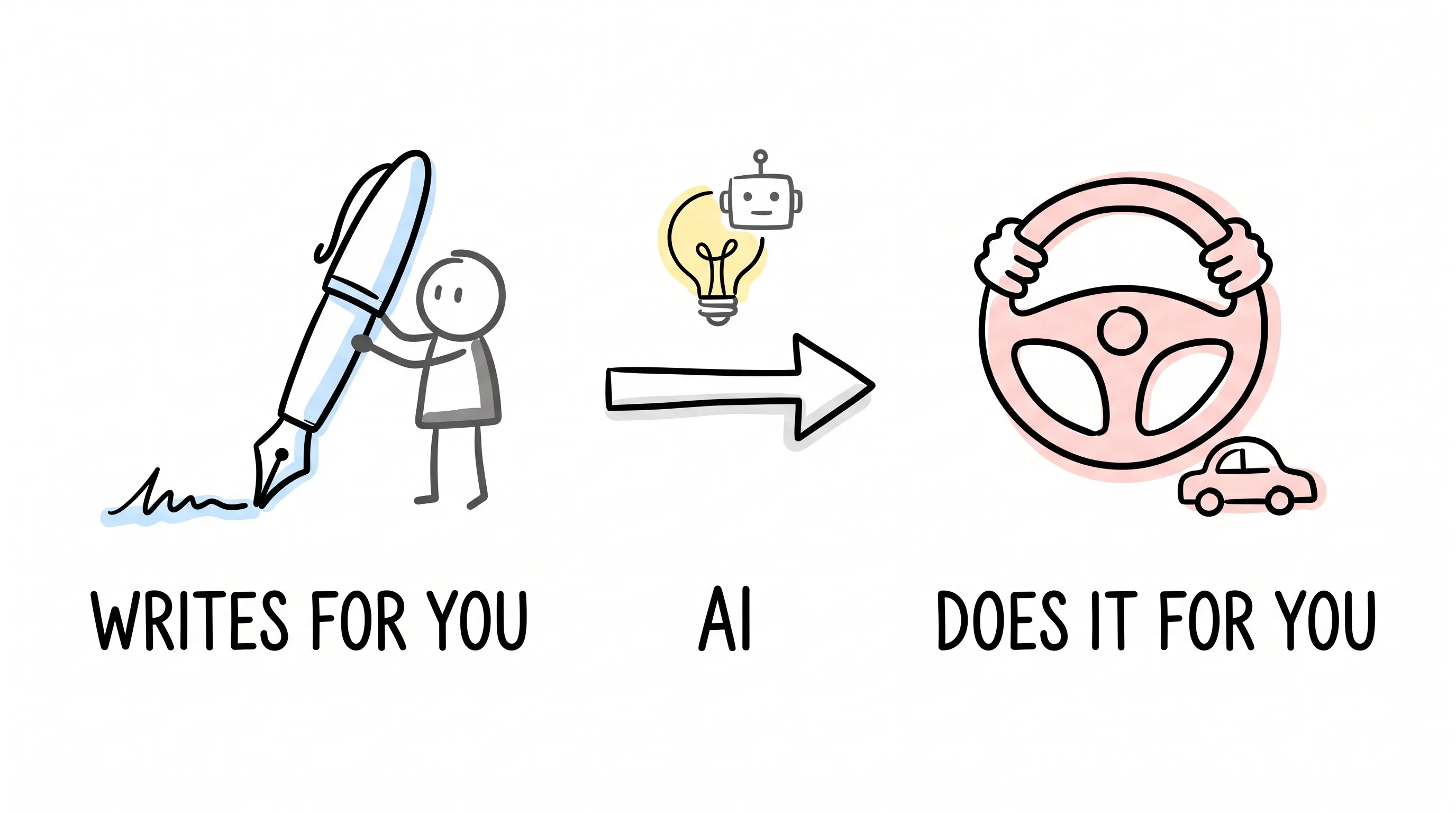
AI in marketing is shifting from the "write for you" stage to the "do it for you" stage.
What does that mean? Let me take it slowly.
First up: Decisioning Studio Go
What is AI decisioning, anyway?
Put simply, it means the system decides for you: for this specific user right in front of you, right now, which email to send, with which subject line, which image, at what time — for the best possible results.
Braze has actually been doing this for a while. It has an enterprise edition called Decisioning Studio Pro that uses reinforcement learning to compute the "next best action." The results are genuinely good. But there's a catch: you need to be able to afford a dedicated team of data scientists and engineers.
What about smaller teams? They can only watch from the sidelines.
The Go edition announced this time is aimed squarely at that barrier. It turns AI decisioning into a buffet. No dedicated technical staff required — a marketing team can pick it up on its own and lay out personalized journeys by itself.
George Khachatryan, the product lead behind this product line, put it well: this is lightweight AI decisioning, so more companies can actually put it to use — and a single team can apply it to far more journeys than ever before.
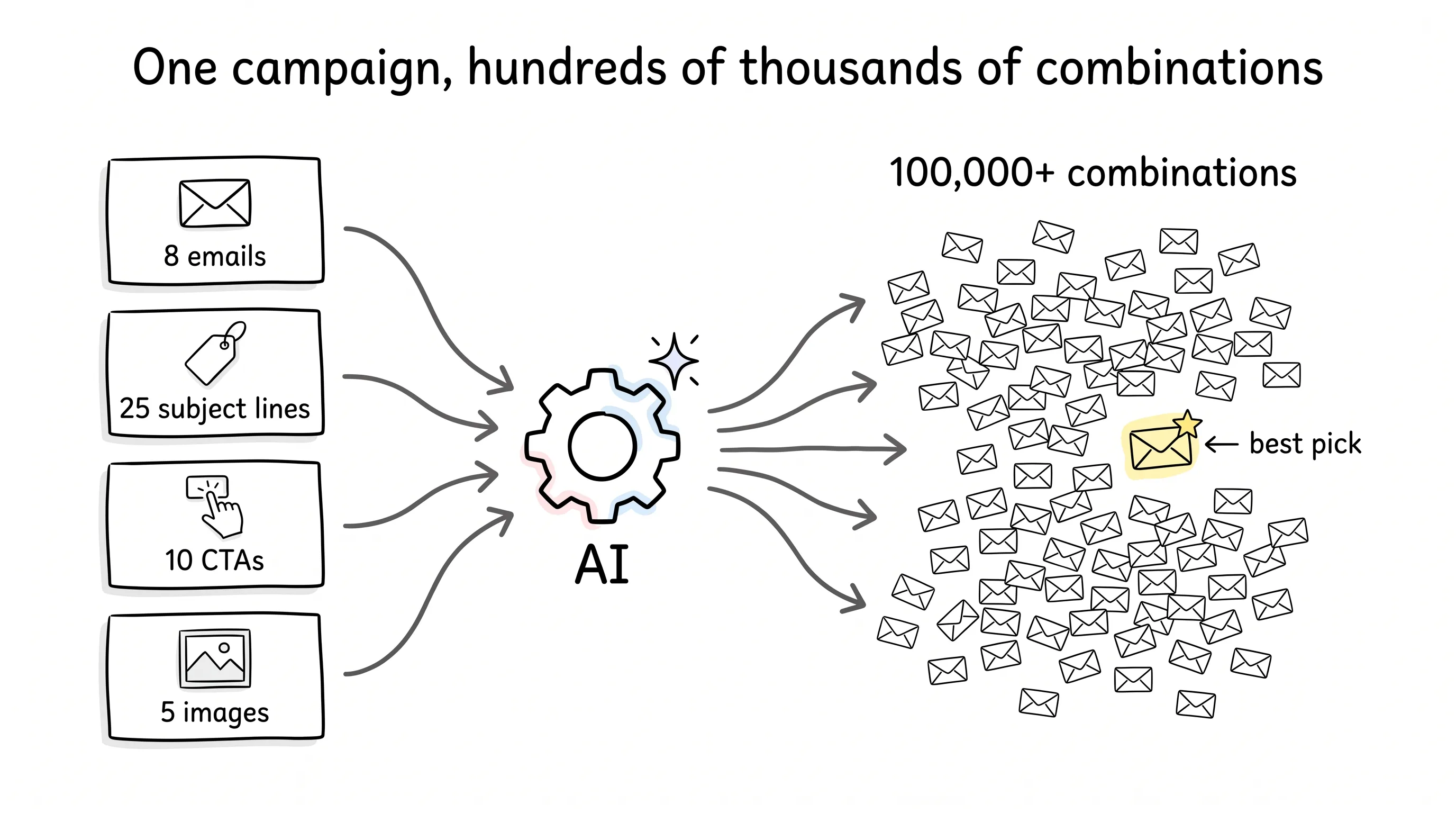
Email is the launch use case. You feed in the variables: a few creative versions, dozens of subject lines, several calls to action (CTAs), a handful of images, a few send-time slots. The system computes the optimal combination for each recipient, and once the campaign is out the door, it keeps tuning on the fly based on real-time engagement data.
Let me do the math for you. One campaign: 8 base emails to start, 25 subject lines, 10 CTAs, 5 images — stack sending time on top of all that, and the number of combinations runs into the hundreds of thousands.
Try that by hand? You wouldn't finish by this time next year. The system, meanwhile, starts learning the moment it hits send.
The tool is in beta right now, with full general availability on October 14.
Next: Agentic Standards
My first reaction after reading about the second tool: they totally get it.
Do you know what eats up the most time on a marketing team? It's not writing copy — it's checking. Checking whether links are broken, whether the audience segmentation logic is right, whether the creative complies with brand guidelines, whether there's a compliance landmine buried anywhere.
This kind of work is dull, fiddly, high-volume — and you can't afford a single slip.
What Braze is rolling out this time, Agentic Standards, hands this kind of QA work to AI agents.
Here's how it plays out: you set the rules first. Brand guidelines, accessibility checks, compliance requirements — whatever your company needs, that's what you codify. Then the agent takes those rules and audits the entire journey from start to finish, hands you a crystal-clear audit log, and for whatever needs fixing, it can even fix them itself, automatically.
Notice the shift here. In the past, when you used AI, you were mostly having it produce content: write headlines, generate images, draft proposals. And now?
It has gone from content producer to quality inspector.
Hand the grunt work to the machine, and free up people to do the real thinking work.
Finally: Operator Connect
The third one is, to my mind, the most interesting of the bunch.
Braze's platform has long had a built-in AI assistant called Operator. It understands the platform's underlying logic as well as your account's configuration; it can help you build campaigns, set up predictive models, and answer all kinds of setup questions.
But it has a natural limitation: it can only live inside the Braze interface.
Operator Connect's job is to open that door. Using a protocol called MCP (Model Context Protocol), it pipes Operator's capabilities into external environments — Claude, for example.
Khachatryan's description of it is vivid: it's a headless version of Operator, carrying Braze's capabilities into the workspaces marketers are already using.
Picture this: you're drafting a campaign brief in Claude, and mid-sentence, you simply give the word and have it set up the campaign structure in Braze. Creative, copy — the system fills them in automatically. You come back to the Braze dashboard only for the final confirmation and sign-off.
You don't have to switch where you write the plan, and you don't have to hop into the execution platform and babysit it.
Of course, if you like living inside the Braze dashboard, nothing changes. And if you're used to an external assistant, you no longer have to keep switching back and forth.
A Few Closing Words
All three tools point in the same direction.
AI's role in marketing is moving from "think for you" to "do it for you."
On the copywriting front, AI has been grinding at it for two or three years and has gotten good at it. But in the full chain of a marketing campaign, writing is just one link. Who makes the decisions? Who does the quality checks? Who connects the execution end to end? That's where teams actually burn their energy every day.
Whoever takes over these links, one by one, can lift people off the assembly line to do the things machines can't replace: judgment, taste, and genuine relationships with users.
We used to say AI is the marketer's new pen.
The way things look now, it wants to be more than a pen.
It wants the driver's seat.
Continue reading
Related articles

Cross-Border Business: Time to Upgrade Your AI Toolbox
A learn article explaining how AI tools help cross-border e-commerce sellers clear five hurdles: language, regulation, logistics, payments, and fraud. It outlines a five-compartment toolbox, a five-step adoption path, and metrics such as conversion rate and CLV, while cautioning against over-reliance on AI.

AI Is Taking Over the Dirty Work of Social Media Marketing, One Task at a Time
This learn article outlines four social media marketing tasks AI can handle — audience analytics, content drafting and design, ad targeting and creative testing, and spam moderation — and cautions that taste, judgment, and data security remain human responsibilities.

AI Is Already This Good — Why Is Your Social Media Marketing Still Pure Manpower?
An overview of 18 AI tools for social media marketing, organized into six categories covering audience research, content creation, scheduling, comment and DM handling, ad management, and visual production, plus notes on personalization, prediction, and emerging trends.