
AI Rebuilt Social Media Marketing From the Ground Up
A learn article on how AI has reshaped social media marketing: personalized content at scale, AI-assisted drafting and topic research, predictive models, Meta's automated ad testing, data-based influencer selection, and lower tooling costs for small businesses.
A few days ago, I had dinner with a friend who runs a beauty brand. She manages her brand's social media accounts.
I asked what she'd been busy with lately.
She said: "Translating." Turning the boss's requests into copy, and turning user comments into reports. I told her AI does all that faster than she does. She shot me a look: You're only figuring this out now? My department has been on it for ages. One tool writes the first drafts, another watches the data, and a bot answers comments in the middle of the night.
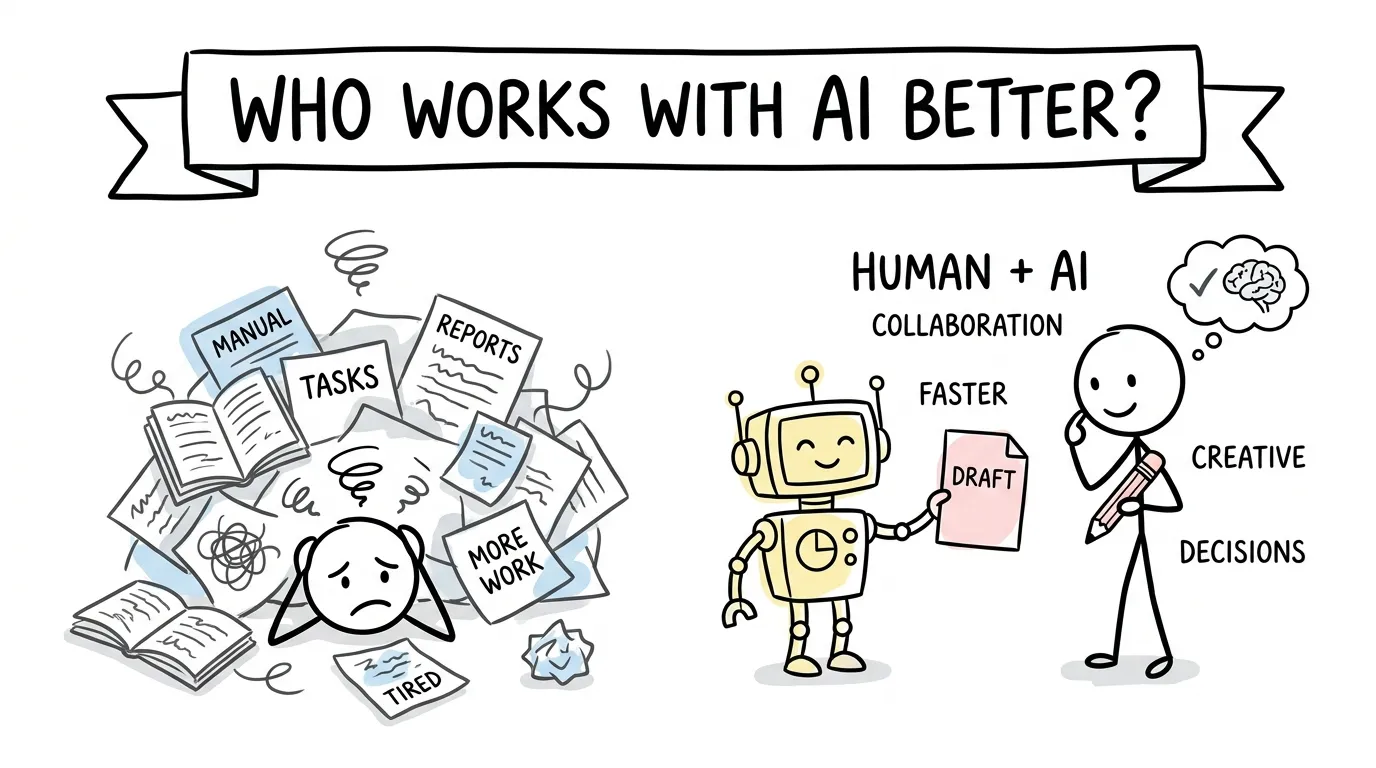
Then she said something that stuck with me: We used to compete on whose ideas were better. Now we compete on who works with AI better.
That sentence deserves unpacking.
First, Let's Get One Thing Straight
What does "AI is changing social media marketing" actually mean? A lot of people read it as: one more tool, slightly better efficiency.
It's more than that.
Think about it. When you post on your own feed, you're talking to maybe three hundred people. When a brand posts on social media, it's talking to tens of thousands, hundreds of thousands, millions. And no two of them want the same things. The old approach? Split them into a few big buckets — young people in one, moms in another, everyone else sorted by gut feel.
Now? The algorithm learns each individual person. What you've clicked, how long you lingered, what you scroll at midnight — it knows. Then it says something different to every single person.
A million people. A million versions.
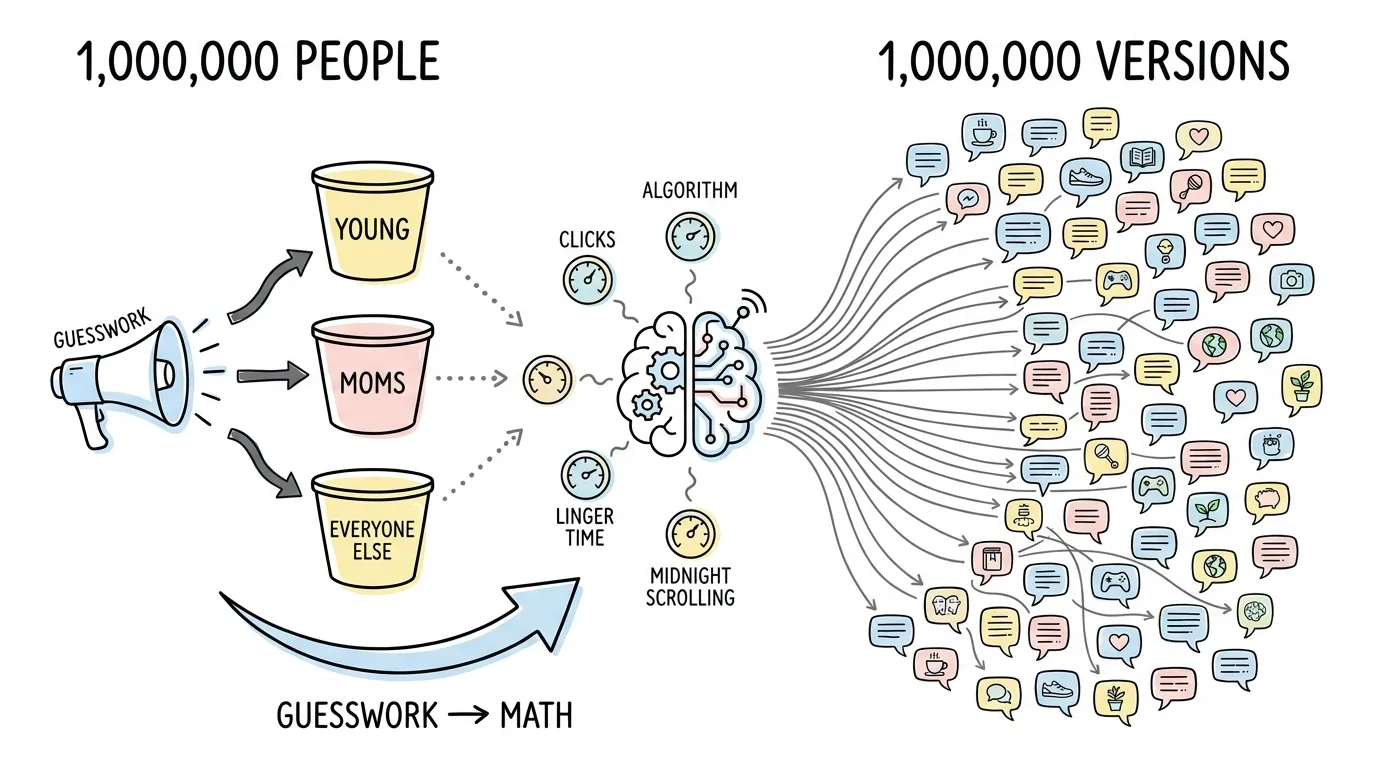
That was unthinkable not long ago. Put plainly, AI has turned "who are we talking to" from guesswork into math.
Content Was Remade First
Writing ten posts used to take an editor a whole afternoon.
Now, tools like ChatGPT and Jasper hand you five first drafts in minutes. Visuals? AI design tools — feed them the copy, out come posters and short videos. Even topic research is handled: AI can sweep the whole web for what's heating up in your industry and what users are debating, then serve the material straight to your desk.
So are editors about to lose their jobs?
My friend's answer: quite the opposite. Machines handle the volume. Humans handle the soul. AI turns out ten versions, she picks one, then edits it by hand until it feels human. Which direction to take an idea — no machine can decide that for her.
Then There's the Fortune-Telling
The hardest thing in marketing is prediction.
Which post will take off? What time should you publish? Which customers are about to churn? Used to be, you relied on the veteran's gut. And when the veteran retired, the know-how walked out with them.
Now, predictive models have turned these into arithmetic problems. Feed in the historical data, and it tells you which piece of content has the highest odds, which hours your followers are most active — it can even warn you the moment the mood in the comments starts turning sour: brace for the backlash, the new launch could flop.
So what do you do when you spot the early signs? Move the money over right away, into the content and channels that are responding well. The machine does the judging; the decision stays yours.
Ads May Be Where Things Changed the Most
Meta's ad system — even if you've never spent a dollar on the platform, you've definitely been on the receiving end of it.
Here's how it works: it runs dozens of creative variants at once, pours more money into whichever gets the higher click-through rate, kills the losers instantly, and steers the audience back on course whenever targeting drifts. No human babysitting required.
The media buyer's job has gone from "staring at the dashboard" to "drawing the lines." You tell the machine which paths are off-limits; everywhere else, it's free to experiment.
Honestly, at this scale of spending, manual monitoring is physically impossible.
Influencers: It's Not About Follower Counts Anymore
How did influencer marketing pick people in the past? Follower count, plus whether the photos looked good.
The fake-follower sellers loved that.
Today's tools take an influencer apart: Does the follower profile overlap with your target customers? Is the engagement rate real or bought? How many actual orders did their endorsements move? One pass of the data, and it's crystal clear who's a genuine creator and who bought their audience.
Influencer marketing is turning from a black art into a business you can actually put numbers on.
One Understated Trick
AI can now "understand" images and videos.
Someone posts a photo wearing your jacket, doesn't tag you, and keyword search finds nothing. But AI recognizes it as your product. Which means word-of-mouth your users create on their own — invisible before — is now visible.
Brand monitoring has upgraded from searching keywords to recognizing products and logos. All the volume that used to fall through that gap went to waste entirely.
The Most Underrated Change Hits Small Businesses
This one, I think, matters most.
Precision ad targeting, deep data analytics, round-the-clock customer service — these used to be privileges of big companies. You needed the payroll to play.
Today? A few hundred dollars in budget lets a small shop owner run the same algorithms as the big brands, putting ads precisely in front of hotpot lovers within a five-kilometer radius. A bot covers customer service; a tool advises on what to cover.
What AI leveled is the tool gap.
One person plus a full AI toolkit can do the work that used to take a small team. The game hasn't changed — but the cost of a seat at the table has collapsed.
A Few Closing Thoughts
Back to my friend.
Over the last of the dinner, I asked whether she was afraid of being replaced by AI someday. She thought about it and said no. AI had taken over all the "translating" for her, and she finally had time to think about what she actually wanted to say.
See — AI didn't make social media marketing more mystical. It took over every repetitive, mechanical part of the job, then handed the real judgment back to people: what to say, to whom, and when.
For marketers, the question is no longer whether to use AI.
People who figure this out early won't have it easier — but they will have it steadier.
Here's to getting comfortable with AI, sooner rather than later.
Continue reading
Related articles

It's 2026: Stop "Buying" AI Tools for Your Marketing Team — Start "Hiring" AI Agents
This learn article explains how AI agents differ from standalone AI tools in marketing, outlines three agent categories — build-your-own platforms, CRM-native agents, and vertical tools — and covers use cases across SEO, social media, advertising, and reporting, plus criteria for choosing one.

Did the Money You Spent on AI Marketing Ever Come Back?
A guide to measuring AI marketing ROI across three layers: ad reports, sales pipeline, and the financial ledger. Covers metrics such as ROAS and CPA, eight dashboard metrics, industry benchmarks, and common measurement mistakes.

How to Pick a Creative Automation Platform: First, Figure Out What These Eleven Actually Do
A learn article sorts eleven creative automation platforms — including Bannerflow, Celtra, Smartly.io, and Storyteq — into four functional groups and proposes five evaluation questions covering publishing reach, automation depth, ease of adoption, team fit, and verifiable evidence.