
AI Is Rebuilding Marketing From the Ground Up
An overview of how AI is reshaping marketing, walking through predictive analytics, hyper-personalization, AI-assisted content, chatbots, programmatic advertising, and automated email, with notes on privacy limits and the human role in strategy and creativity.
A while back, I had dinner with an old friend who runs an e-commerce business. He told me a story at the table that I still remember.
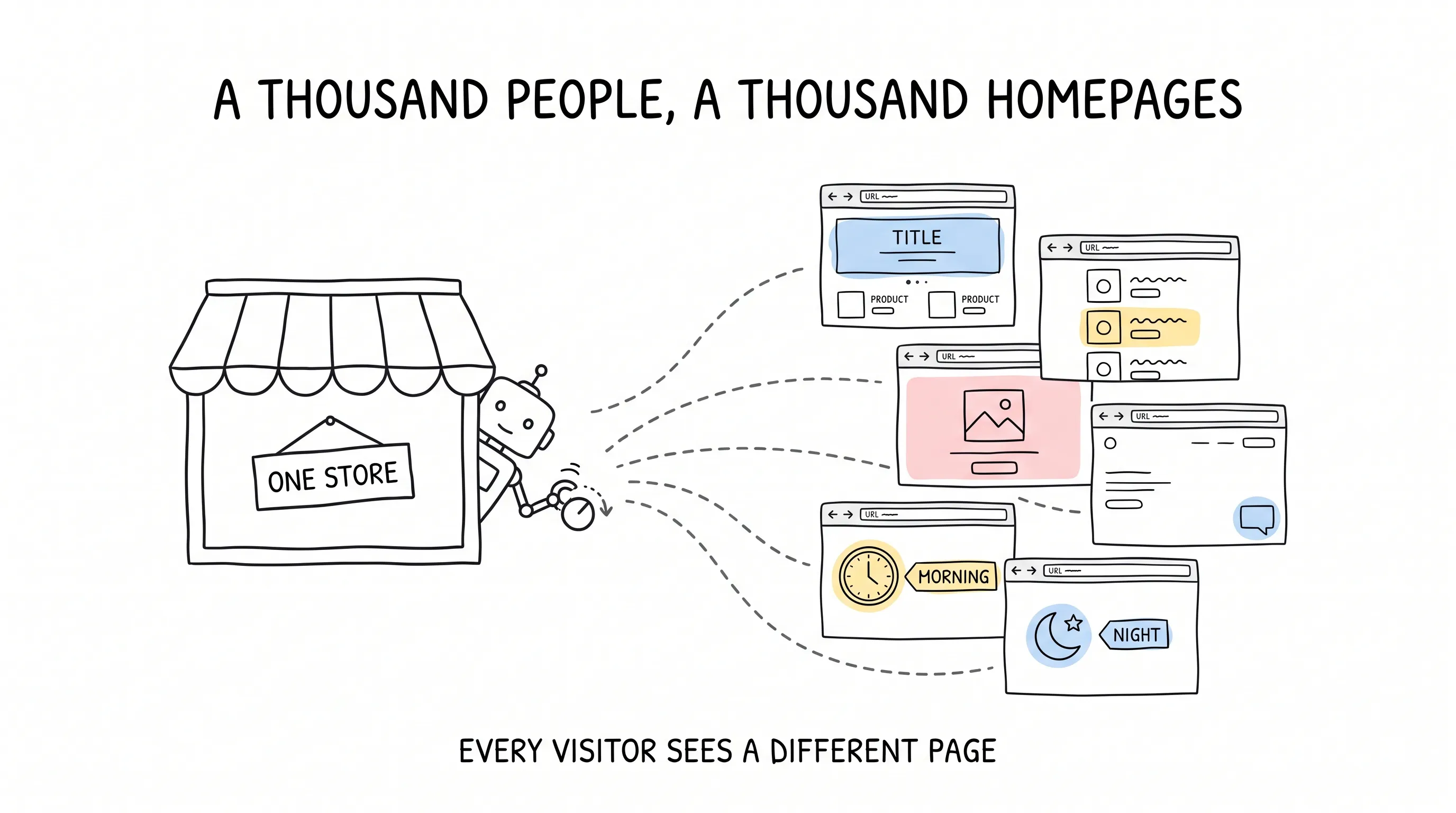
He said their company's homepage stopped being one single page a long time ago. A thousand people open it, and they see a thousand homepages. Different banners, different recommended products, even a different ranking order. And it's all real time — what you see in the morning won't match what you see at night.
I asked: how many ops people does it take, watching and tweaking it all day?
He said: barely any. AI does all the tweaking.
Whoa. Doesn't that mean everyone is browsing their own personal store?
That night I read through a lot of material, and the more I read, the stronger one thought became:
AI isn't helping marketers save time. AI is rebuilding marketing from start to finish.
Below, I'll walk you through what I found and what I've made sense of, one link in the chain at a time.
First, Decisions: From Gut Calls to Hard Numbers
So what is predictive analytics?
Put simply, you let AI watch past and present data and tell you what's coming: which leads will most likely close, which customers are about to churn, which product will take off next month, and when to run ads so your budget stretches furthest.
How were these things decided before? Experience, instinct, and the boss banging on the table.
And now?
Sales ranks the leads and works the high-intent ones first, instead of burning time on customers with no chance. Brands check the demand forecast before a launch, then decide on stocking. Agencies go a step further — they estimate the return before the money is even spent.
Going from "I guess" to "I calculate" — that one step alone cuts out a huge chunk of waste.
That's why I keep saying AI stopped being a bonus in marketing a long time ago.
It's the price of entry.
Whoever doesn't use it gets flat-out outworked on efficiency by those who do.
Next, Personalization: The Kind That Goes Beyond Your Name
When I say personalization, you might picture an email that opens with "Hello Mr. Zhang."
That's way too shallow.
So what is real hyper-personalization? AI goes through a person's browsing behavior, purchase history, city, interaction habits, even which device they opened the page on — then builds an entire experience for that one person alone.
The site layout, arranged for you. The recommendations, computed for you. Emails arrive on your schedule. Even the ad creatives are the kind you like to look at.
It's the homepage from the opening story — a thousand people, a thousand homepages.
The change is tangible: engagement is up, and so are conversions — noticeably. And this used to be a game only big companies could afford. The barrier has come down, and small teams can play too.
Content: AI Writes Fast, Humans Write Right
Content is the most talked-about part.
Today's AI can write blog posts, ad copy, social captions, emails, video scripts. Once it's done, it adjusts SEO, tone, and readability while it's at it. Output goes up, costs come down, and the brand voice stays steady — and that steadiness is worth real money. Ten people writing won't produce ten different voices.
But.
Hand your entire content strategy over to it too, and you're in trouble.
Which story to tell, which emotional nerve to strike, where the brand truly stands — the machine has no answer. It provides the execution; you provide the soul.
AI is in charge of writing fast. Humans are in charge of writing right.
Chatbots: The Salesperson Who Never Clocks Out
Today's chatbots and the "auto-replies" of a few years ago are two entirely different species.
They understand natural speech, can infer what the other person wants, recommend products, handle complaints — and, yes, close deals.
They're deployed everywhere too: the company site, WhatsApp, Instagram, Messenger, apps. Wherever there are customers, that's where they stand guard. Your team has gone home, but the bot is still chatting with potential customers scrolling their phones at midnight.
It's like hiring a salesperson who takes no salary, never sleeps, and works all year round.
Support costs drop, responses get faster, conversions climb. Three numbers every boss loves to see.
Advertising: A Business Measured in Milliseconds
Ad buying is probably the most thoroughly automated piece of the whole stack.
What is programmatic advertising? Within milliseconds, an algorithm decides whether to buy a given ad slot, how much to bid, who sees it, and which creative goes with it.
Milliseconds. That's insane. In the time it takes you to blink, it has already run an entire round of bidding.
Targeting, bids, placements, creatives, budgets — all tuned on their own. Ad stalling? It pauses itself. Creative performing well? The budget switches over immediately.
The result: acquisition costs drop, ad returns rise, waste shrinks.
Advertising is shifting from labor-intensive to algorithm-intensive. There's no stopping it.
Users Have Changed: Fewer Typing, More Talking
One more shift many people haven't paid much attention to: the way users search has changed.
It used to be typing. Now? Pull out your phone, snap a photo of a product, and tools like Google Lens tell you what it is and where to buy it. Or just speak to Alexa or Siri — one "help me find a…" and the results appear.
Once the way people search changes, the optimization playbook has to change with it.
Product image descriptions need to be solid, or the machine "can't read" your images. Keywords need to lean toward how people actually talk. A spoken question and a typed keyword don't follow the same grammar.
The fast-moving brands are already feasting on this traffic. The slow ones are still navigating by an old map.
Social and Email: Every Channel, Reworked by AI
Social media is algorithm turf to begin with. AI can track trending topics, predict which piece of content looks like a hit, pick the best time to post — and read sentiment too: it can tell a happy comment section from a furious one.
Likes, shares, watch time, the hesitation before someone swipes away — machines are reading all of these signals. Read them well, and you can refine your content strategy round after round.
And email goes without saying. This old channel's ROI has always ranked near the top among marketing channels, and now a layer of automation sits on top: when to send, how to write subject lines, which user action triggers which email — algorithms watch it all.
Welcoming new customers, rescuing abandoned carts, waking up dormant customers, getting repeat buyers to add more — flow after flow, following each person's behavior, not the calendar.
It used to be mass sends. Now it's a thousand people, a thousand emails.
Oh, and one more thing: all the capabilities above already exist as ready-made tools. Copywriting, ad management, analytics, customer operations — four big categories sitting on the shelf, and small companies can just pick what they need.
Speed: From Waiting for the Weekly Report to a Few Minutes
String everything above together and you'll notice one shared change: fast.
Dashboards watch performance in real time. Ads dying? Auto-paused. Creative working? Budget rerouted in seconds. Wherever the funnel leaks, you see it on the spot.
Teams used to wait for weekly reports and monthly reviews, grinding one decision out over a week. Now they move within minutes.
Marketing in this era is decided not just by budget, but by reaction speed.
Honestly, this is the part that moves me most.
But Don't Forget to Hit the Brakes
By this point, you might be thinking AI is just about perfect.
Hold on.
The more user data you use, the tighter you have to hold the line on privacy. How data is collected, whether users agreed, whether the algorithm carries bias — there's no dodging any of it. Regulation is tightening too: data collection, cookie tracking, AI transparency — the rules will only keep growing.
My view is simple: personalization is a good thing, but it has to be clean personalization. Precision built on skirting the rules always comes due eventually.
Trust takes ten years to build and one news story to collapse.
Finally, People: The Part That Can't Be Replaced
After all this AI talk, you might be getting anxious: so what are marketers for?
Don't be. Break the work apart and it gets clear.
Data processing, automation, optimization — the mechanical parts, feel free to hand them to AI. How to tell the brand story, how to feel what users feel, where creativity should head, how strategy gets set — those are still human territory.
The marketer of the future is the one who gets the work done with AI in hand.
People who know how to use AI are already doing the work of people who don't. That line holds true in every industry.
One Last Thing
Think back to that friend from the start. Midway through dinner, he pulled out his phone and showed me the backend: tonight's homepage had quietly changed who knows how many more times, and he hadn't notified a single person.
You see, AI has already rebuilt marketing once, and it's still rebuilding.
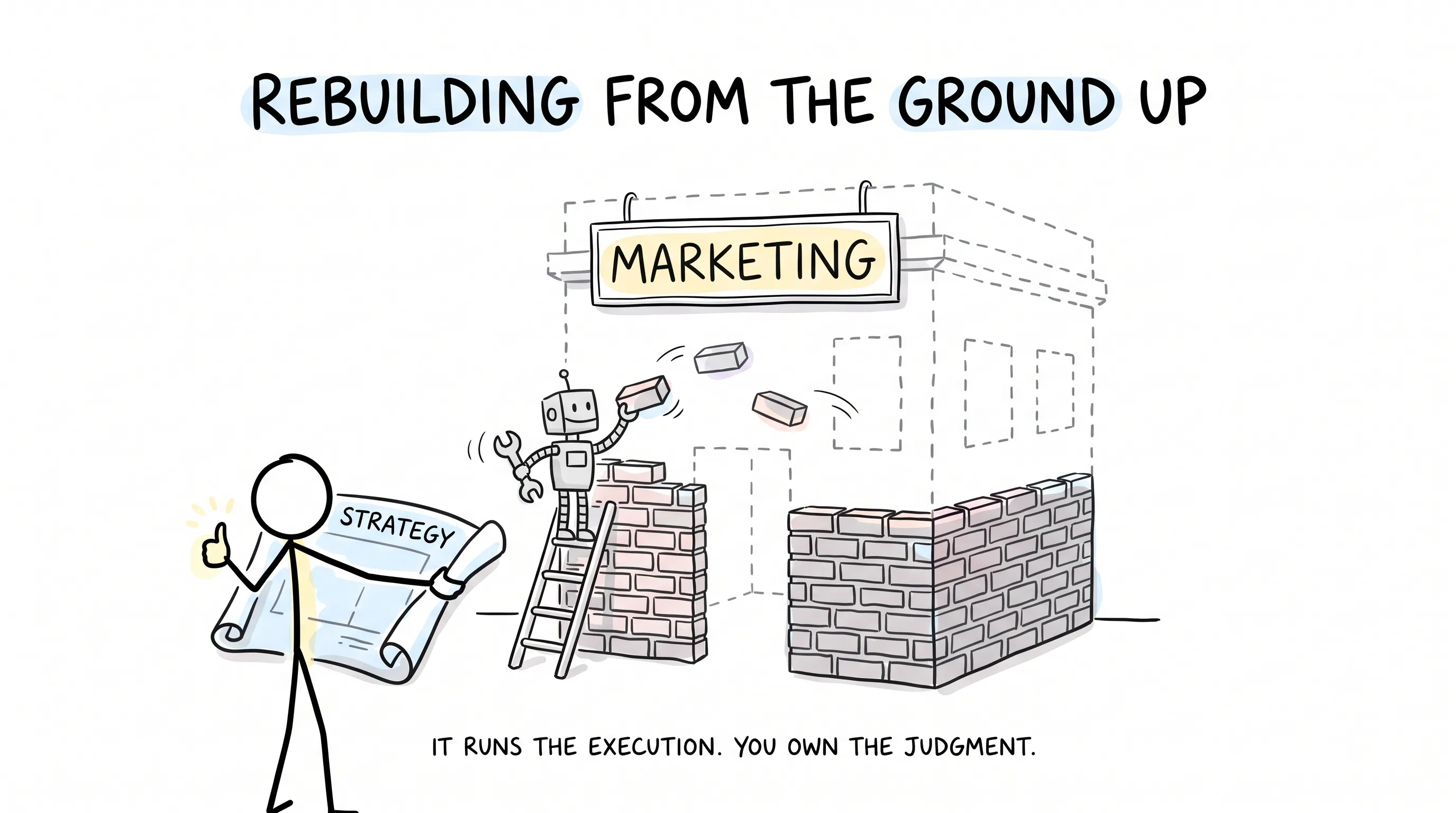
It runs the execution, you own the judgment; it handles the efficiency, you handle the human heart. Get this right, and every minute you save can go to the things machines can't do.
Here's wishing you become the one who works with AI — sooner rather than later.
Continue reading
Related articles

Cross-Border Business: Time to Upgrade Your AI Toolbox
A learn article explaining how AI tools help cross-border e-commerce sellers clear five hurdles: language, regulation, logistics, payments, and fraud. It outlines a five-compartment toolbox, a five-step adoption path, and metrics such as conversion rate and CLV, while cautioning against over-reliance on AI.

AI Is Taking Over the Dirty Work of Social Media Marketing, One Task at a Time
This learn article outlines four social media marketing tasks AI can handle — audience analytics, content drafting and design, ad targeting and creative testing, and spam moderation — and cautions that taste, judgment, and data security remain human responsibilities.

AI Is Already This Good — Why Is Your Social Media Marketing Still Pure Manpower?
An overview of 18 AI tools for social media marketing, organized into six categories covering audience research, content creation, scheduling, comment and DM handling, ad management, and visual production, plus notes on personalization, prediction, and emerging trends.