
AI Has Already Done Its Pass on Marketing — You Just Didn't See It
A learn article on how AI already works across marketing: synthetic consumers for research, AI brief tools, generative ad production, automated bidding, and creative scoring. It cautions that AI makes work faster but not automatically better, urging marketers to feed their expertise into the tools.
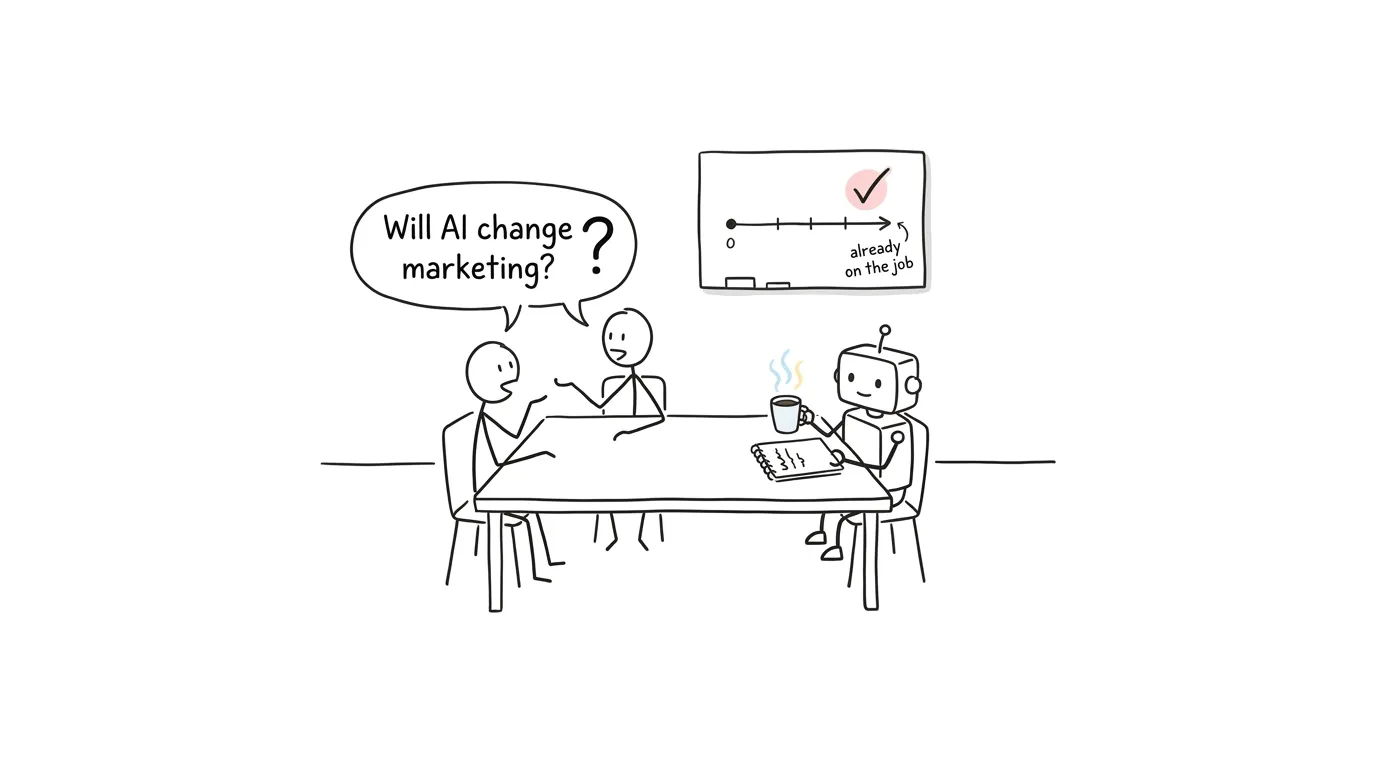
I did some math recently.
About half of the meetings I've sat in lately end up on the same word: AI. Generative AI.
And every time, toward the end, someone asks: do you think AI will completely transform marketing?
I used to ask that too. Now I think the question came too late.
AI has been sitting in your meeting room for a while now. It isn't "on its way." It's already on the job.
Talk is cheap, so let me walk you through a few things I've seen with my own eyes. All of them happening right now.
First, the matter of research
A startup I spoke with just last week does something that sounds almost surreal: market research with a whole cast of "synthetic consumers."
What's a synthetic consumer? A fictional customer built by AI.
Brand health reports, audience segmentation, pricing analysis — what did this work look like before? A team of researchers grinding away for weeks.
Now? One night.
They say it matches real humans analyzing real data at about 90% accuracy. Honestly — wow.
There's a leaner example too. A company called Voop has built a tool: feed it consumers' voice notes and text, and it instantly summarizes the insights — and tells you what to do next. It hasn't officially launched yet. But one look and you know exactly where this thing could be used.
Next, the matter of writing briefs
Marketers spend half their working lives writing briefs and reading briefs.
A company called Briefly does exactly this. Think of it as Grammarly for marketing briefs. Several Fortune 500 companies use it, Dell included.
The strategy step is getting surgery too. The team at Jellyfish built their own tool called Strat.GPT. They genuinely use it on their live pitches and the campaign briefs they're writing right now. Its greatest strength: pulling together audience insights and generating propositions.
I especially admire their honesty: people have tried getting AI to produce communications-platform-level creative concepts outright. Not yet — it's worse than humans. But give it a tight brief, and the creative starting points it produces are enough to get a human creative team running.
That's a clear-eyed positioning: AI plays support, humans carry.
Then, the matter of making ads
This is where it gets wild.
The Brandtech Group, Jellyfish's parent company, has an AI platform of its own called Pencil. Creatives across the group use it to produce paid social ads. Faster, more of them, and short-term performance doubled on average.
What scale? Over $1 billion in media spend, more than 5,000 brands, over a million ads. When it makes ads for brands under the Deckers Group — UGG, for instance — it can predict which one in a newly generated batch will perform best.
An even better story: Gravity Road made a TV ad for Hotel Chocolat's Velvetiser, using generative AI deeply from creative concept through production, blended into the CGI process. The finished spot went to System1 for testing: 5.9, a perfect score.
For the home-appliance category, the highest score in that testing company's history. Worldwide, the top 0.3%.
The places you thought AI never touched? It soaked through long ago
Some people think everything above is "new stuff." On the media-buying side, AI is hardly a new guest.
Google's bidding systems have been running AI for years. Products like Performance Max are AI-driven end to end. Meta's Advantage+ automatically generates massive combinations of creative and strips out the manual steps entirely.
Hundreds of billions of dollars in annual media spend worldwide — performance advertising especially — has AI doing the grunt work behind it. It just never makes the headlines, and nobody posts about it on their feed.
The quiet workers are usually the ones who last longest.
The most painful number
Everything so far has been "wow." This part is "ouch."
There's a data company called Creative X that uses AI to evaluate creative quality for more than 1,000 agencies and 3,000 brands worldwide. Unilever, Nestlé, Diageo, Bayer, Mondelez — all of them use it.
It analyzed $1.3 billion in media-spend data and reached one conclusion: half of all digital ad budgets went to creative that "fails basic platform requirements."
What does failing basic requirements mean? Landscape assets running on vertical platforms, no hook in the first three seconds — the most elementary things.
Half.
We spend our days dissecting who took home the Grand Prix at Cannes, studying the masterpieces in the top 0.1%. Meanwhile, half the money dies at the pass line.
The good news: there's a fix. Companies like DAIVID and Realeyes train models to predict how much attention an ad will grab, what emotions it will stir, how much will stick in memory. Testing with real people used to be absurdly expensive. Now it can run at scale.
For the first time, whether creative is good or bad can be "computed."
But there's always a flip side
By now you might be thinking: so marketers have it made?
Hold on.
Almost everything I've seen is doing the same one thing: getting the work done faster and cheaper.
Faster doesn't mean better.
The insights come out faster — but are they sharper? The ads get produced in greater volume — but do they move anyone more?
That's the crux. Making work fast is something AI has already mastered. Making work good — nobody can answer that for you yet.
And one caution: investors and engineers naturally care about whether output is plentiful and fast, not whether it's good. Their judgment of "good" is, most likely, worse than a front-line marketer's.
So don't throw away the things marketers themselves understand — what works, what moves people, what fits platform patterns. Feed it into these tools instead.
If you don't pour your know-how into AI, AI will shape you by its defaults.
One last, bigger thing
Benedict Evans said something I really like: AI will become "just software."
What does "just software" mean? One day, nobody will hold meetings specifically about AI anymore — just like nobody today schedules a meeting to discuss "should we be using electricity."
Every new technology meets this fate: born to the spotlight, eventually fading into the background, becoming air.
My read: AI and marketing are walking this exact road. Probably faster than you think.
But there's a trap. Marketers have always been the most eager early adopters of new technology. When everyone around you is using it, you assume the whole world is. Don't measure the whole industry's speed by the marketing world's.
Back to that meeting room
So the next time someone asks me whether AI will change marketing, I'll say: that question is out of date.
The change has already happened — round one is done.
The real question is the second one: this round, everyone is using AI to get work done fast. The next round, we'll see who can use AI to get work done well.
Fast is what the tools give you.
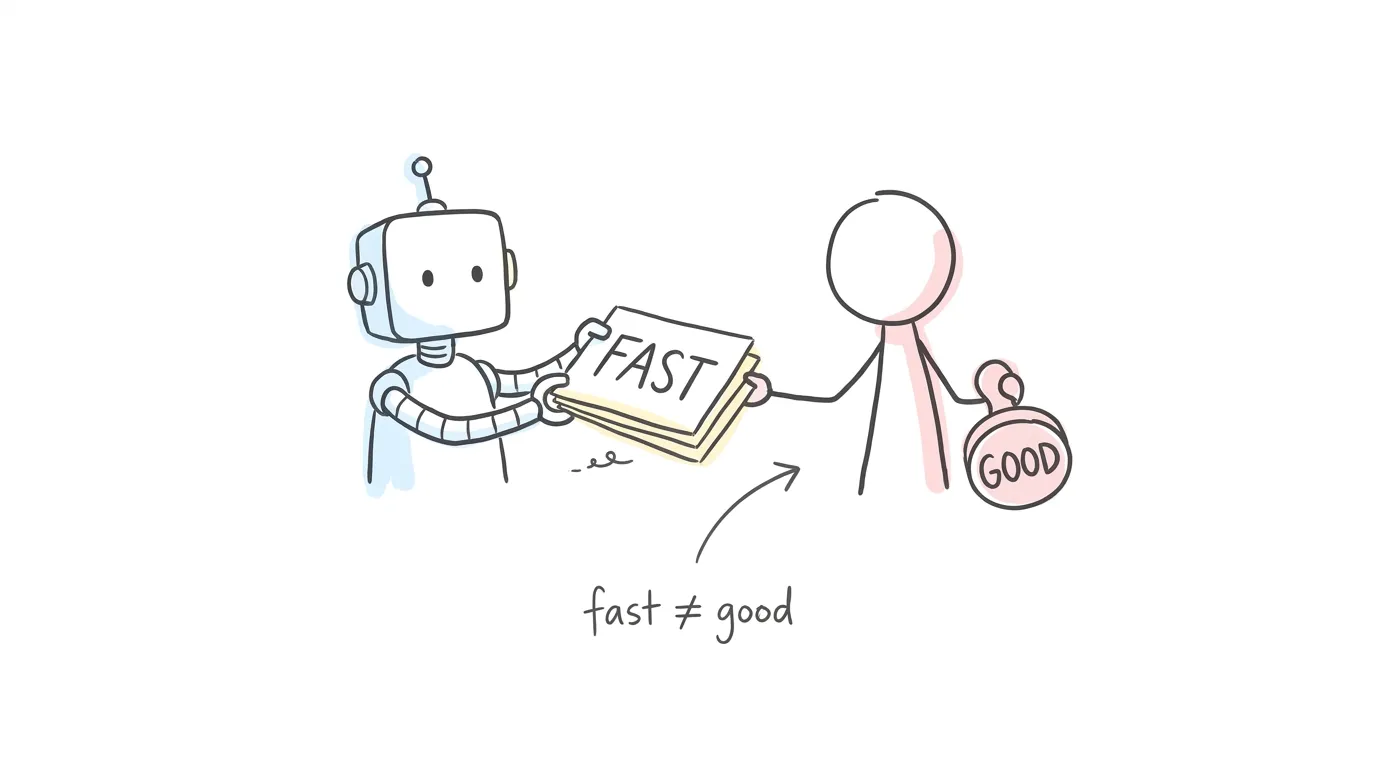
Good is what human taste gives you.
I know a group of brand strategists putting together an AI working group — it's APG, the Account Planning Group. They want to figure out exactly how these tools will rewrite the planning craft, so that planners shape AI — instead of waiting for AI to shape you.
I'm all for it.
Here's to you being the one who shapes the tools.
Continue reading
Related articles

It's 2026: Stop "Buying" AI Tools for Your Marketing Team — Start "Hiring" AI Agents
This learn article explains how AI agents differ from standalone AI tools in marketing, outlines three agent categories — build-your-own platforms, CRM-native agents, and vertical tools — and covers use cases across SEO, social media, advertising, and reporting, plus criteria for choosing one.

Did the Money You Spent on AI Marketing Ever Come Back?
A guide to measuring AI marketing ROI across three layers: ad reports, sales pipeline, and the financial ledger. Covers metrics such as ROAS and CPA, eight dashboard metrics, industry benchmarks, and common measurement mistakes.

How to Pick a Creative Automation Platform: First, Figure Out What These Eleven Actually Do
A learn article sorts eleven creative automation platforms — including Bannerflow, Celtra, Smartly.io, and Storyteq — into four functional groups and proposes five evaluation questions covering publishing reach, automation depth, ease of adoption, team fit, and verifiable evidence.