
After Dissecting These 10 AI Marketing Campaigns, I Couldn't Sit Still
A breakdown of ten AI marketing cases from brands like Coca-Cola, Nike, and Starbucks, highlighting a playbook of human-led strategy, built-in personalization, and faster creative production, plus four starting steps for smaller brands.
A while back, I went through every real, results-producing AI marketing case I could get my hands on from this year, one by one.
And as I read, one thought kept running through my head: Impressive. Genuinely impressive.
When I finished, I noticed something especially interesting. Almost none of the brands that came out ahead were the ones with the biggest budgets. Coca-Cola, Nike, Starbucks — sure, they have money. But what actually set them apart from their peers wasn't money. It was a playbook.
What do I mean by playbook? Let's cover that first, then get to the 10 cases.
In AI Marketing, the Playbook Wins
For many people, "AI marketing" means one thing: let the machine write copy automatically, generate images automatically, place ads automatically.
That's right — but only half right.
Think about it: what happens if you hand strategy over to the machine too? The machine gives you the statistically most "average" output. Never wrong, never remarkable. Because the machine has no point of view, no taste, and no obsession with "I want to move this specific group of people."
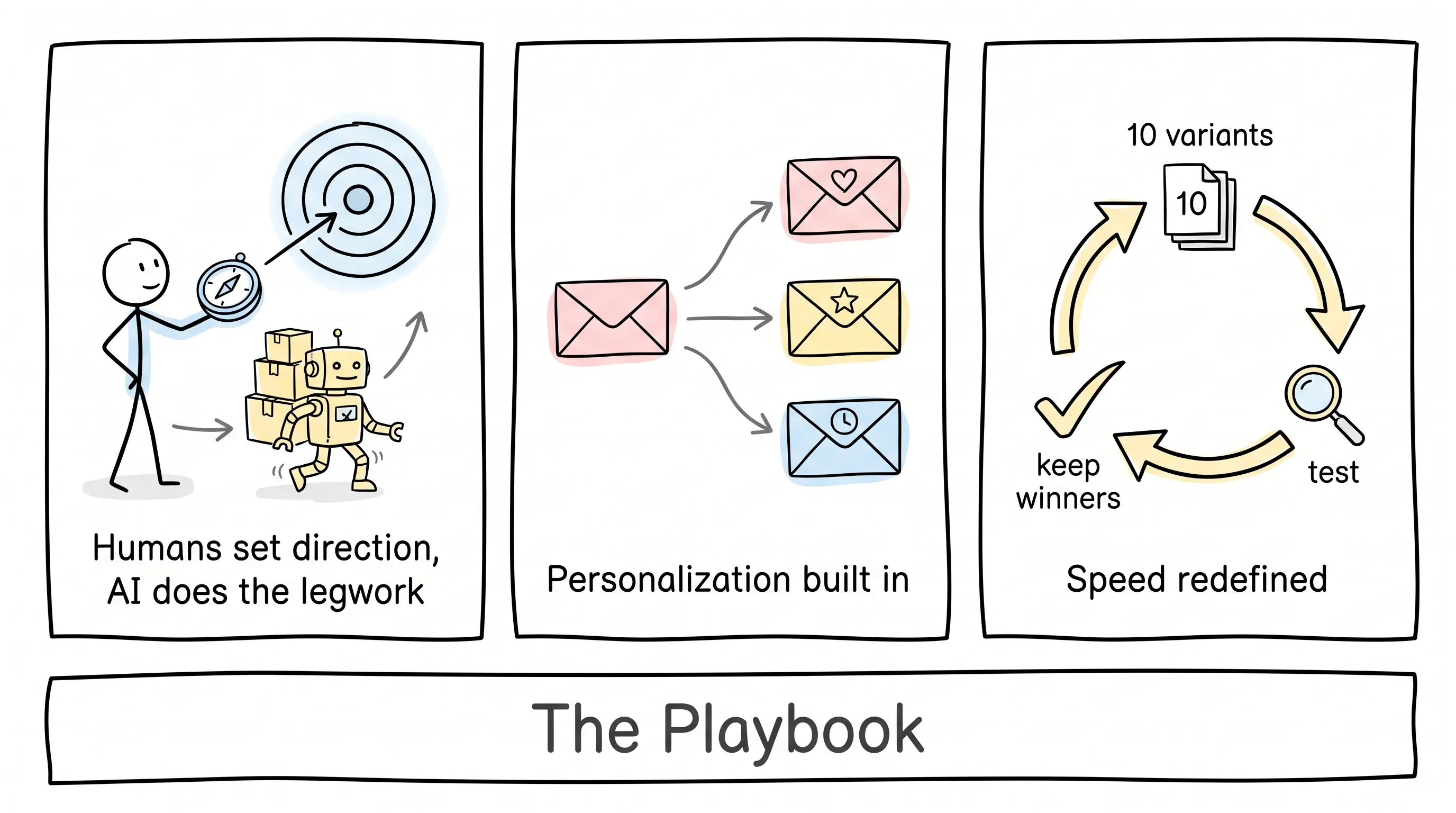
The brands that won this year got three things right.
First, humans set the direction; AI does the legwork. What to say, to whom, in what tone — a person figured that out first. AI speeds things up inside that frame; it doesn't think for you.
Second, personalization is built in, not bolted on. The era of firing one piece of content at every audience is over. Behavioral data, purchase history, browsing trails — these signals make sure the version each person sees feels made just for them.
Third, the speed of creative production has been redefined. It used to be that every new version meant restarting the assembly line. Now: generate ten variants, run a round of testing, keep the ones that perform — a matter of days.
Put these three together, and that's the playbook I keep talking about. Remember this:
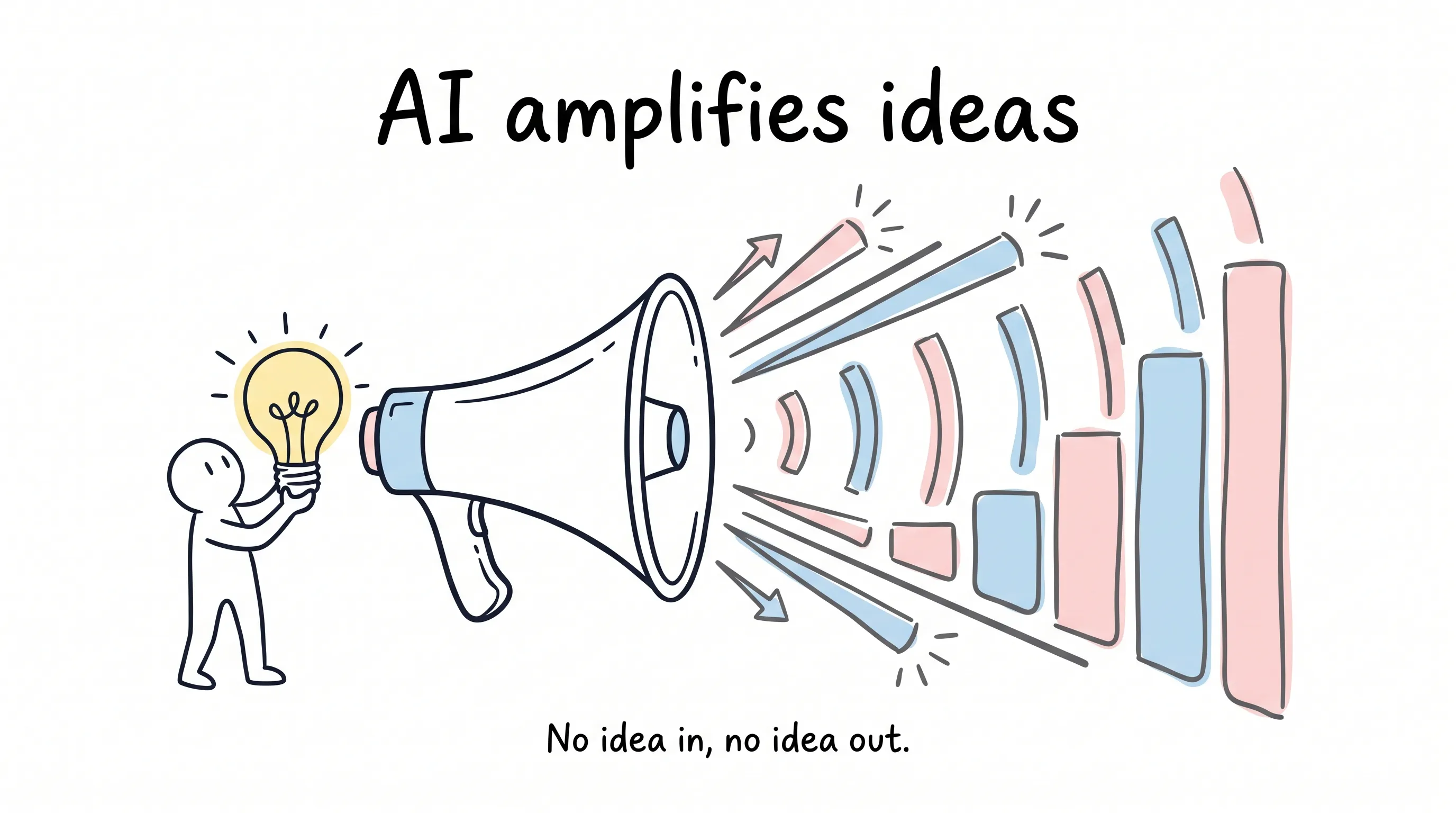
AI is an amplifier. It amplifies human ideas. If you have no ideas, it amplifies your mediocrity.
Alright, playbook covered. Now, the 10 cases. For every one of them, I took a look on your behalf at exactly where the win came from.
10 Cases, 10 Lessons
1. Coca-Cola: Personalization Doesn't Mean Diluting the Brand
The classic dilemma for big brands: do you keep one unified global image, or go local everywhere? In the past, this was nearly a single-choice question.
Coca-Cola used AI to turn that single-choice question into a multiple-choice one. Under one brand skeleton, AI generates thousands upon thousands of ad versions: this region paired with this season, that market paired with that festival. What you see always matches what's happening around you right now.
Brand consistency and one-to-one personalization are not a trade-off. Humans build the brand; AI builds the thousand faces.
2. Nike: Don't Wait for Users to Speak — Anticipate Their Next Move
Nike feeds its first-party data (first-party data: behavioral and transactional data collected directly from your own users, with their consent) — app behavior, purchase history, browsing trails — into predictive models, to judge what you might want next. Then, before you've even opened your mouth, it puts the relevant content in front of your eyes.
Notice the change in sequence. Marketing used to be "you search, I answer." Now it's "you haven't asked yet — I already spoke."
Fast-reacting brands grab traffic. Brands that predict well grab hearts.
3. Spotify: The Product Is the Ad
Of all the cases I went through, this is my personal favorite.
Spotify's AI DJ started out as a feature. But they simply turned it into the marketing itself: give every user their own radio host who gets them. The result? Users started posting their AI DJ moments on social media on their own initiative. Barely any media spend, and the momentum built itself.
Sit with this for a second: when AI genuinely makes a product better, users will do the spreading for you.
The best AI marketing puts AI into the product, not into the ad.
4. Sephora: Try Online, Buy Offline
Sephora took virtual try-on and its AI beauty advisor from being a small in-app feature to being the protagonist of the whole campaign. The ads showcased the experience itself: how products get matched in real time to your skin tone, your lifestyle.
Both tracks climbed: app downloads rose, and so did foot traffic to physical stores.
Plenty of retail brands have long believed online and offline are two separate worlds. Sephora proved that AI can be the bridge between them.
Digital experiences should ultimately point the way to physical business.
5. BMW: Ten Thousand People, Ten Thousand Ads
BMW uses AI to generate personalized video ads. What each ad looks like depends on what you've watched, which city you're in, and what kind of car you're into.
The creative morphs endlessly, but the brand's through-line never breaks.
Ads that feel "shot just for you" — at scale. AI couldn't do that before. Now it can.
6. Heinz: Letting AI Speak for It, Once
The cleverness of this case deserves its own round of applause.
Heinz ran an experiment: invite everyone to have AI draw "ketchup." Regardless of which tool they used or how they wrote their prompts, many of the generated images came out looking like the Heinz bottle. Even though, from start to finish, nobody mentioned the brand.
What is this? It's a nationwide experiment that proved the shape a brand holds in people's minds. Users had fun, social platforms buzzed, and Heinz barely lifted a finger. No — that's not right. It did lift one finger: decades of brand building.
Here, AI isn't a production tool. It's testimony. Only a brand that has truly earned it dares to play this game.
7. Amazon: Dare to Let Go and Let the System Run
Amazon's advertising system uses machine learning to adjust bids, audiences, and placements in real time. When user behavior shifts, the targeting shifts with it — no one babysitting.
One detail is worth chewing on: advertisers who trusted the system's recommendations and did less manual meddling actually performed better.
Human nature can't resist the urge to "just tweak it by hand." But all that fiddling often just adds noise to the system.
Whatever truly belongs to the machine, hand it to the machine. Interference is also an expensive itch.
8. L'Oréal: Personalization Across the Whole Journey
L'Oréal built a "skincare journey": your skin type, the climate of the city you live in, what you've bought before — all of these factors together decide what products and what content get recommended to you.
And it doesn't end after pushing one product. From the first spark of interest to repeat purchase, every person's path is different.
A single-point recommendation is a technique. Personalization across the full journey is a moat.
9. Starbucks: A Loyalty Program That Learned to Predict
Starbucks uses predictive analytics to guess what your next cup will be. Purchase history, preferences, store location, ordering habits — together they decide which coupons and which new drinks get pushed to you.
It's still a push notification. But where everyone else sends "spend more, save more" coupons, Starbucks sends "the drink you always order — the new beans just landed." Which one feels more like it came from a friend?
Discounts win a conversion. Being understood wins repeat purchases.
10. Airbnb: Helping You Discover Places You Never Thought Of
The most impressive thing about Airbnb's AI isn't that it gives you what you search for — it's that it helps you think of things you'd never have searched for. Based on your interests and preferences, it surfaces listings you never searched for but can't scroll past.
This case turns "discovery" itself into marketing.
The best recommendations don't answer your questions. They raise questions for you.
What Do These 10 Cases Have in Common?
I put them side by side, and five traits emerged.
They all start from a real problem, not from "let's do some AI too." They all use clean, compliant first-party data. They all pair AI with human creativity, neither replacing the other. They all watch conversion, repeat purchase, and long-term value — not likes and impressions. And they all keep revising their original ideas against data that actually ran.
Notice something? Not one of these five is about "how impressive the technology was."
Technology is available to everyone. The difference is in how you use it.
Four Things Small Brands Can Do Right Now
At this point you might ask: I don't have Coca-Cola's budget — what do I do?
Good news: today, doing decent AI marketing has a barrier to entry lower than you can imagine. Four things. You can start today.
First, squeeze the existing tools dry. For audience segmentation and send-time optimization in email and push, the AI built into tools like Klaviyo and Braze goes underused by most brands. Pick up what's free for the taking before you talk about building your own.
Second, use generative AI to test creative. Stop letting one asset fight all your battles. Take one ad, generate five versions, and let the data crown the winner. This move lifts your return on spend without adding budget.
Third, start accumulating first-party data now. Clean, explicitly authorized user data is your moat in the post-cookie era. Skip it today, and tomorrow even a premium price won't buy it back.
Fourth, switch dashboards. Watch the metrics that actually predict revenue, and don't let likes and impressions sweet-talk you into feeling good.
Finally, Some Straight Talk from the Heart
After going through these 10 cases, my strongest feeling is this: what makes them admirable was never "wow, they used AI."
It's that they got clear on whom they wanted to move and what problem they wanted to solve — and only then sent AI onto the field. Strategy, creativity, genuine care for the user: that's the fuel. AI is just the engine. However good the engine, without fuel the car doesn't move an inch.
A few days ago, a friend who runs an e-commerce business asked me whether he should bet his entire budget on AI marketing. I didn't answer directly. I asked him back: what do you want your AI to amplify?
He couldn't answer. Now he's written the question on the whiteboard in his office.
AI gave everyone the same capability. The difference is what you choose to amplify with it.
Here's wishing you find the thing worth amplifying, too.
Continue reading
Related articles

Cross-Border Business: Time to Upgrade Your AI Toolbox
A learn article explaining how AI tools help cross-border e-commerce sellers clear five hurdles: language, regulation, logistics, payments, and fraud. It outlines a five-compartment toolbox, a five-step adoption path, and metrics such as conversion rate and CLV, while cautioning against over-reliance on AI.

AI Is Taking Over the Dirty Work of Social Media Marketing, One Task at a Time
This learn article outlines four social media marketing tasks AI can handle — audience analytics, content drafting and design, ad targeting and creative testing, and spam moderation — and cautions that taste, judgment, and data security remain human responsibilities.

AI Is Already This Good — Why Is Your Social Media Marketing Still Pure Manpower?
An overview of 18 AI tools for social media marketing, organized into six categories covering audience research, content creation, scheduling, comment and DM handling, ad management, and visual production, plus notes on personalization, prediction, and emerging trends.