
After AI Muddied the Content Waters, B2B Brands Are Paying "Real Humans" to Show Up
A learn article on how B2B brands are investing in real creators on camera as AI-generated content floods the market, and why credible creator reviews can strengthen trust in AI-driven recommendations.
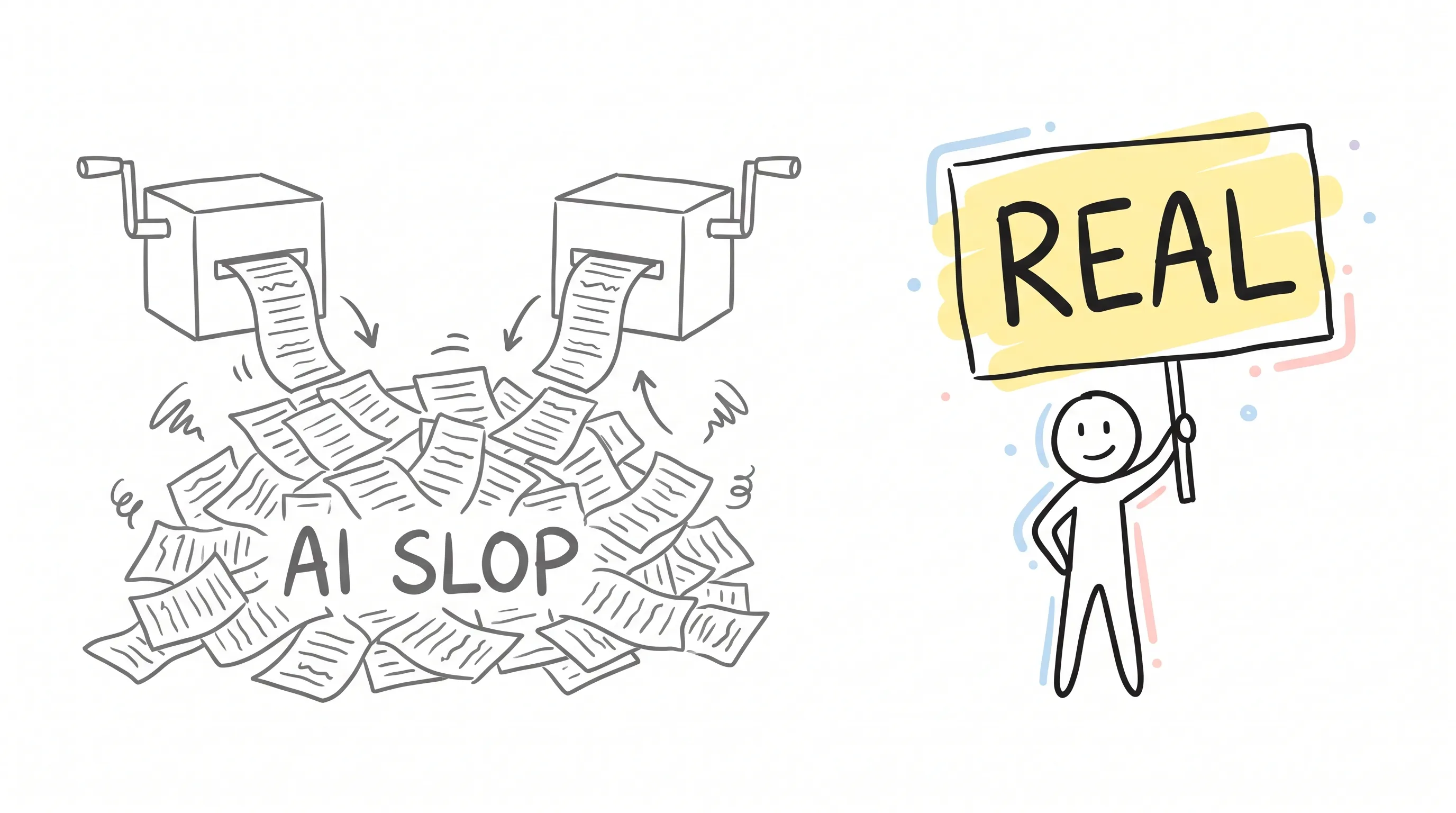
A few days ago, I asked AI to help me pick a project management tool.
It handed me a long list — features, pricing, use cases, all neatly reasoned. But the longer I stared at it, the less sure I felt.
Why so unsure?
Because I couldn't tell whether the content it cited came from real people with real experiences, or from machines churning out filler by the batch.
That's the situation everyone in B2B marketing faces right now: content is overflowing, and trustworthy material is getting rarer. People have even coined a name for what AI mass-produces — "AI slop." Massive in volume, overpowering in smell, and impossible to trust.
The interesting part is that amid all this slop, a counter-current has emerged: B2B brands are spending big money to put real people on camera.
The numbers tell the story. Billo, a creator marketing platform, reports that over the past year, the share of B2B companies using creator video rose 55%; compared with 2023, it has nearly quadrupled.
It's 2026 — and brands are paying people to shoot videos? Isn't that last era's playbook?
Not at all. It's precisely because AI arrived that real people became more valuable.
Why Real Humans Became Scarce in the AI Era
Think about how buyers make purchasing decisions today.
They ask AI first. The AI digs through the whole web, then hands back a recommendation.
So here's the question: on what grounds would AI recommend you?
A survey from IAB (Interactive Advertising Bureau) offers one answer: 65% of consumers say their confidence in an AI recommendation rises noticeably when it's backed by credible creator reviews.
In other words, AI is like an unusually rigorous intern: the more credible the material you hand it, the more willing it is to speak up for you. And credibility, as it happens, is the hardest thing to manufacture at scale.
AI can generate ten thousand words a minute. What it can't generate is "a real person who used your product in a real business."
Real people telling the truth have become the hardest currency of the AI era.
Find Experts, Not Celebrities
So what kind of creators should you look for?
Many people's first instinct: go after big influencers — the more followers, the better.
IAB's data closes off that road. When consumers were asked "whose words feel trustworthy," the top answer was people with a real, proven track record, at 46%; then came those who publish consistently and stay consistent over time, at 40%; then those who genuinely know the product and have actually used it, at 36%.
And follower count?
21%. Dead last.
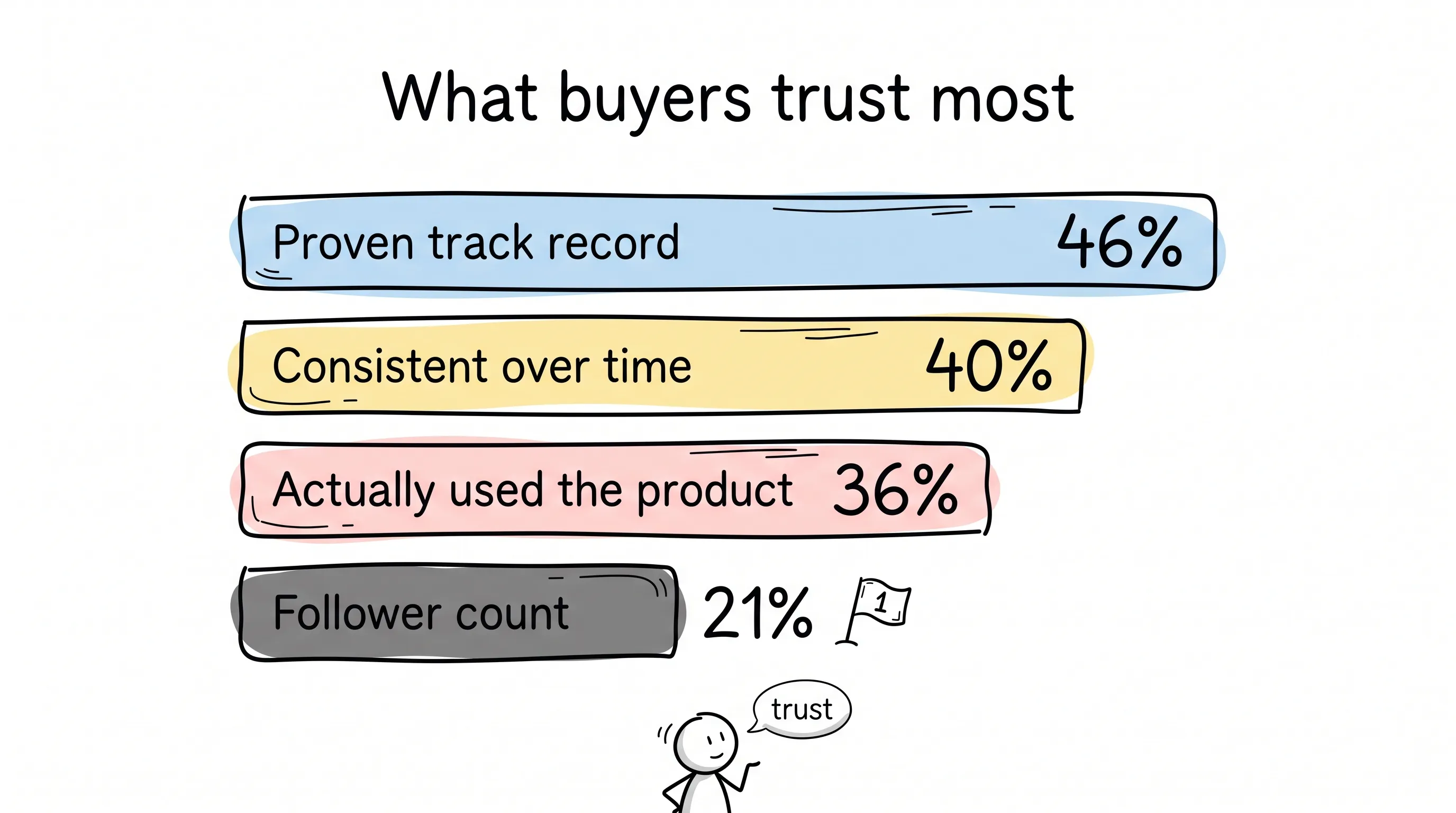
The ranking of who consumers trust most tells the same story: ordinary users sharing real experiences come first, professional reviewers and industry experts follow close behind, and celebrities land at the bottom.
For B2B brands, this is actually good news.
Because it means you don't have to fight over top-tier influencers with sky-high fees. One of your long-time customers can film how the product actually runs in a real business; one of your front-line practitioners can explain exactly what problem it solves; one of your industry experts can help buyers test the product's claims against a bigger picture.
They don't need followers. They only need what buyers want to hear.
B2C Spent a Fortune and Never Learned This Lesson
Here's a comparison group worth chewing on.
Sprout Social published a 2026 Influencer Marketing Report: over the past year, two-thirds of consumers bought something at least once directly because of a creator's recommendation; nearly a third have done it more than ten times; among Gen Z, the figure is 81%.
From recommendation to purchase, the chain is remarkably short.
But what do marketers themselves think? Half of them say they do creator marketing mainly for "brand awareness." Only 24% say they're in it for sales and conversions.
On one side, consumers buy on the spot; on the other, marketers treat it as just another ad. The money gets spent, but the value goes unrecognized.
B2B brands, don't repeat this mistake.
Create for Research, Not Reach
So how should the content actually be made?
Start with a key question: at what moment do buyers need this content most?
The answer is when they're making decisions. IAB found that consumers value creator content most when they're discovering products, comparing alternatives, narrowing the field, and digesting a pile of review information.
That is exactly the core of the B2B buying process.
So don't treat creator video as yet another batch of ads poured into the feed. Hand creators the questions buyers actually ask: How does this thing work? What is it good at? Where does it fall short? How does it compare to competitors?
And AI makes these "credible answers" even more valuable. More than half of consumers are more receptive to AI shopping recommendations backed by creator reviews; among Gen Z and millennials, that rises to 65%.
Once you see this, the playbook is clear: give creators plenty of "raw material." Product demos, side-by-side comparisons, real implementation stories, and honest discussions of trade-offs. Let buyers walk away with evidence, not another page of sales talk.
Buyers want evidence. And evidence is exactly what advertising can't give them.
Stop Looking at This Through an Advertising Lens
One last easy trap to fall into.
Billo found that software marketers, at first, all treat creator video like consumer advertising: they watched, they clicked, so they should buy.
But B2B buyers don't walk that path. They try the product first, then research a round of competitors, pull colleagues into a meeting, and only come back weeks later.
So views and click-through rates help, but they aren't enough. The real accounting happens elsewhere: how many trial signups? How many more qualified leads? Did the downstream pipeline move?
At the end of the day, pouring more content into an already crowded market solves nothing. There is only one real opportunity: find the people buyers trust — then give them something worth saying.
AI can write ten thousand words for you. But it can't earn trust on your behalf.
The next time you ask AI to help you pick software, the list it hands you may well have a real person standing behind it — someone who used the product carefully and spoke about it honestly.
Here's hoping you find those people soon.
Continue reading
Related articles

Cross-Border Business: Time to Upgrade Your AI Toolbox
A learn article explaining how AI tools help cross-border e-commerce sellers clear five hurdles: language, regulation, logistics, payments, and fraud. It outlines a five-compartment toolbox, a five-step adoption path, and metrics such as conversion rate and CLV, while cautioning against over-reliance on AI.

AI Is Taking Over the Dirty Work of Social Media Marketing, One Task at a Time
This learn article outlines four social media marketing tasks AI can handle — audience analytics, content drafting and design, ad targeting and creative testing, and spam moderation — and cautions that taste, judgment, and data security remain human responsibilities.

AI Is Already This Good — Why Is Your Social Media Marketing Still Pure Manpower?
An overview of 18 AI tools for social media marketing, organized into six categories covering audience research, content creation, scheduling, comment and DM handling, ad management, and visual production, plus notes on personalization, prediction, and emerging trends.