
Ads That Talk Back: Meta Puts a Personal Shopper Inside Your Feed
An overview of Meta's Business AI conversational ads in testing on Instagram Stories and Facebook Reels, plus its 2025 Cannes Lions toolkit covering Advantage+, video generation, virtual try-on, and shoppable stickers. The piece argues ads are becoming storefronts and brands need richer content libraries to feed AI.
The other day, I came across a video while scrolling — and watched it three times over.
The footage shows a shopping conversation. A young woman says she's picking a birthday gift for her sister: she's 28, and she likes to dress comfortably. The other side responds right away: in that case, I'd suggest these lightweight stretch pants — breathable, relaxed, with an easygoing touch of style. The woman asks whether there's a top to match. The reply comes right back: pair it with the lightweight Polo from the same line, and the whole outfit is set.
The conversation flows as smoothly as a veteran shop assistant with eight years on the floor.
But the other side isn't a person.
It's an ad.
Meta's Business AI. They're testing it on Instagram Stories and Facebook Reels — put plainly, it lets you chat with an ad.
So what is conversational advertising?
Think about it: what was advertising before? A megaphone. It shouts at you, and you listen whether you want to or not. If your interest is piqued, you still have to jump out on your own: search for the product, compare prices, hunt down customer service, ask about sizing. Every single step leaks customers.
Now, the megaphone has become a counter.
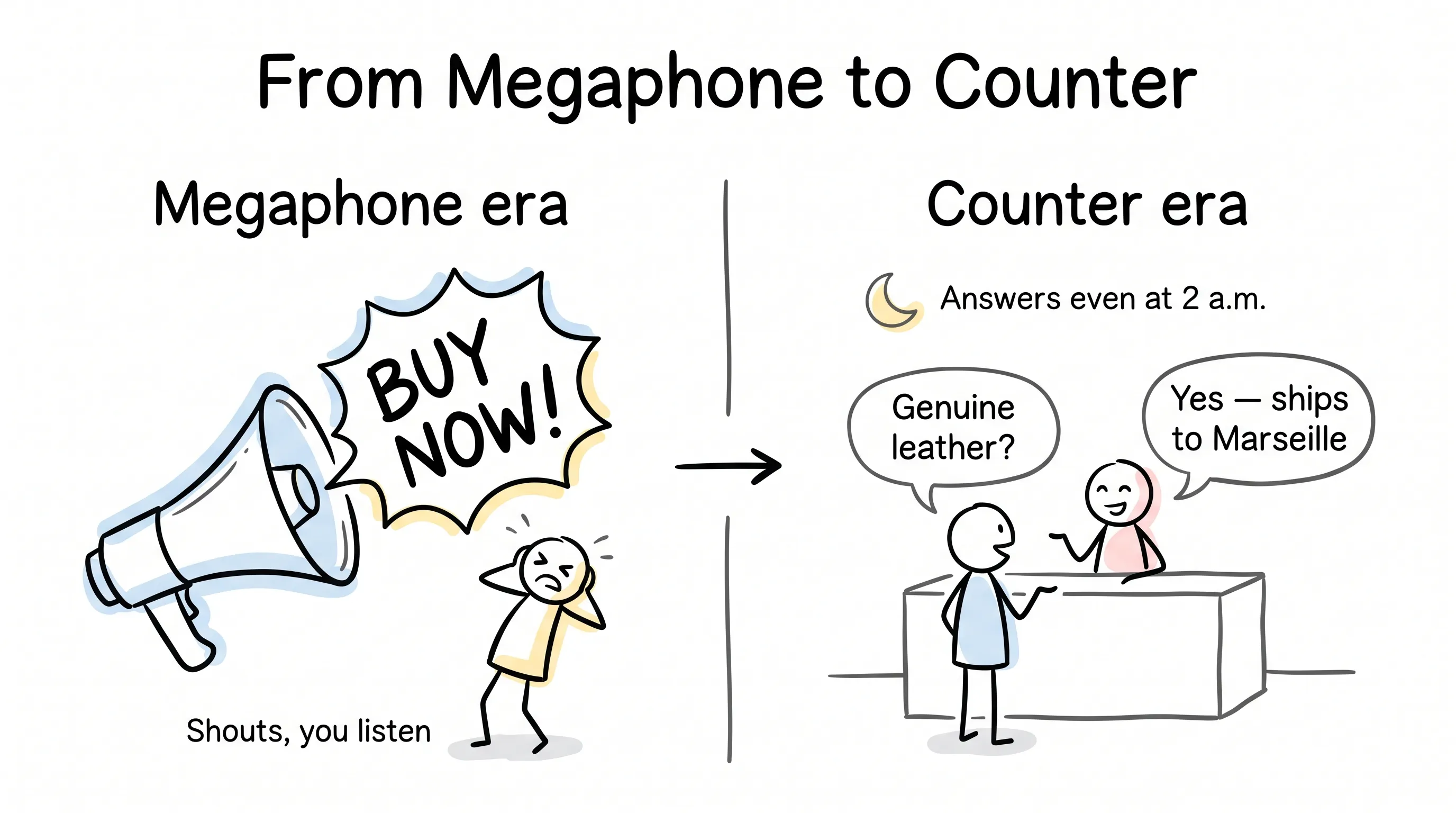
You scroll past a dress in your feed and can ask it directly: is this genuine leather? How fast can it reach Marseille? It answers instantly. Even at 2 a.m., it answers instantly. And once you've asked, you place the order right then and there.
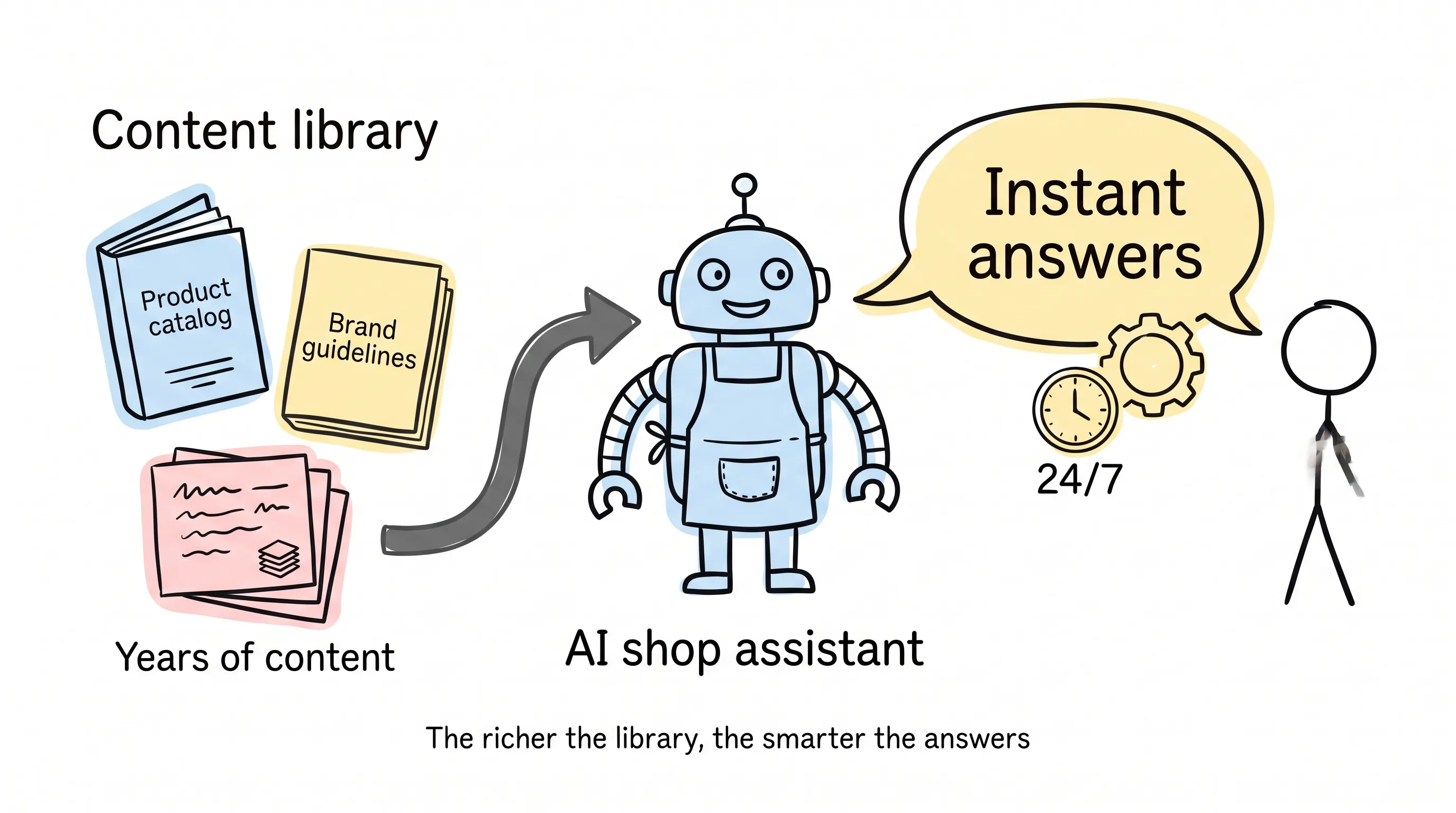
Where does all that ability come from? Its ammunition is the brand's own existing content, guidelines, and product catalog. Feed those to Business AI, and it can serve customers 24/7. A company doesn't need to hire and maintain a whole new customer-service team — it's like cloning your best salesperson ten thousand times over, without paying a single extra salary.
Whichever way you run the numbers, it's a bargain.
At the 2025 Cannes Lions International Festival of Creativity, Meta brought out a full toolkit. Business AI is the star of the show, and every supporting player can hold its own.
Advantage+ gained new features: advertisers set up their logo, brand colors, and fonts once, and the AI applies them across creative assets in bulk. A color revision that used to take a designer half a day now takes minutes.
Then there's Video Generation and Video Highlights: a single static product image turns straight into video. Anyone in e-commerce knows a video asset's click-through rate often runs noticeably higher than a static image's — but shooting video costs several times more than shooting photos. Now, AI is flattening that cost gap.
Add Virtual Try-On for virtual fitting, and Creative Sticker, which turns stickers into tappable buy buttons. Try on a lipstick shade, tap a sticker to place an order — the entire shopping journey completes inside a single Reel.
Having taken in this whole suite, my biggest takeaway is this: the boundary of advertising is disappearing.
Before, ads and stores were two separate places. Ads did the shouting; stores did the selling. Now, the ad is the store.
What does this mean for people who build brands? My call: from here on, the competition is over who has the deeper stack of content assets.
Think about it: what does an AI shop assistant need to consume before starting work? Your product catalog. Years of your brand content. The cleaner and more complete the assets, the smarter it serves customers. In other words, in the years ahead, every company will need a content library rich enough to keep its AI well fed.
Of course, there's always a stretch of road between demo and wide adoption. Whether users buy into "chatting with an ad," and how much of a conversion lift it actually delivers, will depend on the test data to come.
But the direction? That much I can see clearly.
Back to that opening conversation about a gift for a sister. What moved me most: for the first time, an ad bowed its head and started answering your questions.
Making ads speak is, at its core, swapping persuasion for answers.
Only ads willing to answer customers have earned the right to be remembered by them.
Here's hoping your ads learn to talk — soon.
Continue reading
Related articles

Cross-Border Business: Time to Upgrade Your AI Toolbox
A learn article explaining how AI tools help cross-border e-commerce sellers clear five hurdles: language, regulation, logistics, payments, and fraud. It outlines a five-compartment toolbox, a five-step adoption path, and metrics such as conversion rate and CLV, while cautioning against over-reliance on AI.

AI Is Taking Over the Dirty Work of Social Media Marketing, One Task at a Time
This learn article outlines four social media marketing tasks AI can handle — audience analytics, content drafting and design, ad targeting and creative testing, and spam moderation — and cautions that taste, judgment, and data security remain human responsibilities.

AI Is Already This Good — Why Is Your Social Media Marketing Still Pure Manpower?
An overview of 18 AI tools for social media marketing, organized into six categories covering audience research, content creation, scheduling, comment and DM handling, ad management, and visual production, plus notes on personalization, prediction, and emerging trends.