
23 Marketing AI Platforms, Sorted Into 5 Groups
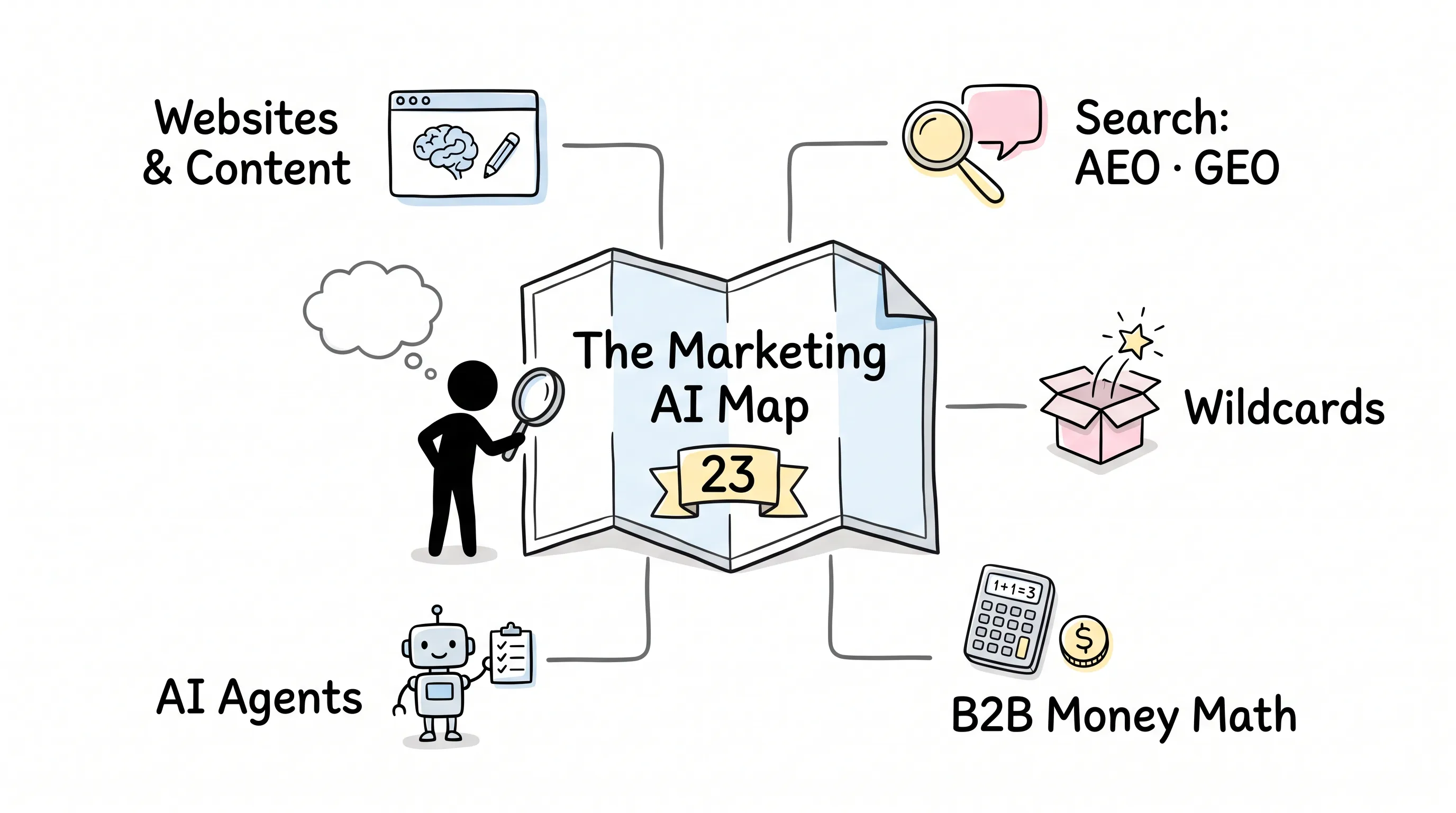
An overview of 23 marketing AI platforms organized into five groups, covering content and website platforms, AEO/GEO search visibility, AI agents, B2B lead analytics, and niche tools.
Last week, a friend who runs a brand invited me out for coffee. He'd barely sat down before sliding his phone across the table: "Run, look at my bookmarks." Nearly a hundred AI marketing tools saved — and not a single one he dared to use.
My take: his problem isn't too many tools. It's that the map is a mess.
What do I mean by that? Name almost any marketing job today — writing content, running ads, managing reviews, working leads — and there's an AI tool built to catch it. New platforms are still popping up every single day.
But the opportunity was never "try every new tool once." The opportunity is to read the map first, then pick the one thing that will genuinely change your day-to-day.
I recently went through 23 marketing AI platforms and sorted them into 5 groups by what they can actually do for you. Let's take them one group at a time.
1. Websites and Content Are Growing a Brain
Start with the biggest pile: websites and content.
What's a content platform? It's the thing that manages the content, assets, and workflows on your website — with AI built in.
Think about it: marketers spend half their lives on the website. Change a page, wait on design. Publish a post, wait on approvals. Build a campaign landing page, wait for a slot on the schedule. So everyone in this group is chewing on the same question: could the website get smart on its own?
Acquia puts content, digital assets, AI agents, and site governance into a single workspace, running on open-source Drupal underneath — API-first, so you plug in whatever you like. If your company runs many sites, many brands, and teams scattered across the map, this one's for you.
Optimizely goes even more direct. Content management, experimentation, personalization, ecommerce, analytics — all on one platform. The classic problem it's after: you've published all this content — which pieces actually work?
Progress's Sitefinity takes a different road: instead of bolting a chat window onto your website, it embeds AI agents into the editorial workflow, helping you edit content, run analysis, and move processes along.
Webflow made its name on "build a site without writing code." Now it's gone a step further — it doesn't just help you build, it helps you manage: AI generates content and CMS entries, and it brings SEO and AEO along for the ride.
Pantheon works the layer further down: infrastructure and workflows for WordPress, Drupal, and Next.js. It recently put forward a concept called Agentic Fleet Management — roughly, the idea of turning a company's pile of websites into something AI agents can see, touch, and operate. That idea has legs.
Three more, each covering its own lane: Siteimprove makes sure your content is comfortable for humans to read, findable by AI, and accountable to business results; Fibr.ai turns static pages into living pages that adapt to whoever shows up — different visitor, different page; Navu turns the website conversational: visitors ask, it answers, and then it walks them toward the right content.
Websites are going from "bulletin board" to "employee."
2. The Search Game Has Changed
Quick question: your content ranks number one in search results. Then what?
Then — the user may never even open the search box.
More and more people just ask the AI directly. The AI answers, your brand never comes up, and however high you ranked, it counted for nothing.
Which brings us to two new terms.
What's AEO? Answer Engine Optimization — getting AI to cite you when it generates answers. That's exactly what Conductor does, at enterprise grade, managing everything from visibility all the way to site health.
What's GEO? Generative Engine Optimization — one step further, with the goal of getting AI to mention you, recommend you, and cite you. OmniReach's GEO Vibe does exactly this.
Put simply: the old game was rankings. The new game is getting talked about.
3. AI Went From Advisor to Doer
This is the group I'd watch most closely.
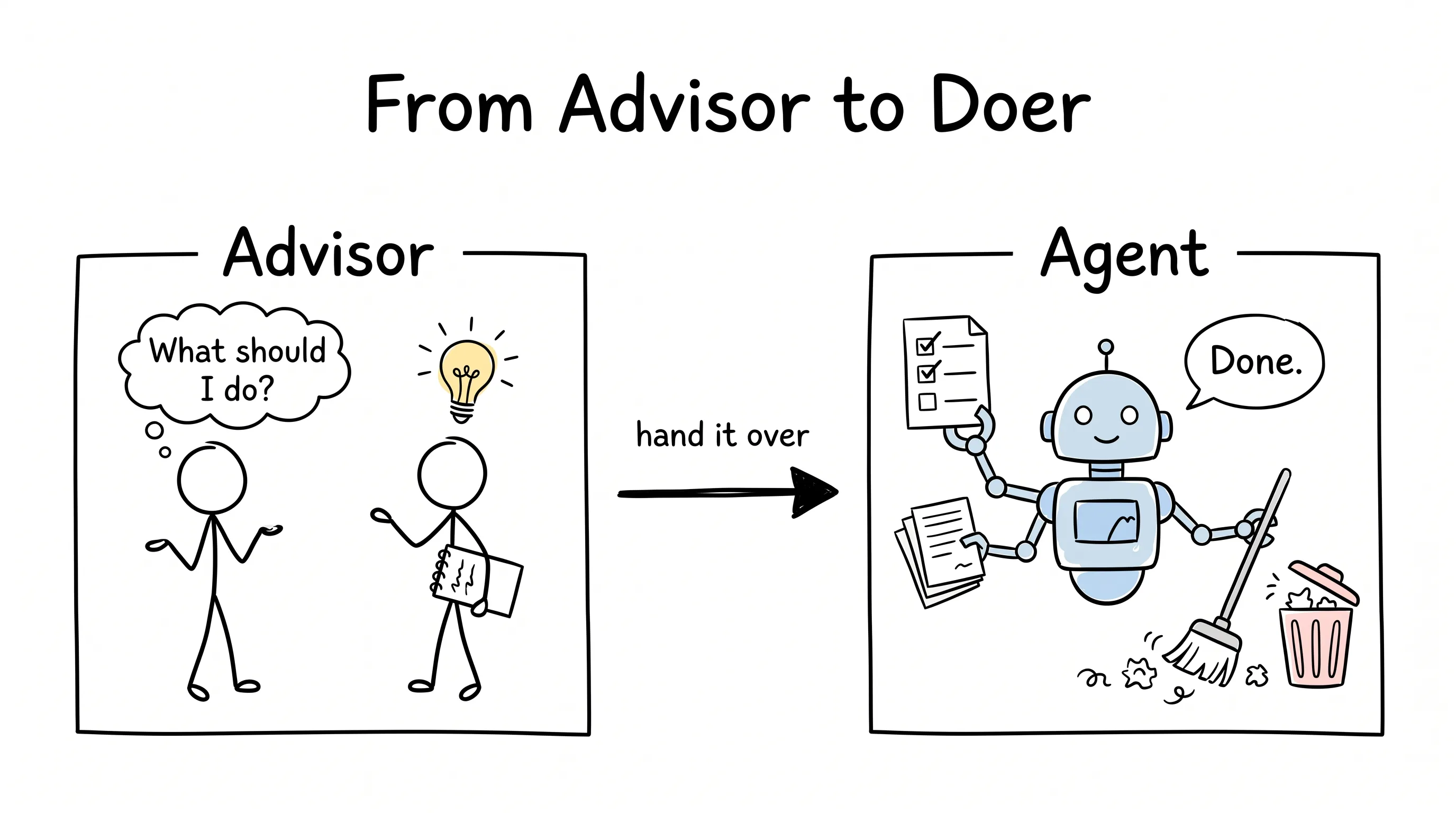
The AI tools of the past answered when you asked and acted when you clicked — essentially an advisor. This new batch takes the job off your hands and does it.
What's an agent? It's when you stop just asking it "what do I do" and start telling it to go "do it."
ActiveCampaign's AI agents can build campaigns, suggest segments, set up automations, handle personalization, track performance — and then tell you what to do next. It walks the whole chain for you.
KEN-E aims even higher. It doesn't do point solutions. It sits on top of tools like Google, Meta, HubSpot, and Mailchimp, orchestrating a fleet of specialized agents to plan, execute, optimize, and report across platforms. And the humans? They just take a look at the key checkpoints.
SOCi watches out for multi-location brands and franchisees. A few hundred stores — who's managing every location's reviews, listings, and social accounts? Its Genius Agents learn your brand guidelines inside out first, then monitor and act on their own.
WRITER is thinking at enterprise scale: it uses your company's own data, knowledge, brand guidelines, and business rules to build agents that can run an entire workflow. Permissions, guardrails, visibility — all set up for you in advance. That's what makes you willing to truly hand the work over.
NinjaCat serves agencies managing dozens or even hundreds of accounts. A typical report tells you "what happened." Its agents tell you "what's off, what to do next" — and then go do it for you.
Google Cloud is the foundation of this group. From Gemini models to its agent platform, it wires AI into enterprise data and workflows, giving agents the grounding to take on complex, multi-step work.
From "help me think" to "do it for me." That line has just been crossed.
4. B2B's Money Math, Down to the Penny
In B2B marketing, leads are the lifeline. Everyone in this group is turning guesswork into math.
Demandbase is a veteran of account-based marketing (ABM). This past April, it released Demandbase AI: the entire platform reorganized into an AI-first interface built specifically to orchestrate GTM execution, with ChatGPT and Claude plugged in.
N.Rich uses intent data to work out which companies are most likely to buy. Then you say in plain language what you need — dashboards, account lists, reports — and it generates them on the spot.
Hightouch does something clever: instead of making you build yet another marketing database, it connects directly to the data warehouse you already have — Snowflake, say — and turns the customer data inside into one real-time personalization action after another.
LeanData handles the pie-slicing. Leads come in and get routed to the right rep by territory and by rule — not one slips through, and every step is auditable.
CallRail listens to phone calls. Which caller is a high-quality lead, which ad produced a genuinely valuable conversation — it transcribes, analyzes, and calls it. It recently upgraded Voice Assist: a call comes in, it reads intent, vets quality, then routes the call to the right person.
5. Two I Didn't See Coming
Two more to finish. They reminded me that this map's borders are wider than I thought.
MementoPhoto.AI tackles the oldest headache of event photos: thousands of pictures, and nobody ever flips through them. Attendees scan a code, authorize facial recognition, and the photos they appear in get delivered automatically — no app to install. Organizers can see sharing data too.
REHATCH built a "marketing operating system" called ENSOR, made for small teams. Creative production, landing pages, data analysis — all under one roof. The most interesting part is that it has memory: past decisions, past results — it remembers them all, so it does better next time.
Back to That Coffee
My friend listened to all of it, then asked: so where do I start?
Honestly? I don't know. That's the truth. Only you know your own business — which tool will disrupt your day-to-day is something you'll have to test yourself.
But there's one thing I'm pretty sure of. The most interesting tools in this batch are already doing far more than "getting the old work done faster." The tools are changing, and the marketer's role is changing right along with them. Getting the old work done faster is just a side effect.
Tools won't replace marketers. Marketers who know how to pick tools will go further.
Here's to a shorter bookmarks folder.
Continue reading
Related articles

Cross-Border Business: Time to Upgrade Your AI Toolbox
A learn article explaining how AI tools help cross-border e-commerce sellers clear five hurdles: language, regulation, logistics, payments, and fraud. It outlines a five-compartment toolbox, a five-step adoption path, and metrics such as conversion rate and CLV, while cautioning against over-reliance on AI.

AI Is Taking Over the Dirty Work of Social Media Marketing, One Task at a Time
This learn article outlines four social media marketing tasks AI can handle — audience analytics, content drafting and design, ad targeting and creative testing, and spam moderation — and cautions that taste, judgment, and data security remain human responsibilities.

AI Is Already This Good — Why Is Your Social Media Marketing Still Pure Manpower?
An overview of 18 AI tools for social media marketing, organized into six categories covering audience research, content creation, scheduling, comment and DM handling, ad management, and visual production, plus notes on personalization, prediction, and emerging trends.